 English
 Español
 Deutsch
-
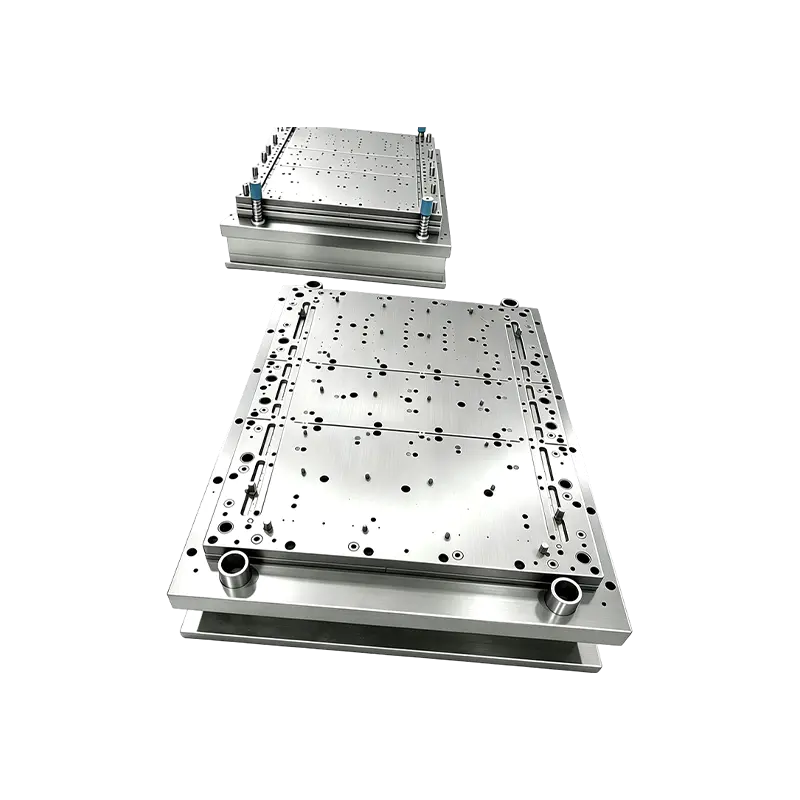
Progressive Stamping Die for Connector & Terminal Parts High Speed Progressive Stamping Die Precision Metal Hardware Stamping Tool mold for Connector Terminal Parts Automotive Components
Progressive Stamping Die for Connector & Termi...
-
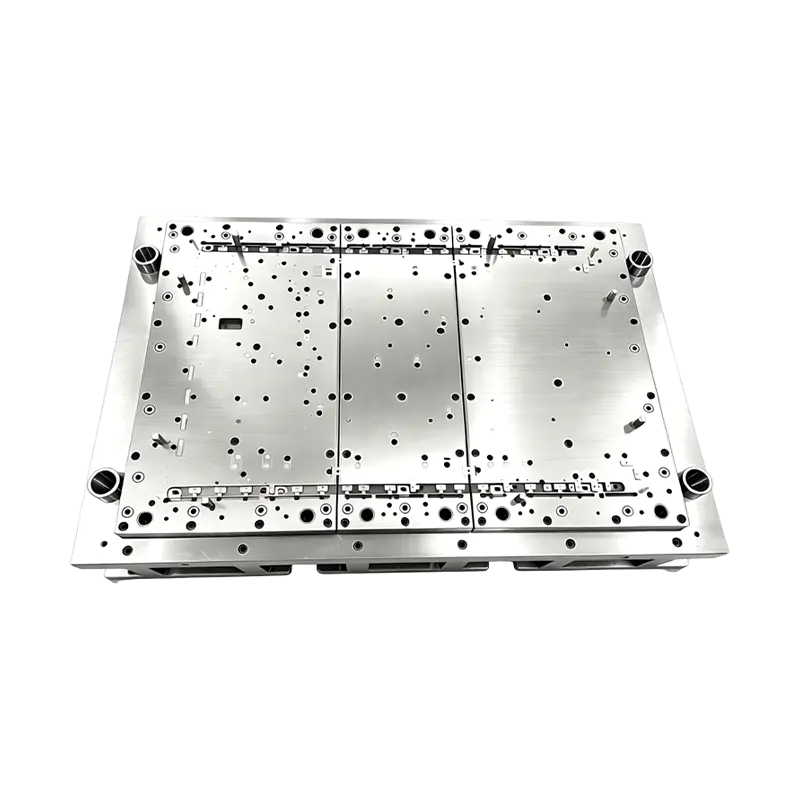
High Precision Stamping Die Multi Station Hardware Progressive Mold Tooling
Precision Metal Stamping Tool for Automotive &...
-
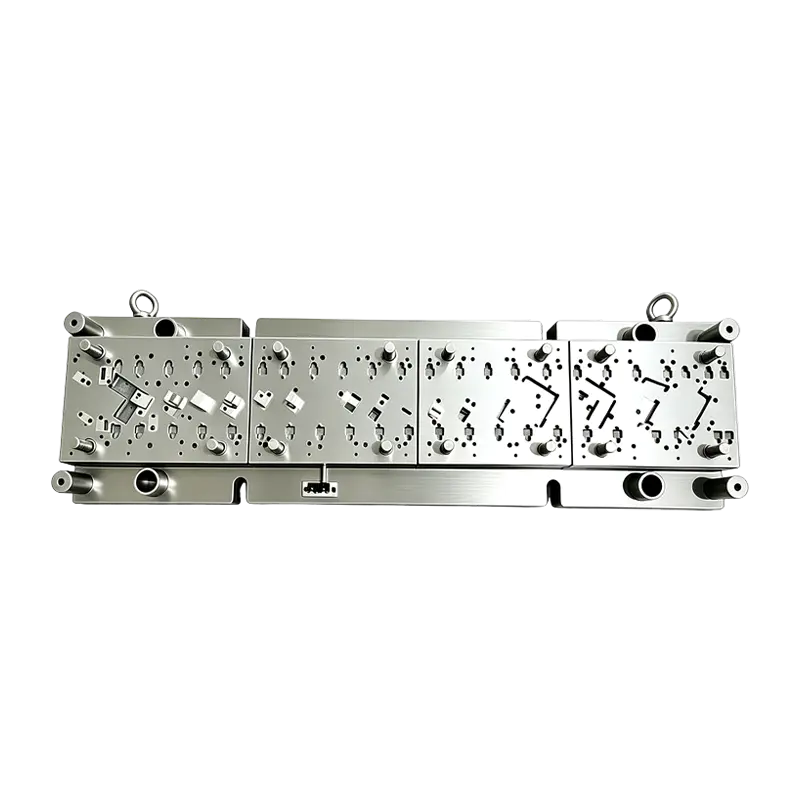
High Speed Progressive Stamping Die Sheet Metal Follow on Press Tool
Multi-operation Metal Stamping Tool for Continuous...
-
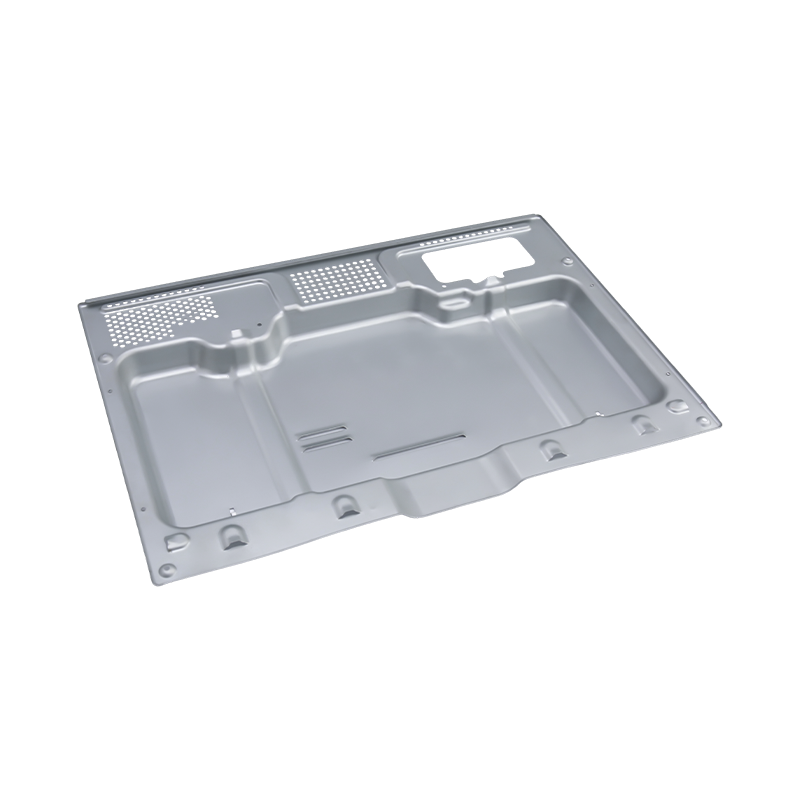
High-end oven stamping parts
Our High-end oven stamping parts are precision-man...
-
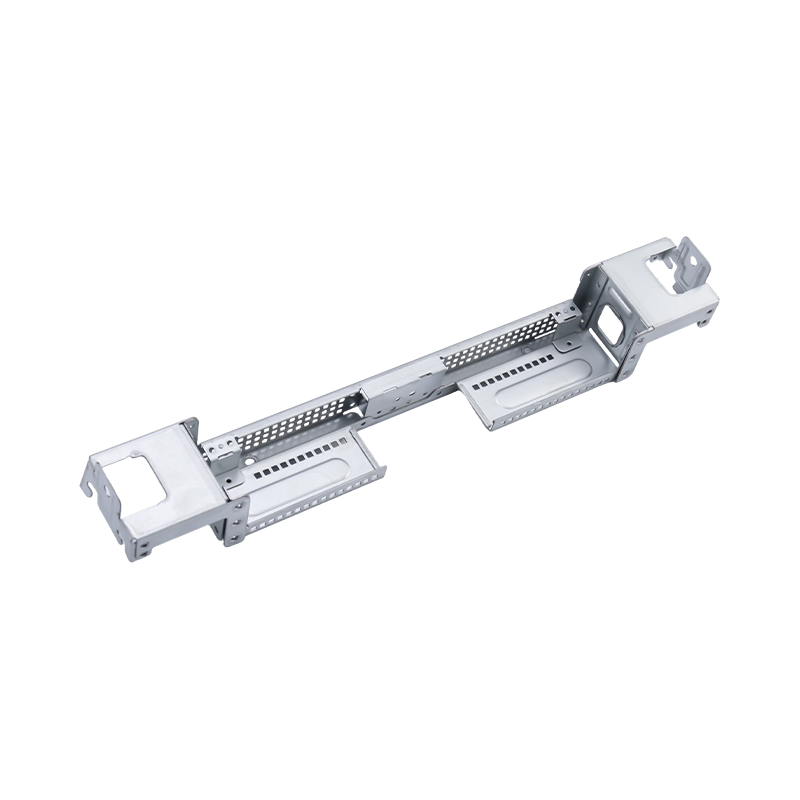
High-end large computer stamping parts
Our High-end large computer stamping parts are pre...
- E-mail us: [email protected]
- Call us: +86-139 1308 8972

Industry News
Home / News / Industry News / Automotive Seat Stamping Parts: High-Precision Manufacturing, Load Bearing & Material Selection
Automotive Seat Stamping Parts: High-Precision Manufacturing, Load Bearing & Material Selection
2026-06-04
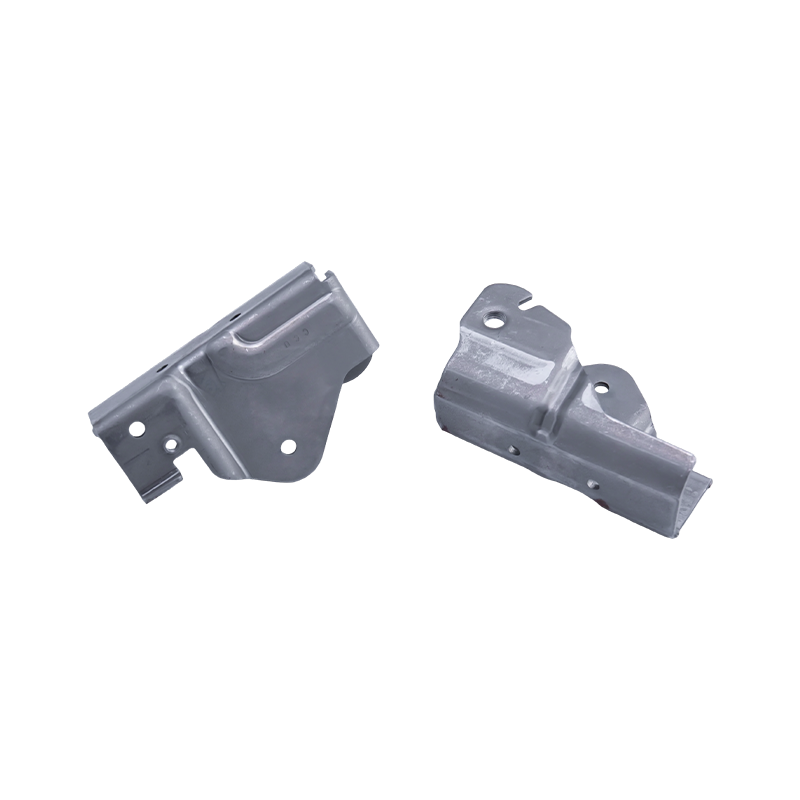
A car door panel needs to fit flush and look good. A seat frame stamping needs to do considerably more: it must carry the static weight of an occupant over hundreds of thousands of cycles, absorb the dynamic forces of hard braking and rough roads, and hold its geometry precisely enough that the seat belt anchor, recliner mechanism, and slide rail all assemble and function correctly. That combination of structural, fatigue, and dimensional requirements makes automotive seat stamping parts among the most demanding components a precision metal stamper will produce — and a clear indicator of a manufacturer's engineering depth.
This article examines the five engineering dimensions that determine whether a seat frame stamping performs reliably across the vehicle's service life: tolerance requirements, material selection, die precision, load performance, and multi-vehicle compatibility.
Content
- 1 Why Automotive Seat Stamping Parts Face Stricter Tolerances Than Most Body Components
- 2 High-Strength Steel vs. Aluminum Alloy: Choosing the Right Material for Seat Frame Stampings
- 3 How High-Precision Stamping Dies Determine Load-Bearing Capacity
- 4 Static and Dynamic Load Performance: What Seat Stamping Parts Must Withstand
- 5 Multi-Vehicle Compatibility and OEM Dimensional Accuracy Requirements
- 6 SQS's Integrated Die and Part Manufacturing Advantage for Seat Stampings
Why Automotive Seat Stamping Parts Face Stricter Tolerances Than Most Body Components
Body panel stampings are evaluated primarily on surface appearance and fit. A gap that is 0.5 mm too wide is visible; a gap that is 0.3 mm too narrow creates an assembly interference. Both are unacceptable, but neither is a safety issue. Seat frame stampings operate in a fundamentally different failure mode: dimensional error in a structural component propagates into reduced load capacity, misaligned safety-critical interfaces, and premature fatigue cracking.
Consider the recliner mechanism mounting bracket. Its bolt holes must be positioned to within fractions of a millimeter to ensure the recliner engages its locking teeth uniformly across the full arc of adjustment. A shifted hole pattern creates eccentric loading on the locking mechanism — not immediately apparent, but progressively degrading over the life of the seat. The same logic applies to slide rail attachment points, which must distribute occupant load symmetrically to both rails; any asymmetry concentrates stress at one attachment and accelerates wear or fatigue failure.
The tolerance standard for automotive seat stamping parts manufactured to automotive safety standards is therefore tighter than general body stampings — and enforced not just at first article inspection but across production runs, because variation between early and late production parts affects assembly line throughput and end-of-line adjustment time.
High-Strength Steel vs. Aluminum Alloy: Choosing the Right Material for Seat Frame Stampings
The material decision for seat frame stampings is not a single choice applied to the entire seat — it is a component-by-component optimization that balances strength requirements, forming complexity, weight targets, and cost.
High-strength steel remains the dominant material for structural seat frame components. Advanced high-strength steels (AHSS) with tensile strengths of 600–1,500 MPa provide the yield strength needed for recliner brackets, seat pan reinforcements, and seat back frames to withstand the 530 Nm backward torque load specified in automotive seat safety standards without permanent deformation. The material's high stiffness also resists the bending moments generated when seat belt loads are transmitted through the seat frame during a frontal collision. The trade-off is that high-strength steels require more capable tooling — higher press tonnage, precision die materials, and careful blank holder force management — because their reduced ductility relative to mild steel leaves less margin for forming errors before cracking occurs.
Aluminum alloy is increasingly specified for seat components where weight reduction is the priority, particularly in electric vehicles where range efficiency justifies the higher material and tooling cost. Aluminum seat frame stampings can reduce component weight by 30–40% compared to steel equivalents. The challenge is that aluminum's lower yield strength typically requires thicker sections or design reinforcement to achieve equivalent structural performance — partially offsetting the weight advantage. Its larger springback during forming also demands more precise die compensation and closer process control to maintain dimensional accuracy.
In practice, seat assemblies often combine both: high-strength steel for primary load paths (back frame, recliner bracket, seatbelt anchor reinforcement) and aluminum alloy for secondary structures where weight reduction has a clear benefit and peak loads are lower (cushion pan side members, headrest guide brackets).
How High-Precision Stamping Dies Determine Load-Bearing Capacity
The mechanical properties of a stamped seat frame part are determined partly by the raw material and partly by the stamping process itself. A die that produces inconsistent wall thickness — through uneven blank holder force, worn punch radii, or imprecise clearance between punch and die — creates local thinning in the stamped part. Those thin zones become stress concentrations: the first locations to yield under static overload and the initiation sites for fatigue cracks under cyclic loading.
This is the direct mechanical link between die precision and seat stamping load-bearing capacity. A die machined to 0.002 mm accuracy on its critical forming surfaces produces parts with consistent wall thickness throughout the draw depth. The occupant load is distributed uniformly across the section, working stresses stay well below the material's fatigue limit, and the part meets its design life target. A die with worn or imprecisely machined radii produces parts where thinning is concentrated, local stresses are elevated, and fatigue life is reduced — often without any dimensional non-conformance detectable by routine inspection.
Edge quality has the same significance. Burrs and micro-cracks on punched edges from dull or poorly fitted tooling act as crack initiation sites. Under the cyclic loading of normal driving — road vibrations, seat adjustment cycles, passenger ingress and egress — these edge defects propagate into fatigue cracks in the base material. Smooth, well-supported shear edges produced by precision tooling eliminate this failure mode.
For automotive and electric vehicle deep drawing dies for seat frame components, the design and manufacturing quality of the tooling is therefore not separable from the structural performance of the parts it produces.
Static and Dynamic Load Performance: What Seat Stamping Parts Must Withstand
Seat frame stampings carry three distinct categories of load, each with different implications for design and material specification.
Static loads represent the sustained weight of the occupant — typically 75–100 kg for a single occupant, acting continuously through the seat cushion and back. These loads determine the minimum cross-sectional area and material yield strength required to prevent permanent deformation during normal use. Static load performance is straightforward to test and verify, and most seat stamping failures attributed to "static overload" are actually fatigue failures that have been accelerating for some time before visible deformation appears.
Dynamic loads arise from vehicle acceleration, braking, cornering, and road surface irregularities. During hard braking at 1g deceleration, the forward inertia of a 75 kg occupant generates approximately 750 N of load through the seat back and into the recliner mechanism and back frame stampings. On rough road surfaces, vertical accelerations of 2–3g are possible, cycling the seat frame at frequencies of 1–20 Hz for thousands of hours over the vehicle's lifetime. Vibration resistance — the ability of the stamped structure to maintain its geometry and mechanical properties under this cyclic loading — is a performance dimension that is frequently underestimated in initial design reviews but becomes visible in long-term durability testing.
Crash loads represent the worst-case condition. In a 50 km/h frontal collision with the seat belt loaded, the seat frame must transmit the occupant's kinetic energy into the vehicle structure without fracturing or allowing seat displacement that could injure the occupant. These loads are an order of magnitude higher than dynamic driving loads, and the stamped parts in the seat belt anchor, back frame, and slide rail locking mechanism are all in the primary load path.
Meeting all three load categories simultaneously requires that the stamping process delivers both dimensional accuracy and consistent mechanical properties — which is why material traceability and in-process thickness monitoring are standard requirements in automotive seat component supply chains.
Multi-Vehicle Compatibility and OEM Dimensional Accuracy Requirements
A single seat stamping supplier rarely serves a single vehicle platform. OEM customers and Tier 1 seat manufacturers source stamped components that must fit multiple vehicle lines, often with different dimensional envelopes, mounting configurations, and safety load requirements. Managing this multi-platform complexity without proliferating tooling cost is one of the core competencies that separates capable stamping suppliers from commodity processors.
The foundation of multi-vehicle compatibility is dimensional accuracy at the individual feature level — not just overall part geometry. Hole position tolerances of ±0.15 mm or tighter on mounting and locating features ensure that the same stamped part assembles correctly into different seat frame architectures without requiring manual adjustment or rework. This level of accuracy is achievable only when the die is designed with appropriate datum references, machined to tight feature tolerances, and validated with a full first-article inspection against the customer's CAD model before production launch.
Custom die design is not an overhead cost in this context — it is the mechanism by which dimensional accuracy and multi-vehicle compatibility are achieved. A die designed specifically for a part's geometry, with feature positions and clearances matched to the part's forming requirements, will consistently produce parts that assemble correctly. A generic or modified die will require ongoing sorting, shimming, or adjustment to maintain acceptable dimensional output.
The full range of automotive stamping parts at SQS is produced from dies designed and manufactured in-house, ensuring that the dimensional requirements of each customer's vehicle platform are engineered into the tooling from the outset rather than compensated for in production.
SQS's Integrated Die and Part Manufacturing Advantage for Seat Stampings
The conventional supply chain for automotive seat stampings separates die manufacturing from part production: a tooling shop builds the die, qualifies it, and transfers it to a stamping house that runs production. At each handoff, information about why the die was designed a specific way — the forming sequence, the blank holder force settings, the die clearance compensation for springback — is partially lost. Production engineers optimize for throughput rather than for the part characteristics the die designer intended.
Suzhou Shuangqisi Mold Equipment Co., Ltd. operates both functions under one roof. The same engineering team that designs the stamping die for a seat frame component also runs the press that produces the parts. When a dimensional drift appears in production — as it will over a die's service life through gradual wear — the response is an informed die correction rather than a process workaround. The result is more consistent part quality across the production run and a faster path to root cause when non-conformances occur.
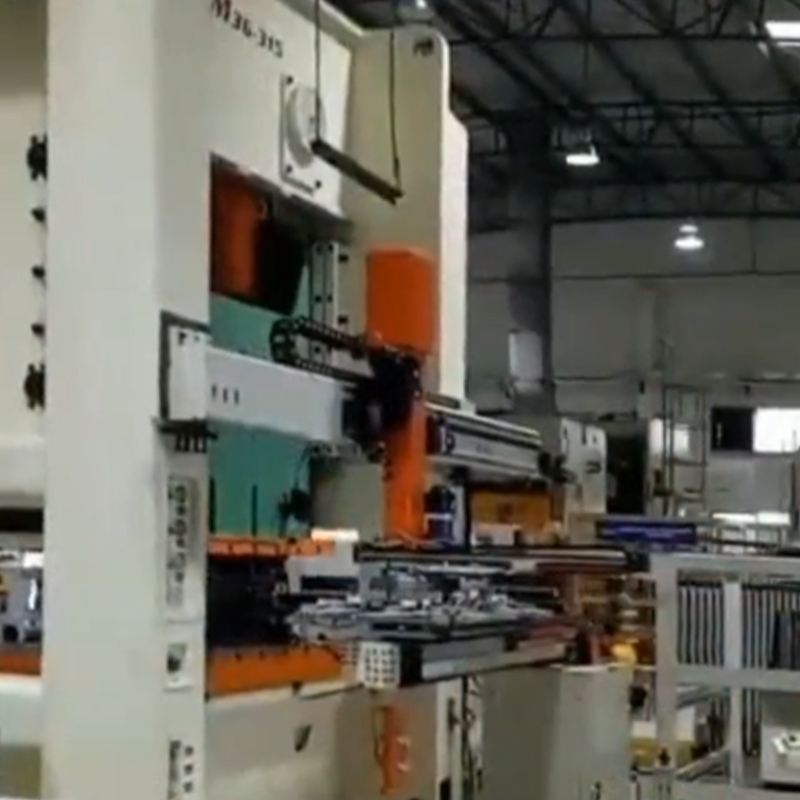
SQS's manufacturing infrastructure supports this integration at the precision level automotive seat stampings require. Wire EDM machines sourced from Japan achieve machining accuracy within 0.002 mm on die features, ensuring that the forming surfaces that determine wall thickness, edge quality, and hole position are held to the tolerances the part design requires. A press fleet spanning 80T to 400T covers the full range of seat frame stamping geometries, from small bracket components to full back frame structures. With over 15 years of experience serving OEM customers and Tier 1 automotive suppliers, and a team of 60 technical staff dedicated to die design, manufacturing, and quality assurance, SQS provides the engineering depth that seat frame stamping programs demand.
For OEM supply inquiries, custom die development, or technical specification review, contact SQS directly.
Previous Post
Metal Stamping Parts for Home Appliances: Materials, Precision & Custom Solutions
Next Post
Draw Ratio & Blank Holder Force in Deep Drawing: Preventing Wrinkling and Cracking
Our Products.
Start Your Business with an OEM Manufacturer Right Here!

Provide global customers with complete turn-key solutions
through
innovation!
QUICK LINKS
CONTACT INFO.
-
 +86-139 1308 8972
 -

-
 No. 118 Yexin Road, Wujiang Economic Development Zone, Suzhou, China
Copyright © Suzhou Shuangqisi Mold Equipment Co., Ltd. All Rights Reserved. Custom Stamping Die Metal Stamping Die Manufacturers
