 English
 Español
 Deutsch
-
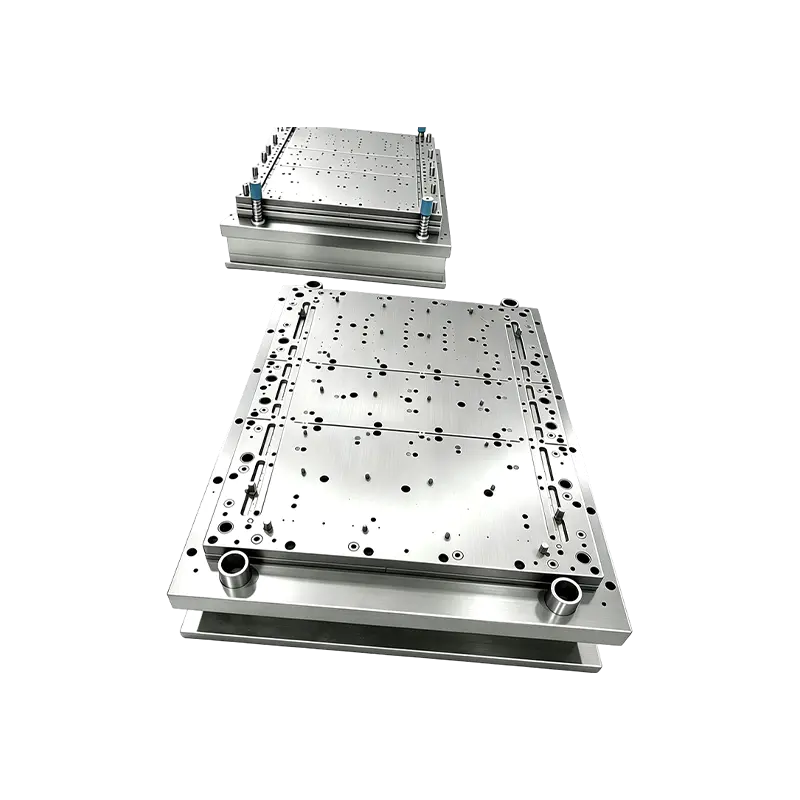
Progressive Stamping Die for Connector & Terminal Parts High Speed Progressive Stamping Die Precision Metal Hardware Stamping Tool mold for Connector Terminal Parts Automotive Components
Progressive Stamping Die for Connector & Termi...
-
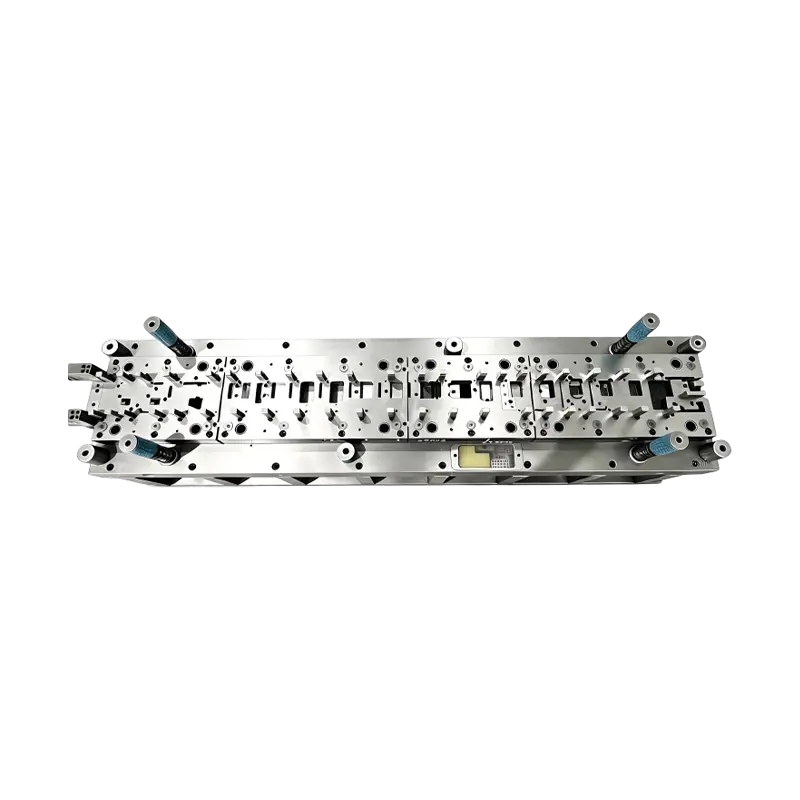
Long-Stroke Multi-Stage Progressive Die Automatic Strip Feed Progressive Die Long Travel Follow on Stamping Tool for Sheet Metal Hardware Press Moulding
Long-Stroke Multi-Stage Progressive DieOur custom ...
-
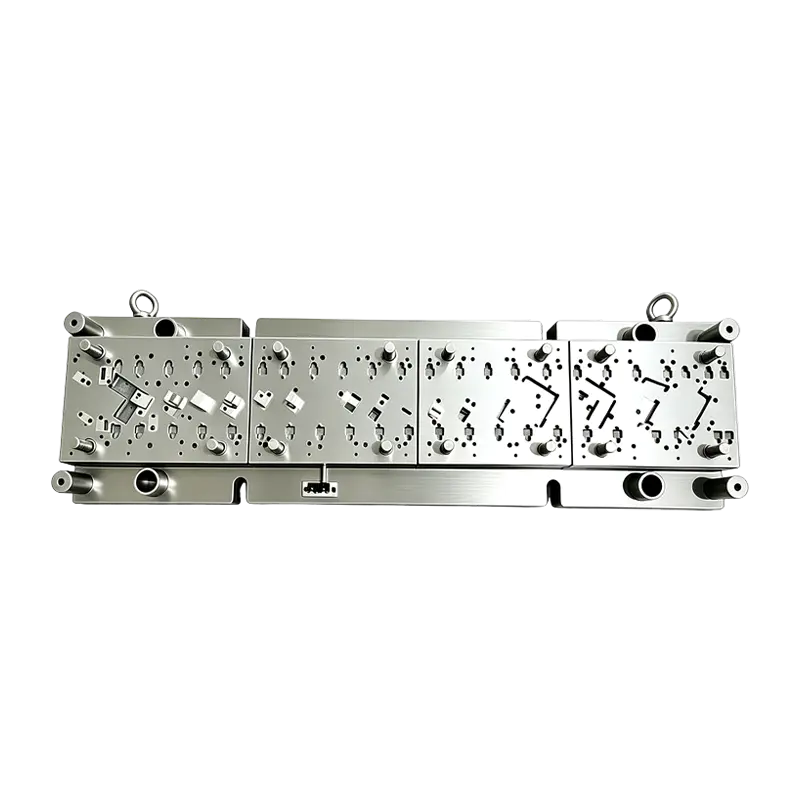
High Speed Progressive Stamping Die Sheet Metal Follow on Press Tool
Multi-operation Metal Stamping Tool for Continuous...
-
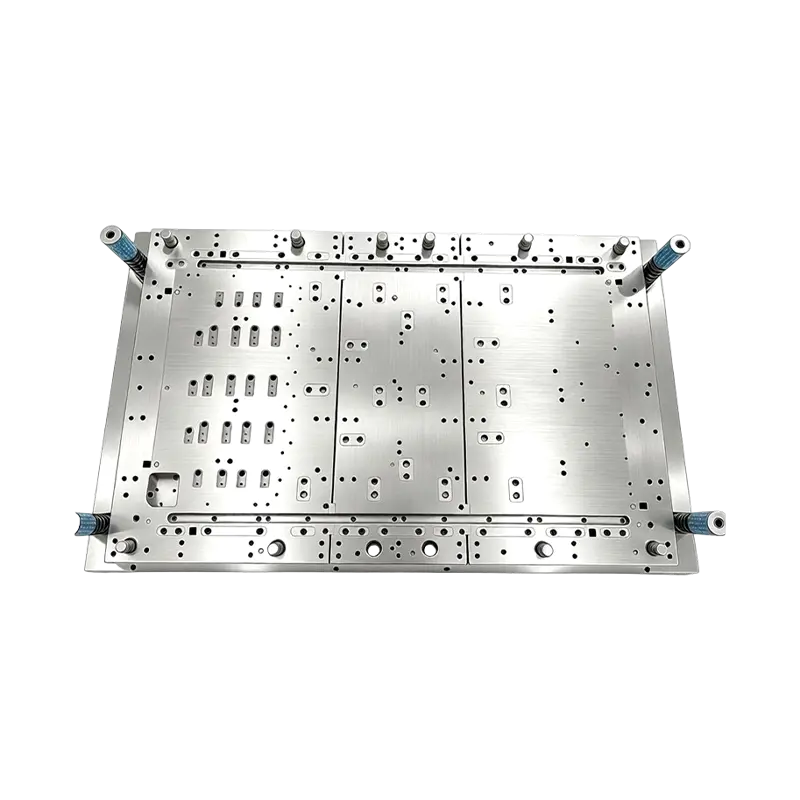
Multi-Station Progressive Stamping Die with Carbide Inserts Custom Multi Station Progressive Stamping Die Carbide Insert Metal Stamping Mold Tool for Equipment Appliances Device Hardware
High Speed Metal Stamping Tool for Precise Equipme...
-
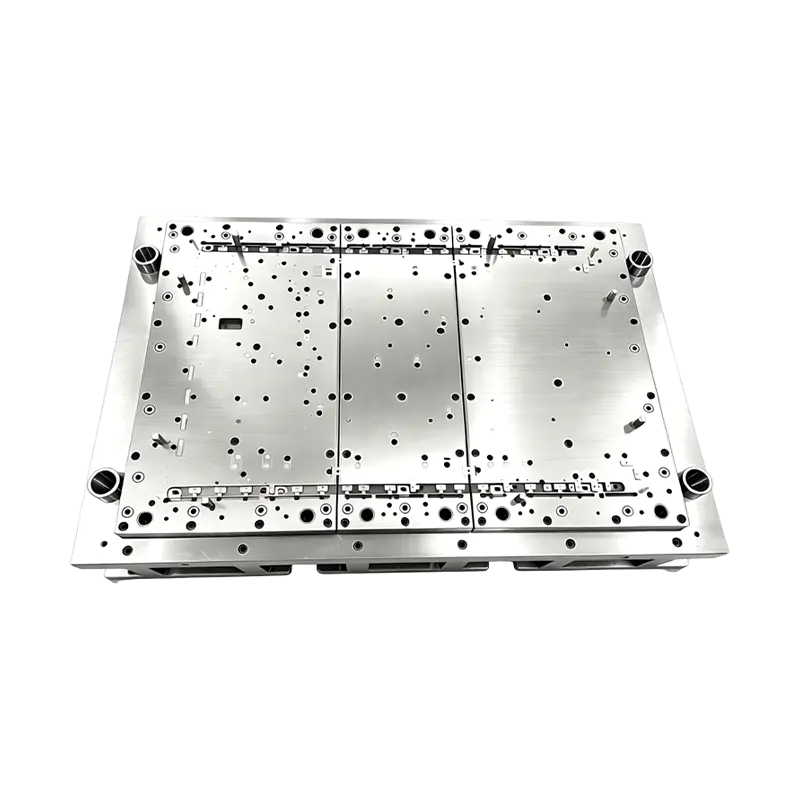
High Precision Stamping Die Multi Station Hardware Progressive Mold Tooling
Precision Metal Stamping Tool for Automotive &...
- E-mail us: [email protected]
- Call us: +86-139 1308 8972

Industry News
Home / News / Industry News / Cost Comparison: Metal Stamping Parts VS Metal Drawing Part Products in 2026
Cost Comparison: Metal Stamping Parts VS Metal Drawing Part Products in 2026
2026-02-25
Content
- 1 Why Cost Comparisons Between These Two Processes Are Often Misleading
- 2 Tooling Investment: Upfront Cost and Amortization Rate
- 3 Material Cost and Utilization Efficiency
- 4 Labor, Cycle Time, and Press Cost Per Part
- 5 Quality Cost, Scrap Rate, and Secondary Operations
- 6 Decision Framework: Which Process Saves More Money in 2026
Why Cost Comparisons Between These Two Processes Are Often Misleading
When manufacturers evaluate metal stamping parts against metal drawing part products, the conversation almost always starts with unit price — and that is precisely where most cost comparisons go wrong. The per-piece price visible on a supplier quotation reflects only one layer of a multi-layered cost structure that includes tooling amortization, material utilization, secondary operations, quality fallout, and lead time implications. A metal stamping part that quotes at $0.45 per piece may carry $85,000 in progressive die tooling that takes 900,000 units to amortize, while a metal drawing part product at $0.78 per piece may require no secondary machining and zero assembly steps because the drawn geometry integrates features that stamping cannot produce in a single operation. Evaluating these two processes accurately in 2026 requires building a total cost of ownership model rather than comparing line-item unit prices in isolation.
This comparison has also grown more complex in 2026 because material price volatility — particularly for cold-rolled steel, stainless, and aluminum — has shifted the relative economics of the two processes in ways that were not present two or three years ago. Deep drawing is a material-intensive process where the blank size is substantially larger than the finished part footprint, meaning that raw material cost fluctuations hit drawn parts harder on a per-piece basis than they hit stamped flat blanks. Understanding where each process sits in the current cost environment requires examining each cost driver individually before synthesizing an overall comparison.
Tooling Investment: Upfront Cost and Amortization Rate
Tooling cost is the largest single variable that separates the economics of metal stamping parts from metal drawing part products at low-to-medium production volumes. A progressive stamping die for a moderately complex bracket or terminal — say, six to eight stations with two piercing and one forming operation — typically requires an investment in the range of $40,000 to $120,000 depending on die size, steel selection, and required tolerances. A deep drawing die set for a shell component of comparable material thickness involves a draw die, a blank holder, a redraw die if multiple draw passes are needed, a trimming die, and often a flanging or ironing die — a complete tool family that commonly totals $60,000 to $200,000 for medium-complexity parts.
The amortization calculation depends entirely on annual volume. Consider the following comparison for a hypothetical part running at three different volume tiers:
| Annual Volume | Stamping Tooling Cost / Unit (5-yr life) | Drawing Tooling Cost / Unit (5-yr life) | Tooling Cost Advantage |
| 50,000 units/yr | $0.32 | $0.52 | Stamping by $0.20/pc |
| 250,000 units/yr | $0.064 | $0.104 | Stamping by $0.04/pc |
| 1,000,000 units/yr | $0.016 | $0.026 | Stamping by $0.01/pc |
The tooling cost advantage of metal stamping parts over metal drawing part products shrinks rapidly as volume increases, because at very high volumes the tooling cost per unit becomes negligible for both processes. The absolute dollar difference matters most at low volumes — which is precisely where many manufacturers make tooling investment decisions — meaning that the tooling cost comparison has its highest practical significance exactly when it is most carefully scrutinized.
Material Cost and Utilization Efficiency
Material cost per finished part is where metal drawing part products consistently show a disadvantage relative to metal stamping parts for geometrically equivalent components. Deep drawing requires a blank diameter that is significantly larger than the finished part diameter — the draw ratio (blank diameter divided by punch diameter) typically ranges from 1.8 to 2.2 for a single-draw operation — meaning that 50% to 60% more metal enters the process than appears in the finished part. Some of that material is redistributed into the wall thickness of the drawn shell rather than becoming scrap, but the trim allowance removed after drawing does become scrap. For a drawn stainless steel housing with a 100mm diameter and 60mm depth, the blank might measure 230mm in diameter, producing a scrap ring with a substantial material content that must be credited back through scrap recovery at a significant discount to raw material cost.
Metal stamping parts, by contrast, can achieve strip layout utilization rates of 70–85% for parts with favorable geometries — meaning that 70–85% of incoming coil weight ends up as finished part. The remaining 15–30% becomes scrap skeleton, which is recycled at a per-kilogram rate that is typically 15–25% of the raw material purchase price. In 2026, with cold-rolled steel prices in the range of $700–$850 per metric ton and stainless at $2,200–$2,800 per metric ton, the scrap recovery gap between high-utilization stamping layouts and less-efficient drawing blanks can add $0.05–$0.25 per piece to the effective material cost of drawn parts compared to stamped equivalents — a meaningful difference at production volumes above 200,000 units per year.
Labor, Cycle Time, and Press Cost Per Part
Metal stamping parts produced on progressive dies typically run at 80–400 strokes per minute, with each stroke producing one finished part. At 200 SPM on an 80-ton press with an operating cost of approximately $60–$90 per hour, the press cost per part is $0.005–$0.0075. Metal drawing part products require multiple press operations — blanking, first draw, redraw if necessary, trimming, and often a separate flanging or piercing operation — each run at 20–60 SPM given the slower forming speeds required to control metal flow in deep drawing. Even if each individual operation runs at 40 SPM, a four-operation drawing sequence consumes four times as much cumulative press time per finished part as a single-hit stamped part, producing a press cost per part that is commonly 4–8× higher than an equivalent stamped component on a per-operation-per-piece basis.
However, this calculation changes materially when the drawn part eliminates secondary operations that the stamped equivalent requires. A drawn housing that integrates a bottom, four walls, and a rim feature in a single part family may replace a stamped assembly of three or four separate components that must be welded or fastened together. When the labor, fixture cost, and quality risk of that assembly operation are included in the cost model for metal stamping parts, the apparent cycle time advantage of stamping can be partially or fully offset by the downstream cost it avoids in drawing.
Quality Cost, Scrap Rate, and Secondary Operations
Quality-related costs affect the two processes differently and are frequently omitted from initial cost comparisons. Metal stamping parts in well-maintained progressive dies running stable materials typically achieve scrap rates below 0.5% during steady-state production. Metal drawing part products are more sensitive to incoming material variation — particularly yield strength variability within a coil — because the draw ratio is set to the nominal material properties, and a batch of material at the upper end of the yield strength range can cause wrinkling or fracture at the same draw ratio that produces good parts with nominal-property material. In-control drawing processes typically run at 1–3% scrap depending on draw severity and material consistency, and the scrap parts are larger and heavier than stamping scrap, making the material cost of quality fallout proportionally higher per rejected piece.
Secondary operations add differently to the cost of each product type. Common secondary costs to account for when building a complete comparison include:
- Deburring: Metal stamping parts with blanked edges frequently require deburring or edge rolling before assembly or use. Drawn parts have smooth, uninterrupted walls with no sheared edges on the side walls, though the trim edge at the rim does require attention.
- Surface treatment: Both part types may require plating, coating, or passivation, but drawn parts with enclosed geometry can create trapping issues in liquid treatment baths that flat stamped parts do not, sometimes requiring drainage holes or specialized racking that adds process cost.
- Assembly elimination: As noted above, drawn parts often eliminate welding, riveting, or fastening steps that stamped assemblies require, and the avoided assembly cost should be credited to the drawing process in a complete comparison.
- Machining: Metal stamping parts can achieve hole locations and profile tolerances in the ±0.05–0.10mm range without secondary machining. Metal drawing part products may require machined threads, precise bore sizing, or flatness correction on the flange face that stamping can achieve in-die, adding $0.10–$0.50 per piece in machining cost for tightly toleranced drawn components.
Decision Framework: Which Process Saves More Money in 2026
Based on the cost drivers analyzed above, the following framework provides a practical guide for determining which process delivers the lower total cost for a given application in 2026 market conditions. Neither metal stamping parts nor metal drawing part products is categorically cheaper — the answer depends on the specific combination of factors below.
| Decision Factor | Favors Metal Stamping Parts | Favors Metal Drawing Part Products |
| Part geometry | Flat or shallow profile, 2D features | 3D shell, enclosed form, deep walls |
| Annual volume | Any volume with simple geometry | Medium to high (offsets tooling cost) |
| Material cost sensitivity | High material cost — better utilization | Lower when drawing eliminates assembly |
| Assembly downstream | Part is one component of a larger assembly | Drawn part replaces multi-piece assembly |
| Tolerance requirements | Tight in-plane tolerances, hole locations | Wall thickness uniformity, seamless enclosure |
The most reliable approach in 2026 is to request concurrent quotations for both processes where the part geometry allows it, specifying that the total cost comparison must include tooling amortization, secondary operations, and scrap rate assumptions rather than unit price alone. Suppliers with genuine experience in both metal stamping parts and metal drawing part products will be able to identify where the cost crossover point lies for a specific part and volume combination — and that analysis, done rigorously, is worth more than any generic cost rule of thumb.
Previous Post
Why Do Electronic Stamping Dies Require Tighter Tolerances Than Home Appliance Stamping Dies?
Next Post
What Is the Difference Between Progressive and Transfer Metal Stamping Dies?
Our Products.
Start Your Business with an OEM Manufacturer Right Here!

Provide global customers with complete turn-key solutions
through
innovation!
QUICK LINKS
CONTACT INFO.
-
 +86-139 1308 8972
 -

-
 No. 118 Yexin Road, Wujiang Economic Development Zone, Suzhou, China
Copyright © Suzhou Shuangqisi Mold Equipment Co., Ltd. All Rights Reserved. Custom Stamping Die Metal Stamping Die Manufacturers
