 English
 Español
 Deutsch
-
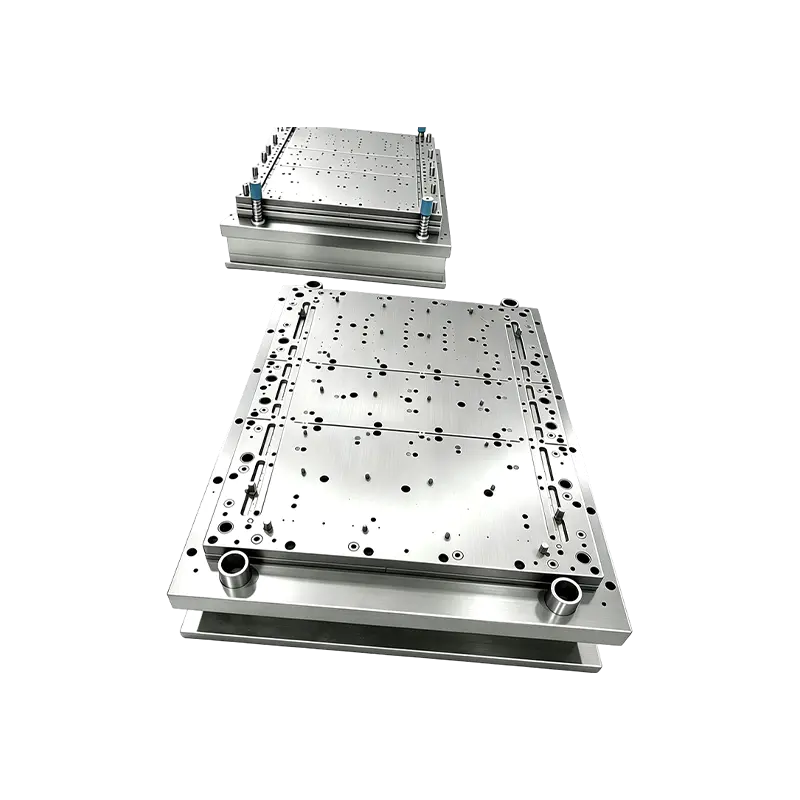
Progressive Stamping Die for Connector & Terminal Parts High Speed Progressive Stamping Die Precision Metal Hardware Stamping Tool mold for Connector Terminal Parts Automotive Components
Progressive Stamping Die for Connector & Termi...
-
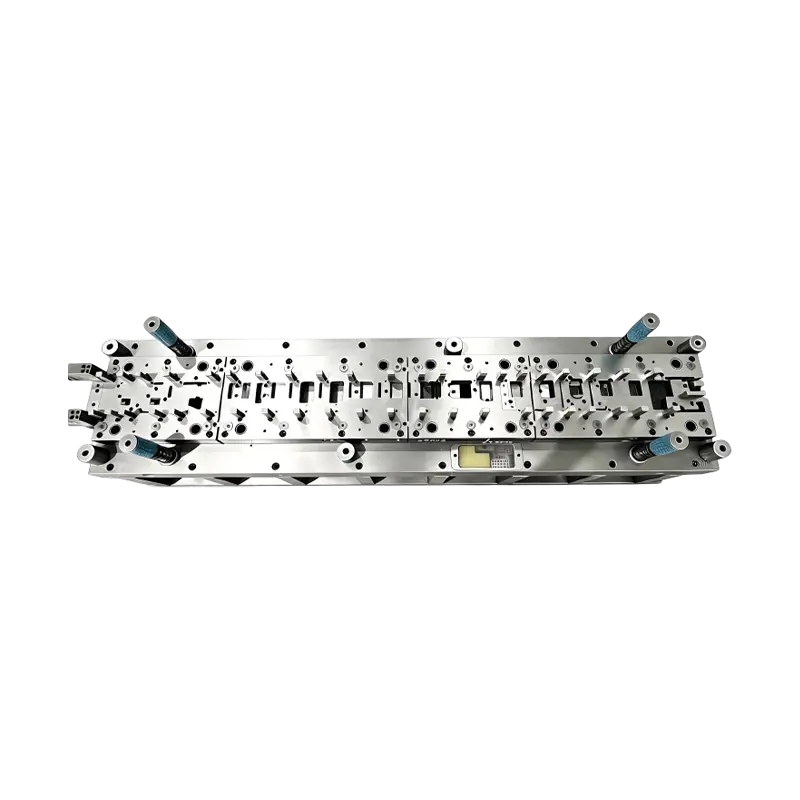
Long-Stroke Multi-Stage Progressive Die Automatic Strip Feed Progressive Die Long Travel Follow on Stamping Tool for Sheet Metal Hardware Press Moulding
Long-Stroke Multi-Stage Progressive DieOur custom ...
-
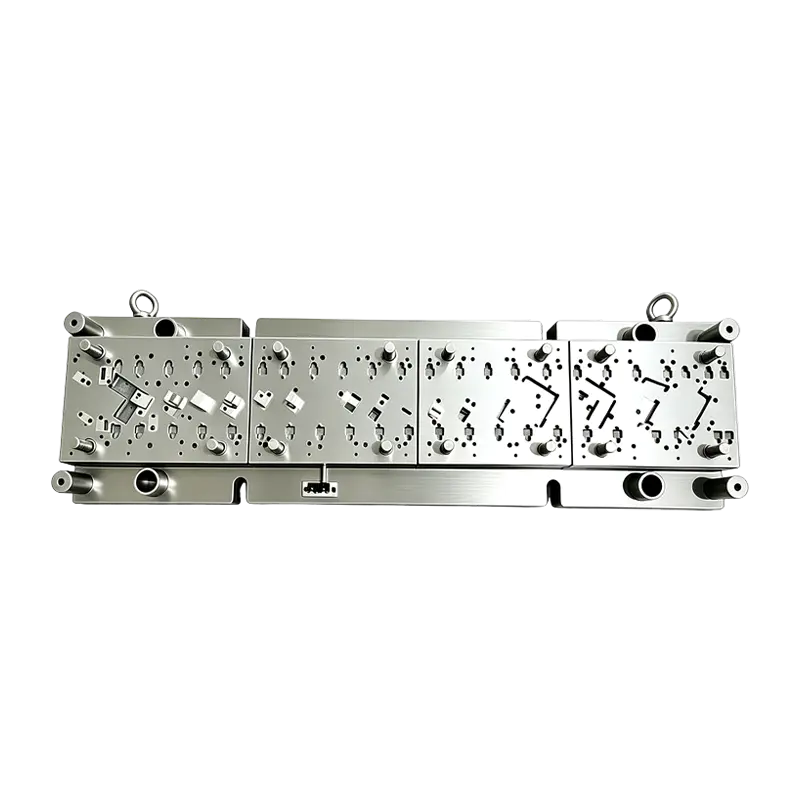
High Speed Progressive Stamping Die Sheet Metal Follow on Press Tool
Multi-operation Metal Stamping Tool for Continuous...
-
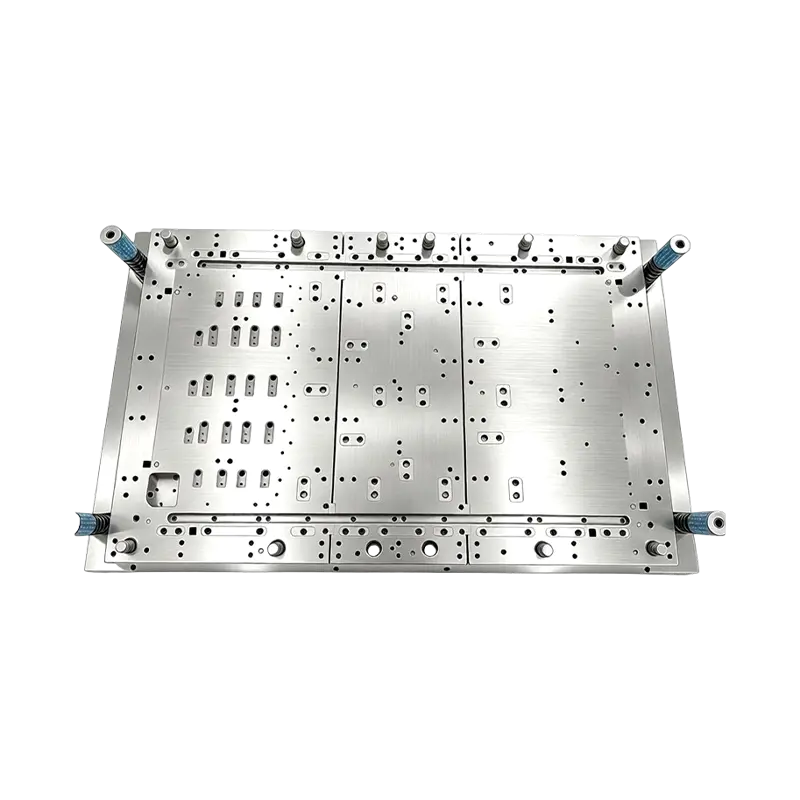
Multi-Station Progressive Stamping Die with Carbide Inserts Custom Multi Station Progressive Stamping Die Carbide Insert Metal Stamping Mold Tool for Equipment Appliances Device Hardware
High Speed Metal Stamping Tool for Precise Equipme...
-
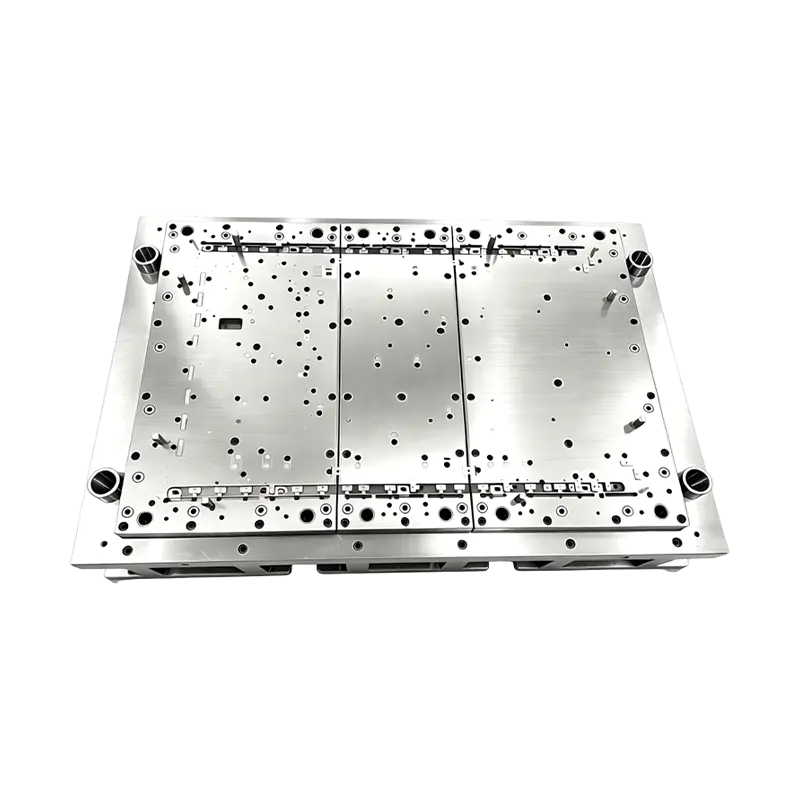
High Precision Stamping Die Multi Station Hardware Progressive Mold Tooling
Precision Metal Stamping Tool for Automotive &...
-
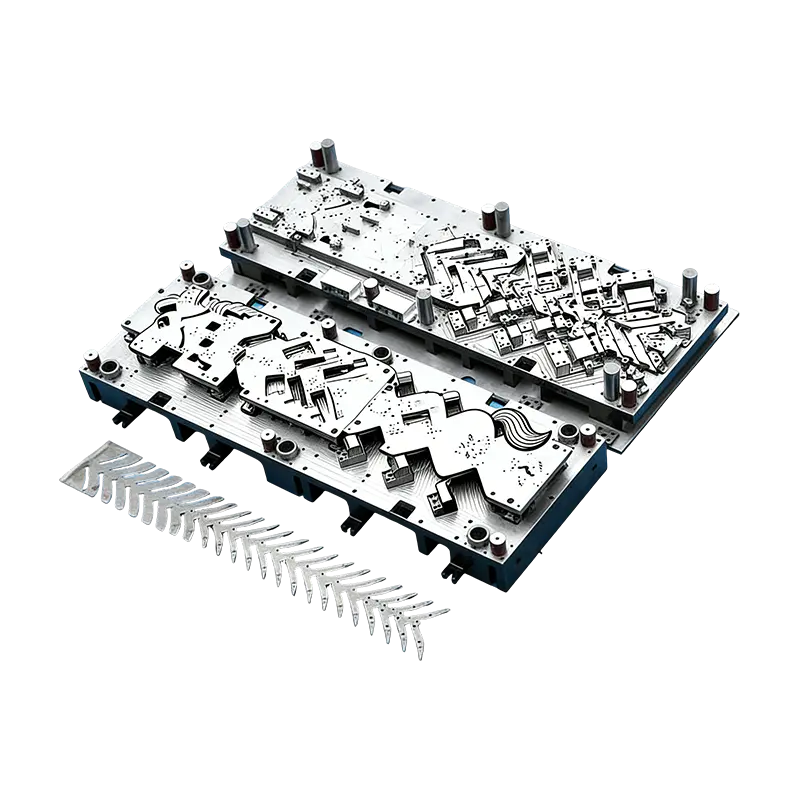
Progressive molds for automotive parts
This Continuous mold for automotive motor housing ...
- E-mail us: [email protected]
- Call us: +86-139 1308 8972

Industry News
Home / News / Industry News / What Is the Difference Between Progressive and Transfer Metal Stamping Dies?
What Is the Difference Between Progressive and Transfer Metal Stamping Dies?
2026-02-25
Content
How Each Die Type Moves Material Through the Press
The most fundamental difference between progressive and transfer metal stamping dies lies in how the workpiece moves from one forming station to the next. In a progressive die, the blank remains attached to the original coil strip throughout the entire forming sequence. The strip advances by a fixed pitch with each press stroke, carrying partially formed parts through successive stations — piercing, lancing, bending, drawing — until the finished part is cut free from the skeleton at the final station. The part is never physically separated from the strip until forming is complete, which means the strip itself acts as the carrier and locating reference for every operation.
Transfer metal stamping dies operate on a fundamentally different principle. A blank is cut from the coil or sheet at the first station and then moved as a free, independent piece from station to station by a mechanical or servo-driven transfer finger system. Because the part is no longer connected to a strip, it can be repositioned, flipped, or reoriented between stations — movements that are geometrically impossible when the workpiece is still attached to a continuous carrier. This distinction in how material is handled is the root cause of almost every other difference between the two die types in terms of capability, cost, and application.
Part Geometry and Forming Complexity
Progressive metal stamping dies are best suited to parts that are relatively flat or shallow in profile. Since the part remains in-strip, the total height of any formed feature is constrained by the need for the strip to continue feeding cleanly through the die without the formed geometry fouling adjacent stations or the die structure itself. For parts with modest draw depth — brackets, terminals, clips, laminations, and thin-section hardware — this constraint rarely matters, and progressive tooling is the natural choice. The strip layout can often be engineered to achieve material utilization rates above 75%, and the absence of a transfer mechanism means fewer mechanical components and a simpler overall system.
Transfer metal stamping dies become necessary when part geometry demands forming in multiple planes, deep drawing on more than one axis, or operations on surfaces that face downward relative to the strip — a configuration impossible to tool in a progressive die. Shell-shaped components, tubular cross-sections, parts with undercut flanges, and deep-drawn housings all fall into this category. Because the blank travels as an individual piece, the transfer die can present it to each station in the optimal orientation, including upside-down or rotated 90° if the forming geometry requires it. This three-dimensional freedom is the primary technical justification for the higher tooling investment that transfer dies require.
Speed, Throughput, and Production Volume
Progressive metal stamping dies consistently outperform transfer dies in strokes per minute. Because there is no transfer mechanism to synchronize — no fingers to extend, grip, move, and retract between strokes — progressive dies can operate at speeds of 200 to 1,500 SPM depending on part complexity and press capability. For high-volume, small-to-medium part production measured in millions of pieces per year, this speed advantage translates into a decisive throughput benefit that is difficult for any other stamping method to match.
Transfer dies are typically limited to 30–150 SPM by the kinematics of the transfer system, which must complete its full motion cycle — extending into the die, gripping the part, retracting, advancing to the next station, and releasing — within the window allowed by press ram motion. Servo transfer systems have improved this significantly compared to mechanical cam-driven fingers, but the fundamental cycle time constraint remains. For parts that genuinely require transfer die capability, this speed difference is an accepted trade-off rather than a flaw, since progressive tooling simply cannot produce those geometries at any production rate.
Tooling Cost, Maintenance, and Setup Comparison
Tooling investment and ongoing maintenance costs differ substantially between the two die types, and understanding these differences is essential for making a sound sourcing decision.
| Factor | Progressive Metal Stamping Dies | Transfer Metal Stamping Dies |
| Initial tooling cost | Moderate to high | High to very high |
| Setup time per run | Shorter — single die set | Longer — transfer system must be timed and adjusted |
| Maintenance complexity | Moderate — punch/die sharpening, pilot wear | Higher — transfer fingers, rails, and timing add wear points |
| Die change flexibility | Limited — stations are interdependent | Higher — individual station dies can be swapped independently |
| Minimum viable volume | High (amortizes cost over volume) | Medium to high |
One maintenance advantage that transfer metal stamping dies hold over progressive tooling is the ability to service or replace individual station dies without rebuilding the entire tool. Since each station die is a discrete unit, a worn draw station can be pulled and reground while the others remain on the press. In a progressive die, all stations are integrated into a single compound assembly, meaning that any maintenance requiring die disassembly affects the entire tool and the entire production run.
Material Utilization and Scrap Rate Differences
Material utilization is another area where the two die types diverge meaningfully. Progressive metal stamping dies produce a continuous scrap skeleton — the remaining strip after blanks or finished parts are removed — which must be handled, chopped, and disposed of or recycled. Depending on part geometry and strip layout efficiency, the scrap skeleton can represent 20–40% of total coil weight consumed. Sophisticated strip layouts with angled blanking, interleaved opposite-hand parts, or multi-row configurations can reduce this figure significantly, but the skeleton is an unavoidable byproduct of in-strip processing.
Transfer metal stamping dies cut the blank to near-net shape at the first station, so the scrap generated at that point can be optimized independently of the forming sequence that follows. For large parts with complex contours — where a progressive strip layout would require a very wide scrap bridge to maintain strip integrity — transfer blanking can achieve materially better utilization by nesting blanks tightly and running a dedicated high-efficiency blanking operation ahead of the transfer line. The scrap from subsequent forming stations is typically minimal, consisting only of piercing slugs and trim offal rather than a continuous skeleton.
Choosing the Right Die Type for Your Application
Selecting between progressive and transfer metal stamping dies should be driven by a structured evaluation of part requirements rather than cost alone. The following criteria provide a practical decision framework:
- Part geometry: If the part can be fully formed while remaining flat in a strip — all features accessible from above or below without repositioning — progressive tooling is appropriate. If the part requires forming on multiple faces, deep drawing beyond a depth-to-diameter ratio of approximately 1:1, or operations on the underside of a flange, transfer tooling is required.
- Production volume: Very high annual volumes (typically above 500,000 pieces per year for mid-complexity parts) favor progressive dies because the speed advantage reduces the per-piece press time cost significantly. Transfer dies are more economical for moderate volumes where part geometry makes progressive tooling impossible.
- Part size: Large-format parts — those exceeding roughly 400mm in any dimension — become impractical in progressive dies because the resulting die length and coil width requirements exceed typical press and coil handling capacities. Transfer lines handle large parts more practically by using individual station dies sized to the part rather than a single elongated progressive tool.
- Dimensional accuracy requirements: Progressive dies locate the part via pilot pins engaging holes in the strip, while transfer dies locate individual blanks via part features or nest tooling at each station. For parts where inter-feature position tolerance is tighter than ±0.05mm, the locating strategy of each die type must be carefully evaluated against the tolerance stack-up it will generate.
- Future design flexibility: If the part design is expected to change during the product lifecycle, transfer tooling offers greater adaptability since individual station dies can be modified independently. Changing a feature in a progressive die often requires re-engineering multiple interdependent stations simultaneously.
In practice, the decision is rarely made in isolation. An experienced die manufacturer will evaluate the part drawing, the annual volume forecast, the press resources available, and the downstream assembly requirements together before recommending a tooling strategy. Both progressive and transfer metal stamping dies represent mature, well-understood technologies — the key is matching the correct technology to the specific demands of the application rather than defaulting to whichever approach is most familiar.

Previous Post
Cost Comparison: Metal Stamping Parts VS Metal Drawing Part Products in 2026
Next Post
The automotive stamping die industry is ushering in a new round of technological upgrades.
Our Products.
Start Your Business with an OEM Manufacturer Right Here!

Provide global customers with complete turn-key solutions
through
innovation!
QUICK LINKS
CONTACT INFO.
-
 +86-139 1308 8972
 -

-
 No. 118 Yexin Road, Wujiang Economic Development Zone, Suzhou, China
Copyright © Suzhou Shuangqisi Mold Equipment Co., Ltd. All Rights Reserved. Custom Stamping Die Metal Stamping Die Manufacturers
