 English
 Español
 Deutsch
-
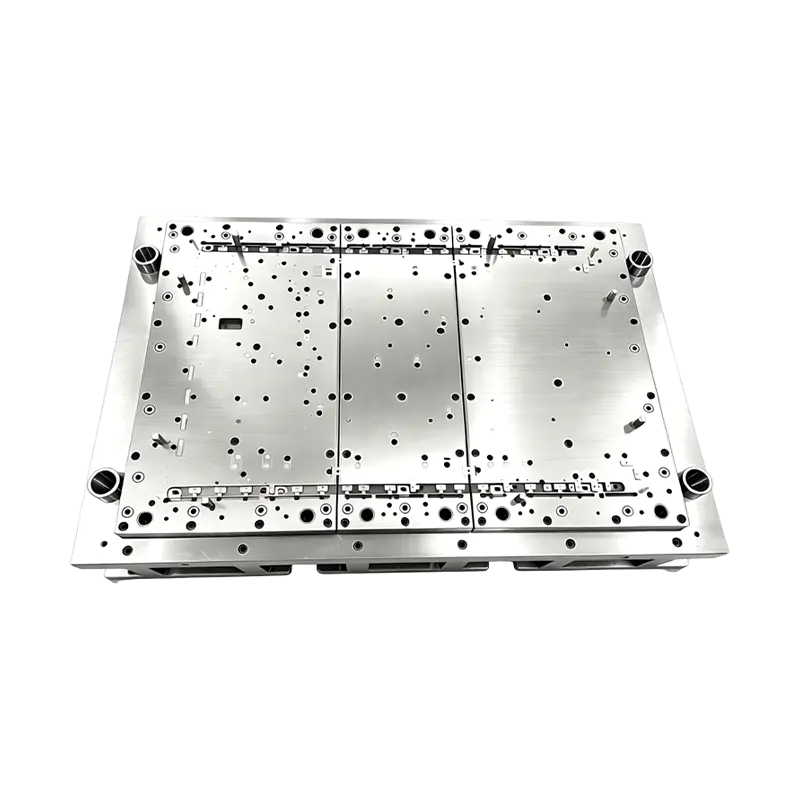
High Precision Stamping Die Multi Station Hardware Progressive Mold Tooling
Precision Metal Stamping Tool for Automotive &...
-
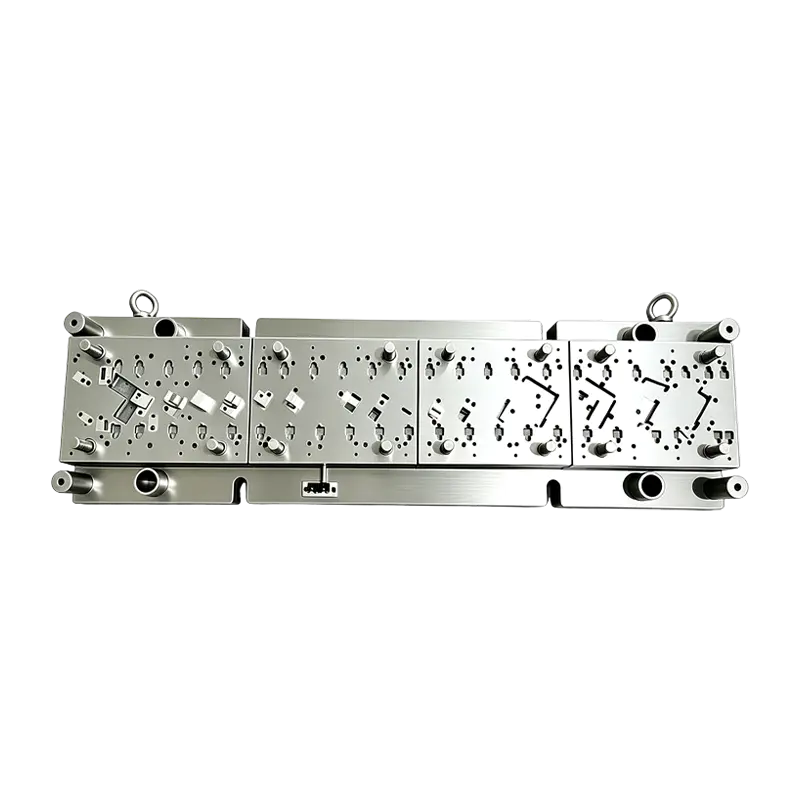
High Speed Progressive Stamping Die Sheet Metal Follow on Press Tool
Multi-operation Metal Stamping Tool for Continuous...
-
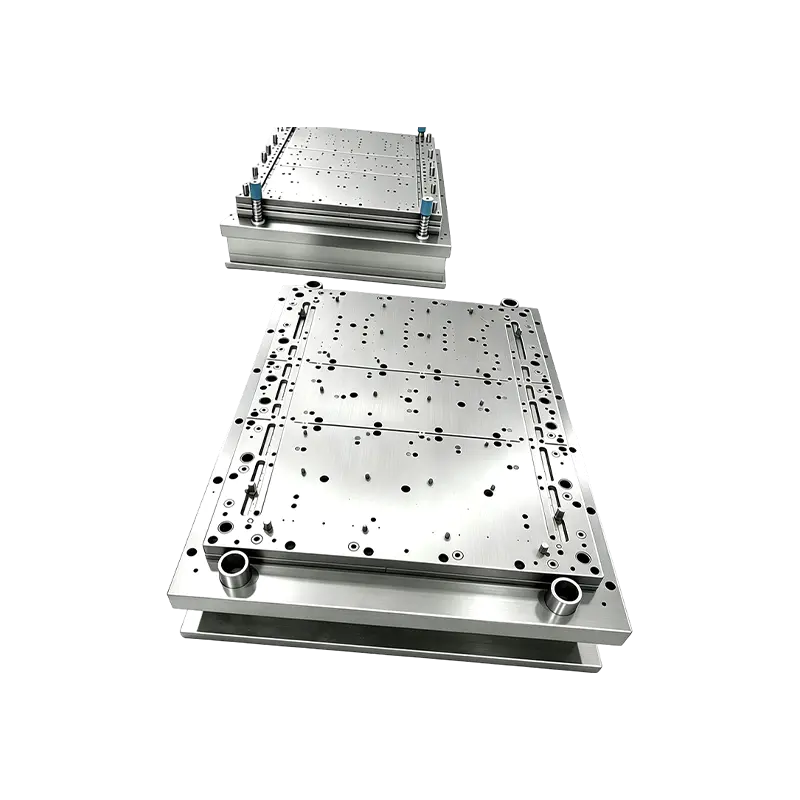
Progressive Stamping Die for Connector & Terminal Parts High Speed Progressive Stamping Die Precision Metal Hardware Stamping Tool mold for Connector Terminal Parts Automotive Components
Progressive Stamping Die for Connector & Termi...
-

Deep drawing mold for front and rear wheels of two-wheeled electric vehicles
This Deep drawing mold for front and rear wheels o...
-
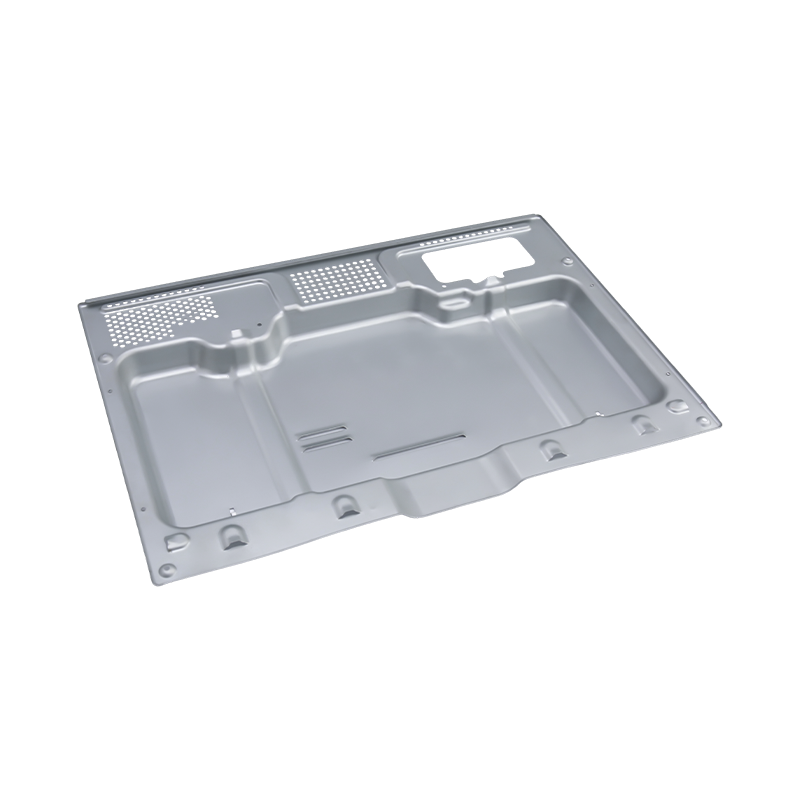
High-end oven stamping parts
Our High-end oven stamping parts are precision-man...
-
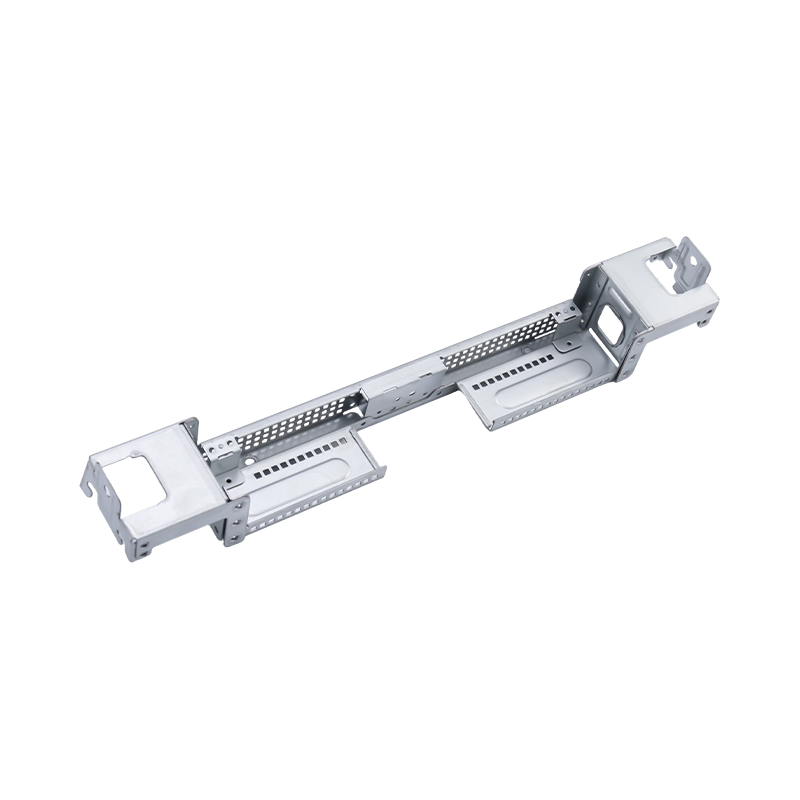
High-end large computer stamping parts
Our High-end large computer stamping parts are pre...
- E-mail us: [email protected]
- Call us: +86-139 1308 8972

Industry News
Home / News / Industry News / Lightweight, High-Precision: The Deep Drawing Die Strategies Driving EV Body Panel Innovation
Lightweight, High-Precision: The Deep Drawing Die Strategies Driving EV Body Panel Innovation
2026-05-07
Content
- 1 What Makes Automotive Deep Drawing Dies Different from Standard Tooling
- 2 Aluminum Alloy Formability and the Role of the Aluminum Melting Point in Process Design
- 3 EV-Specific Die Design: Deep Drawing Ratios, Battery Casings, and Lightweighting
- 4 Blank Holder Force Control: Preventing Wrinkling and Cracking Simultaneously
- 5 Simulation-Driven Die Development and Intelligent Monitoring in Mass Production
What Makes Automotive Deep Drawing Dies Different from Standard Tooling
Deep drawing dies used in automotive and electric vehicle manufacturing are not interchangeable with general-purpose sheet metal tooling. They are purpose-engineered systems composed of four primary components — punches, dies, blank holders, and die sets — each optimized to work in concert under extreme forming loads. In a typical automotive stamping press, the punch descends into the die cavity while the blank holder applies controlled downward pressure on the sheet flange, guiding metal flow into the cavity without wrinkling or tearing. The die set provides the rigid structural frame that maintains alignment under cyclic loads that can exceed several hundred tons per stroke.
What distinguishes automotive-grade deep drawing dies is the precision tolerance demanded throughout the entire tool. Dimensional accuracy is typically held to ±0.02 mm across critical forming surfaces, a requirement driven by the fact that cumulative deviations across a body panel — a door outer panel, for instance — translate directly into visible surface defects or assembly gaps that affect both aesthetics and structural fit. Surface finish on punch and die radii is equally critical: an Ra value of ≤0.05 μm (near mirror-quality) minimizes friction-induced thinning and scoring, particularly when processing high-strength or lightweight alloys.
Aluminum Alloy Formability and the Role of the Aluminum Melting Point in Process Design
Aluminum alloy has become the dominant lightweight material for both traditional automotive body panels and EV structural components, driven by its favorable strength-to-weight ratio, corrosion resistance, and recyclability. However, aluminum presents unique challenges in deep drawing that are directly linked to its material properties — including its thermal behavior relative to the aluminum melting point.
Pure aluminum melts at approximately 660 °C, but the aluminum alloys used in automotive stamping — primarily 5xxx (Al-Mg) and 6xxx (Al-Mg-Si) series — have melting ranges starting slightly lower depending on alloy composition. While the aluminum melting point itself is not directly reached during cold stamping, it is highly relevant to two process-adjacent areas: warm forming and die cooling management. In warm forming of aluminum, blanks are heated to 200–300 °C (a carefully selected fraction of the melting point) to increase ductility and reduce springback, enabling the production of complex geometries that would crack under ambient-temperature forming conditions. Die designers must account for thermal expansion at these temperatures, recalibrating clearances and blank holder force parameters accordingly.
Even in conventional cold deep drawing, frictional heat generated at the punch-blank and die-blank interfaces can elevate local surface temperatures significantly. For aluminum alloys, which have a relatively low melting point compared to steel, excessive localized heating accelerates galling — the adhesive transfer of aluminum onto die surfaces — which degrades surface finish, increases forming forces, and shortens tool life. This makes lubrication strategy and die surface coating selection especially important when processing aluminum alloy sheets.
Common Automotive Aluminum Alloys and Their Forming Characteristics
| Alloy Series | Typical Grade | Melting Range (°C) | Key Application |
|---|---|---|---|
| 5xxx (Al-Mg) | 5052, 5182 | 607–649 | Hood inners, door inners, EV enclosures |
| 6xxx (Al-Mg-Si) | 6016, 6111 | 610–655 | Outer body panels, structural closures |
| Mg-Al (Magnesium-Aluminum) | AZ31, AM60 | 470–630 | EV battery casings, instrument panels |
EV-Specific Die Design: Deep Drawing Ratios, Battery Casings, and Lightweighting
Electric vehicle manufacturing places demands on deep drawing dies that go beyond what traditional automotive stamping requires. The most technically demanding application is the formation of magnesium-aluminum alloy battery casings — large, deep, structurally complex enclosures that protect battery cell arrays while contributing to the vehicle's overall weight budget. These components require deep drawing ratios exceeding 2.5:1 (the ratio of blank diameter to punch diameter), which pushes the material to its ductility limits and demands exceptional die engineering to avoid flange cracking or excessive wall thinning.
Minimizing material thinning across the drawn wall is critical for battery casings because wall thickness uniformity directly affects structural rigidity and crash performance. Die designers address this through several coordinated strategies: optimizing punch nose radius to distribute strain more evenly, implementing variable blank holder force (BHF) profiles that increase pressure progressively as the draw depth increases, and applying multi-stage drawing sequences for particularly deep geometries rather than attempting single-operation forming.
The shift toward lightweighting has also driven the adoption of modular die structures in EV programs. Rather than machining a monolithic die block, modular designs use interchangeable inserts for high-wear zones such as die entry radii and punch corners. This approach reduces tooling cost per vehicle program by 20–35% in high-volume scenarios, since worn inserts can be replaced without scrapping the entire die set. Modular dies also enable faster adaptation when design iterations occur during the EV development cycle, which tends to move faster than traditional automotive programs.
Blank Holder Force Control: Preventing Wrinkling and Cracking Simultaneously
Blank holder force is the single most influential process variable in deep drawing, and its correct calibration is what separates a stable production process from one prone to scrap. Too little BHF allows the flange to buckle under compressive circumferential stress, producing wrinkles that cannot be flattened in subsequent operations. Too much BHF prevents metal from flowing into the die cavity, causing tensile fracture in the wall — typically at the punch radius, where material is thinnest.
For aluminum alloy sheets, the acceptable BHF window is narrower than for low-carbon steel because aluminum has a lower strain hardening exponent and is more sensitive to localized thinning. Modern automotive deep drawing dies address this with hydraulic or servo-controlled blank holders that can dynamically adjust pressure in real time based on feedback from load cells embedded in the die structure. This closed-loop control is especially valuable when drawing magnesium-aluminum alloy components at elevated temperatures, where material flow stress changes continuously as the blank cools during the stroke.
The following factors must be balanced when setting blank holder parameters for a new deep drawing operation:
- Material yield strength and elongation: Higher-strength alloys require greater BHF to prevent wrinkling but are simultaneously more vulnerable to cracking, demanding tighter control bandwidth.
- Blank geometry and draw depth: Non-circular blanks — common in door panel and battery casing applications — develop non-uniform flange stress distributions, requiring segmented or variable-geometry blank holders.
- Lubrication film thickness: Thicker lubricant films reduce friction and lower the BHF required to prevent galling, but excessive lubrication can cause hydroplaning effects that destabilize metal flow.
- Press stroke speed: Higher stamping speeds increase strain rates, which affects aluminum's flow stress and narrows the safe BHF range — a critical consideration when scaling from prototype to mass production press lines.
Simulation-Driven Die Development and Intelligent Monitoring in Mass Production
Modern automotive die development no longer relies on physical tryout alone. Finite element analysis (FEA)-based forming simulation — using software platforms such as AutoForm or Dynaform — allows die engineers to virtually test forming conditions before a single piece of tool steel is cut. Simulation accurately predicts thinning distribution, wrinkle risk zones, springback magnitude, and forming force requirements, enabling designers to optimize punch geometry, die entry radii, and BHF profiles computationally. For aluminum alloy components with complex curvature, simulation can reduce physical tryout iterations by 40–60%, compressing die development timelines significantly.
Once dies enter mass production, intelligent monitoring systems maintain process stability across thousands of strokes per shift. Acoustic emission sensors detect the onset of galling or surface scoring before it becomes visible. Strain gauge arrays in the die structure track forming force in real time, flagging deviations that indicate blank material variation or lubricant breakdown. Vision systems perform 100% optical inspection of drawn parts immediately after ejection, measuring critical dimensions against CAD nominal values and automatically flagging out-of-tolerance parts for removal before they reach downstream assembly.
This integration of simulation and in-press monitoring reflects a broader industry transition: deep drawing dies are no longer passive tooling but active components of a data-driven manufacturing system. For automotive and EV manufacturers committed to zero-defect production targets, investing in simulation-validated die designs and sensor-equipped production tooling is not a premium option — it is a competitive baseline requirement as the industry accelerates its shift toward lightweighting with advanced aluminum alloy materials.
Previous Post
Car Seat Stamping Parts: Quality & Fit Guide
Next Post
Metal Stamping Parts: Types & Applications
Our Products.
Start Your Business with an OEM Manufacturer Right Here!

Provide global customers with complete turn-key solutions
through
innovation!
QUICK LINKS
CONTACT INFO.
-
 +86-139 1308 8972
 -

-
 No. 118 Yexin Road, Wujiang Economic Development Zone, Suzhou, China
Copyright © Suzhou Shuangqisi Mold Equipment Co., Ltd. All Rights Reserved. Custom Stamping Die Metal Stamping Die Manufacturers
