 English
 Español
 Deutsch
-

Deep drawing mold for front and rear wheels of two-wheeled electric vehicles
This Deep drawing mold for front and rear wheels o...
-
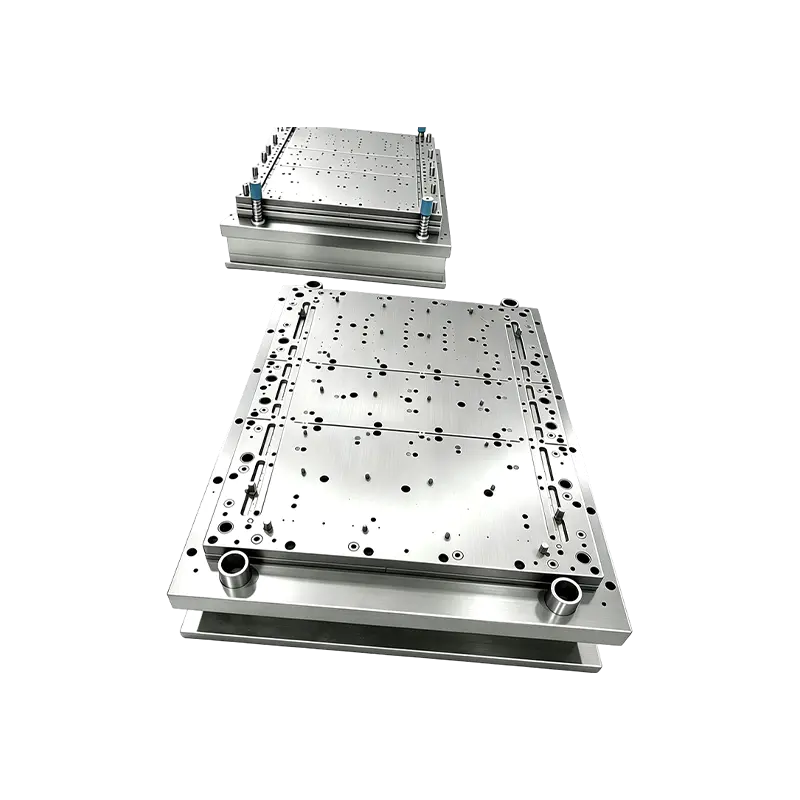
Progressive Stamping Die for Connector & Terminal Parts High Speed Progressive Stamping Die Precision Metal Hardware Stamping Tool mold for Connector Terminal Parts Automotive Components
Progressive Stamping Die for Connector & Termi...
-
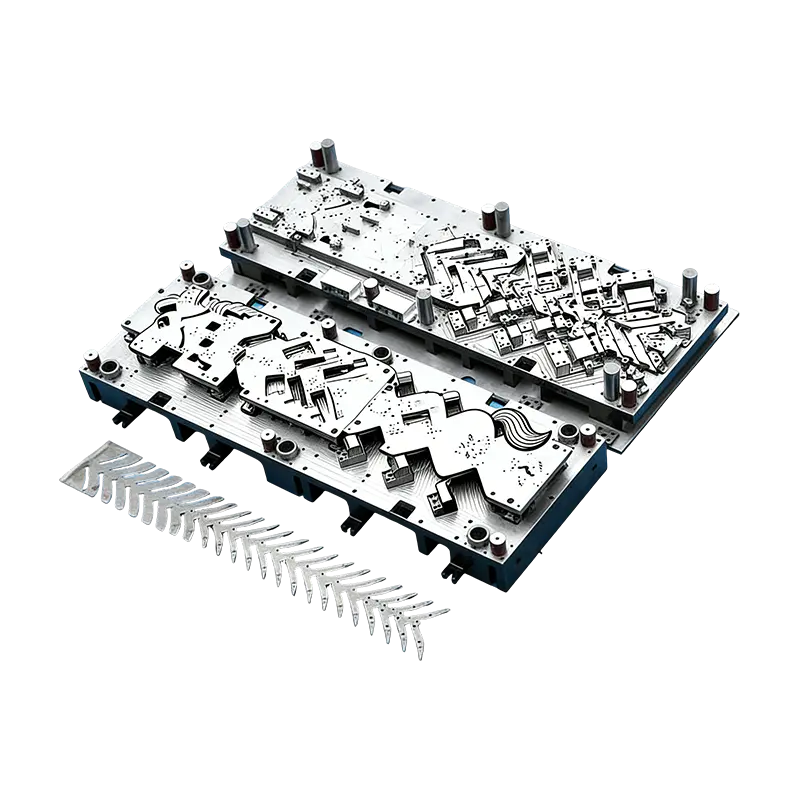
Progressive molds for automotive parts
This Continuous mold for automotive motor housing ...
-
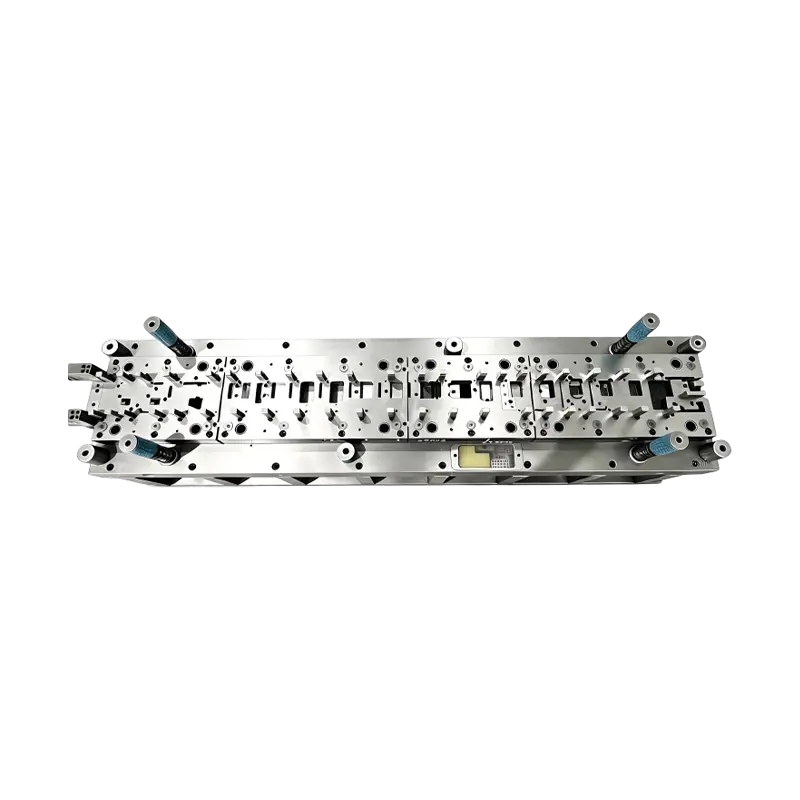
Long-Stroke Multi-Stage Progressive Die Automatic Strip Feed Progressive Die Long Travel Follow on Stamping Tool for Sheet Metal Hardware Press Moulding
Long-Stroke Multi-Stage Progressive DieOur custom ...
-
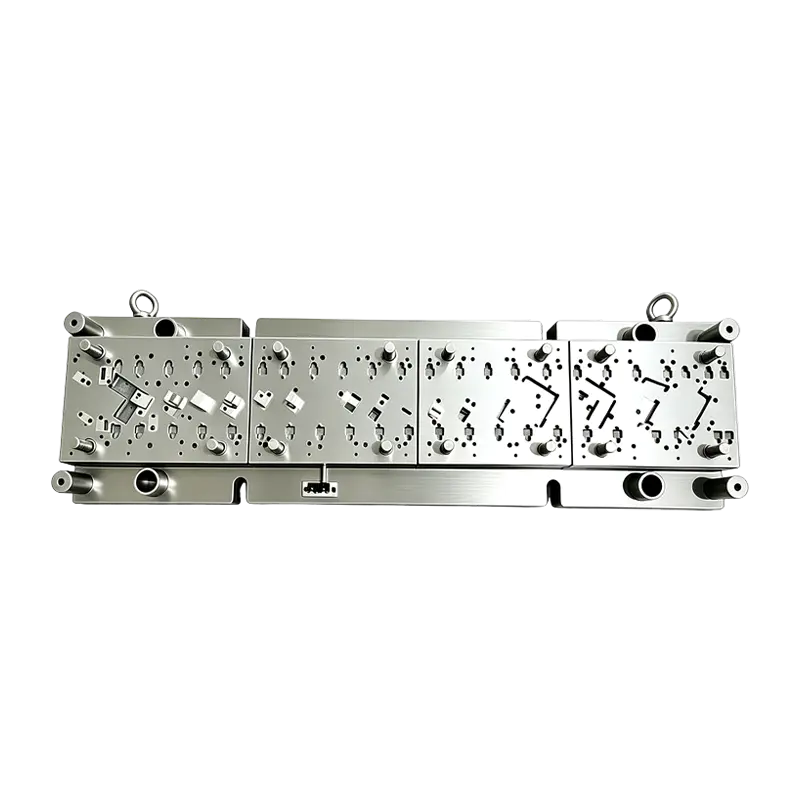
High Speed Progressive Stamping Die Sheet Metal Follow on Press Tool
Multi-operation Metal Stamping Tool for Continuous...
-
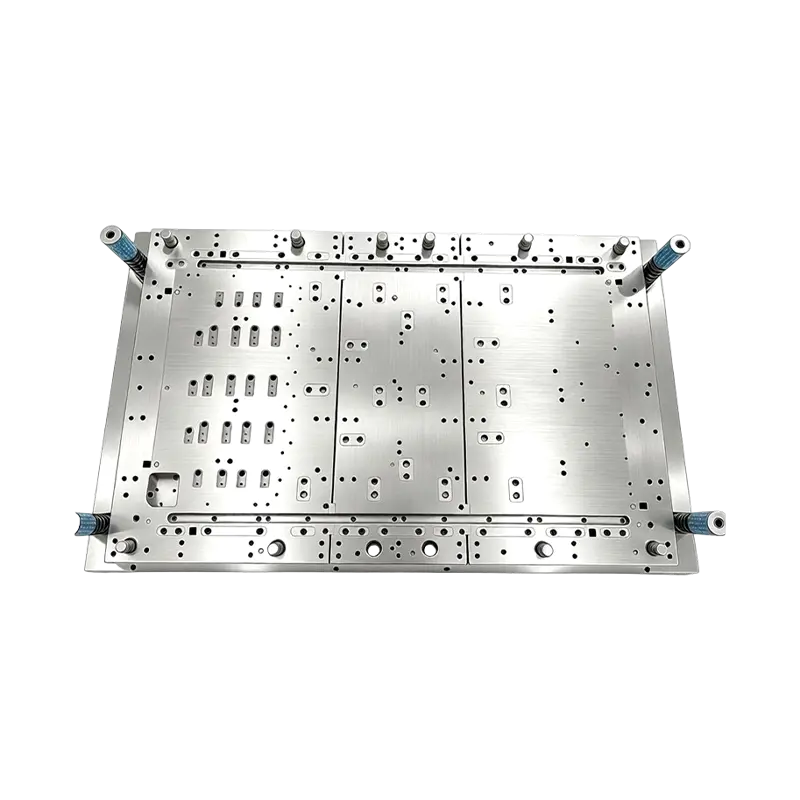
Multi-Station Progressive Stamping Die with Carbide Inserts Custom Multi Station Progressive Stamping Die Carbide Insert Metal Stamping Mold Tool for Equipment Appliances Device Hardware
High Speed Metal Stamping Tool for Precise Equipme...
- E-mail us: [email protected]
- Call us: +86-139 1308 8972

Industry News
Types of Stamping Dies: Progressive, Transfer & Deep Drawing Guide
2026-07-16
Content
The Main Types of Stamping Dies
Most metal stamping projects fall into one of five die categories: progressive dies, transfer dies, compound dies, single-station (simple) dies, and deep drawing dies. The right choice depends on part complexity, production volume, and how many forming operations a part needs — not on which die type sounds most advanced. Understanding what separates them helps buyers spec a project correctly before quoting, rather than discovering a mismatch after tooling is already cut.
Progressive Dies
A progressive die runs a metal strip through a sequence of stations inside a single die set, with each station performing one operation — piercing, bending, forming, or cutoff — while the strip advances automatically between stations. The part is only fully formed once it reaches the last station, but because every station fires on every press stroke, cycle times stay short even for complex geometries.
This structure suits high-volume production of small to mid-sized parts, such as connectors, brackets, and precision electronic components, where consistent dimensional accuracy across millions of cycles matters more than tooling cost. The tradeoff is a longer design and build lead time, since strip layout and station sequencing have to be engineered before the first sample is cut.
Transfer Dies
Transfer dies also perform multiple operations in sequence, but instead of a continuous strip, individual blanks are physically moved — typically by a mechanical or robotic transfer system — from station to station. This separation from the strip allows transfer dies to handle larger, heavier, or more three-dimensional parts than a progressive die strip can support, such as automotive structural components or housings.
Because material handling is decoupled from the die itself, transfer dies offer more flexibility for part geometry, but the added transfer mechanism increases both tooling investment and cycle time compared with a progressive die running the same number of stations.
Compound and Single-Station Dies
Compound dies perform two or more operations — most commonly piercing and blanking — in a single press stroke at one station, producing a finished flat part in one hit. Single-station (simple) dies perform just one operation per stroke, such as a single blanking or bending pass, and typically require the part to be repositioned manually or mechanically for the next operation.
Both are lower-cost, faster-to-build options that make sense for prototyping, low-to-medium volume runs, or simple part geometries where the tooling investment of a progressive or transfer die isn't justified by the order size.
Deep Drawing Dies
Deep drawing dies form flat sheet metal into hollow, cup-shaped, or complex three-dimensional geometries by pulling the material through a die cavity with a punch, rather than cutting or bending it. This process is central to producing round or contoured components such as motor housings, battery enclosures, and wheel-related parts common in automotive and electric vehicle deep drawing dies, where consistent wall thickness and shape retention under load are critical.
Deep drawing is technically demanding: material flow, blank holder force, and lubrication all have to be tuned together to avoid tearing, wrinkling, or excessive thinning, which is why die design experience with the specific metal — steel, aluminum alloy, or coated stock — matters as much as the press tonnage available.

Dies for Precision Electronic Components
Electronic stamping applications add a different set of constraints on top of the die types above: parts are often thinner, smaller, and produced at very high volumes, with tolerances measured in microns rather than millimeters. Terminals, connector pins, shielding cans, and micro-brackets typically run on progressive dies built with tighter station clearances and finer punch geometry to prevent burr formation on delicate features.
Because electronic stamping dies often feed directly into automated assembly lines, dimensional repeatability from the first part to the millionth matters as much as the initial sample quality — a die that drifts slowly out of tolerance over a production run creates downstream assembly failures that are expensive to trace back to their source.
Comparing Die Types at a Glance
| Die Type | Best For | Typical Volume |
|---|---|---|
| Progressive Die | Small-to-mid parts, multi-step forming | High volume |
| Transfer Die | Larger or 3D-shaped parts | Medium to high volume |
| Compound / Single-Station Die | Simple flat parts, prototyping | Low to medium volume |
| Deep Drawing Die | Hollow or contoured 3D parts | Medium to high volume |
Choosing the Right Die for Your Project
In practice, most production programs end up combining die types across a part's life cycle — a compound die for early samples, followed by a progressive or transfer die once volumes justify the investment. Getting this sequencing right up front, with a manufacturer experienced across the full range of stamping dies, avoids paying twice for tooling that has to be redesigned as a project scales from prototype to mass production.
Previous Post
Automatic Riveting Mold for Large Machine Base Assembly
Next Post
Precision Metal Components: Design, Materials & Applications
Our Products.
Start Your Business with an OEM Manufacturer Right Here!

Provide global customers with complete turn-key solutions
through
innovation!
QUICK LINKS
CONTACT INFO.
-
 +86-139 1308 8972
 -

-
 No. 118 Yexin Road, Wujiang Economic Development Zone, Suzhou, China
Copyright © Suzhou Shuangqisi Mold Equipment Co., Ltd. All Rights Reserved. Custom Stamping Die Metal Stamping Die Manufacturers
