 English
 Español
 Deutsch
-
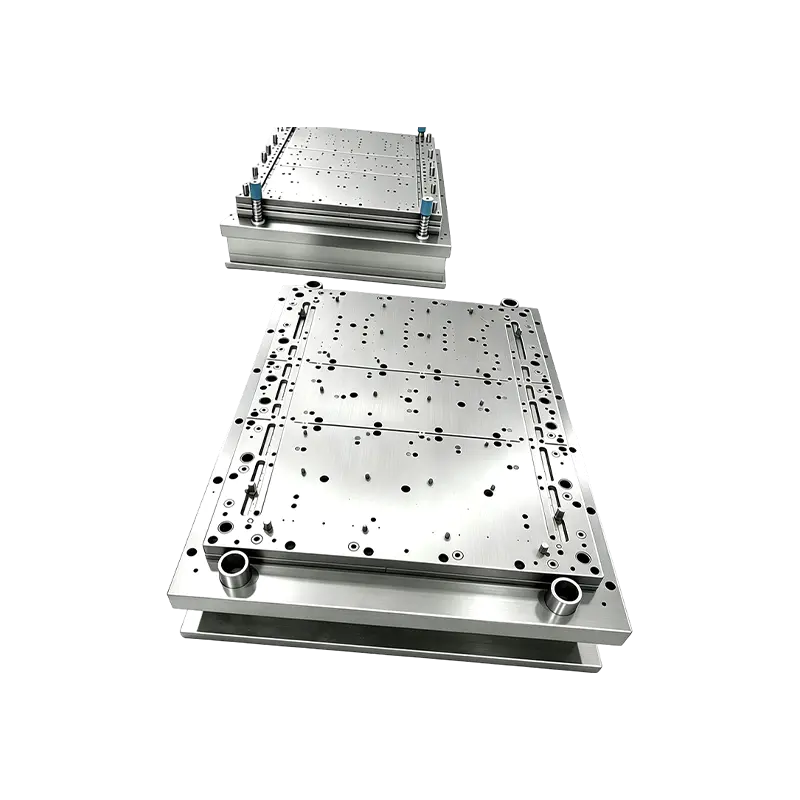
Progressive Stamping Die for Connector & Terminal Parts High Speed Progressive Stamping Die Precision Metal Hardware Stamping Tool mold for Connector Terminal Parts Automotive Components
Progressive Stamping Die for Connector & Termi...
-
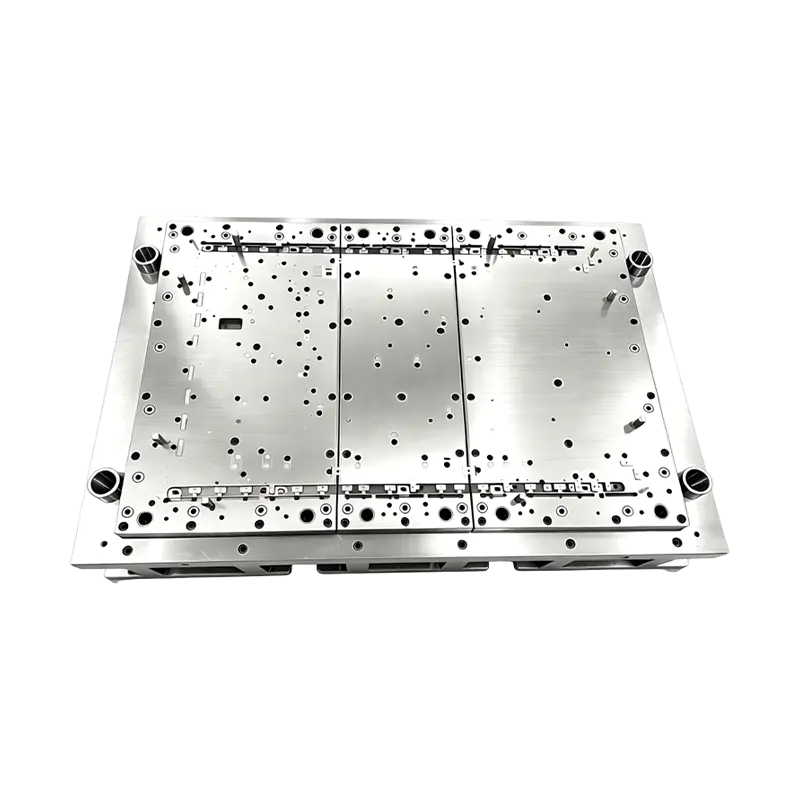
High Precision Stamping Die Multi Station Hardware Progressive Mold Tooling
Precision Metal Stamping Tool for Automotive &...
-
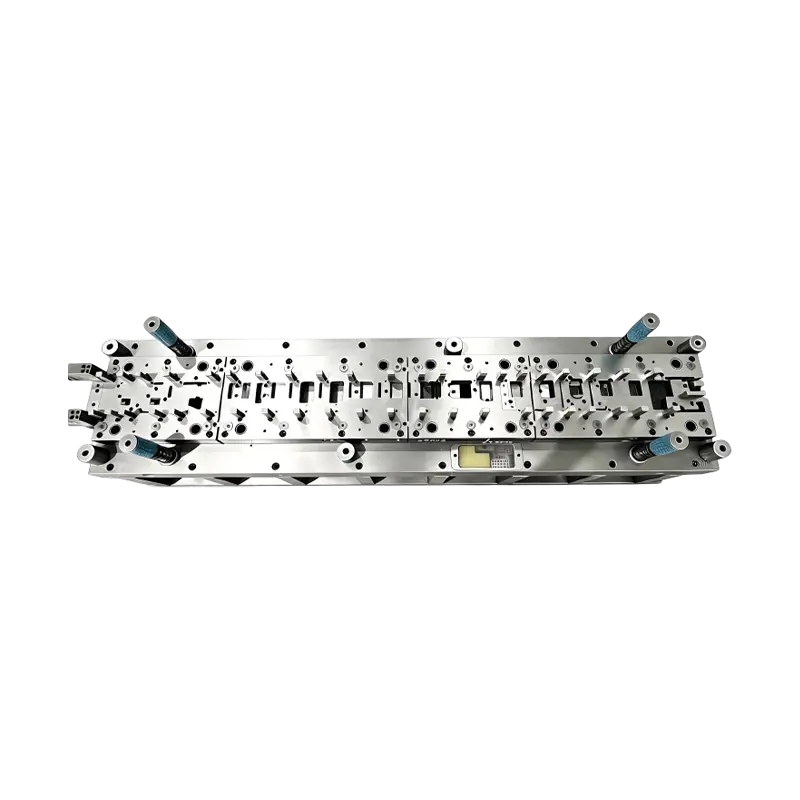
Long-Stroke Multi-Stage Progressive Die Automatic Strip Feed Progressive Die Long Travel Follow on Stamping Tool for Sheet Metal Hardware Press Moulding
Long-Stroke Multi-Stage Progressive DieOur custom ...
-
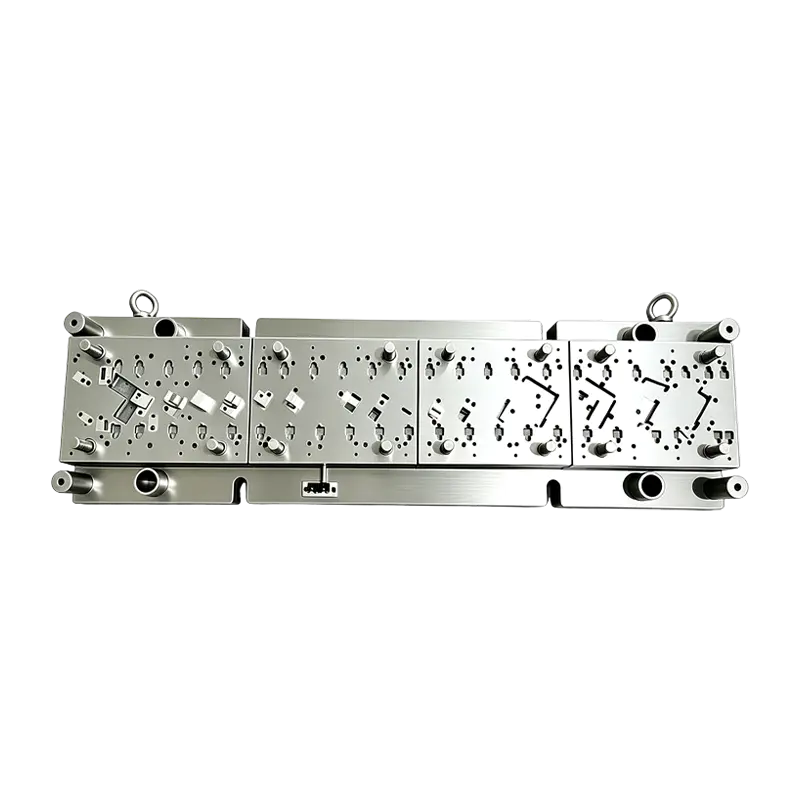
High Speed Progressive Stamping Die Sheet Metal Follow on Press Tool
Multi-operation Metal Stamping Tool for Continuous...
-
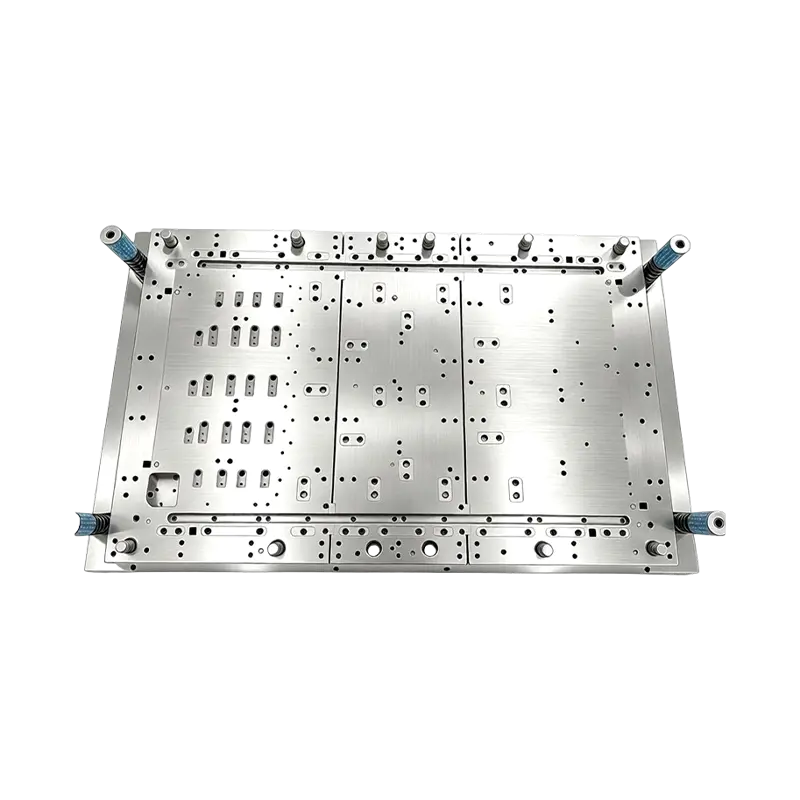
Multi-Station Progressive Stamping Die with Carbide Inserts Custom Multi Station Progressive Stamping Die Carbide Insert Metal Stamping Mold Tool for Equipment Appliances Device Hardware
High Speed Metal Stamping Tool for Precise Equipme...
- E-mail us: [email protected]
- Call us: +86-139 1308 8972

Industry News
Why Aluminum Alloy Is Replacing Steel in Electronic Stamping Parts?
2026-04-14
Content
- 1 What Are Electronic Stamping Parts and How Are They Made?
- 2 The Role of Aluminum Alloy in Modern Stamping Applications
- 3 Core Functions of Stamping Parts in Home Appliances
- 4 Material Comparison: Choosing the Right Metal for Each Part
- 5 Quality Standards and Inspection Requirements
- 6 Impact on Assembly Efficiency and Appliance Durability
- 7 Trends Driving Innovation in Appliance Stamping Parts
What Are Electronic Stamping Parts and How Are They Made?
Electronic stamping parts are precision metal components produced through a high-speed manufacturing process in which flat sheet metal is fed into a stamping press and transformed into complex shapes via cutting, bending, drawing, and pressing operations. In the context of home appliances, these parts function as the structural and functional backbone of finished products — holding motors in place, forming chassis frames, and connecting critical subsystems with exact geometric consistency across every unit produced. The stamping process is inherently suited to high-volume production, making it the manufacturing method of choice for industries that require both dimensional precision and cost efficiency at scale.
The materials used in electronic stamping parts are selected based on the mechanical demands, environmental exposure, and weight constraints of each application. The three most common material categories are stainless steel, galvanized sheet, and aluminum alloy — each offering a distinct combination of strength, formability, corrosion resistance, and weight. Among these, aluminum alloy has emerged as a particularly important material in modern appliance engineering, offering a high strength-to-weight ratio and excellent machinability that make it ideal for components requiring both structural rigidity and lightweight construction. Understanding the manufacturing process and material science behind these parts is essential for engineers, procurement managers, and quality professionals involved in appliance design and production.
The Role of Aluminum Alloy in Modern Stamping Applications
Aluminum alloy has become one of the defining materials in the production of electronic stamping parts, owing to a combination of physical and chemical properties that no other common engineering metal can fully replicate. Its density is approximately one-third that of steel, which translates directly into lighter finished assemblies — a critical advantage as manufacturers compete to reduce appliance weight for shipping efficiency, user handling, and energy consumption during operation. Despite its low density, modern aluminum alloys — particularly the 5000 and 6000 series — achieve tensile strengths sufficient for structural applications in washing machine frames, refrigerator inner panels, air conditioner housings, and microwave oven chassis.
Beyond its mechanical properties, aluminum alloy forms a natural oxide layer on its surface that provides inherent corrosion resistance without the need for additional galvanizing or coating processes. This passive layer protects components exposed to humidity, condensation, and cleaning agents — conditions that are routine in household appliance environments. The alloy's excellent thermal conductivity also makes it the preferred material for components that must dissipate heat efficiently, such as heat exchanger brackets and motor mounts in air conditioning units. These combined properties make aluminum alloy not just a substitute for heavier metals but a functionally superior choice for many electronic stamping part applications.
Core Functions of Stamping Parts in Home Appliances
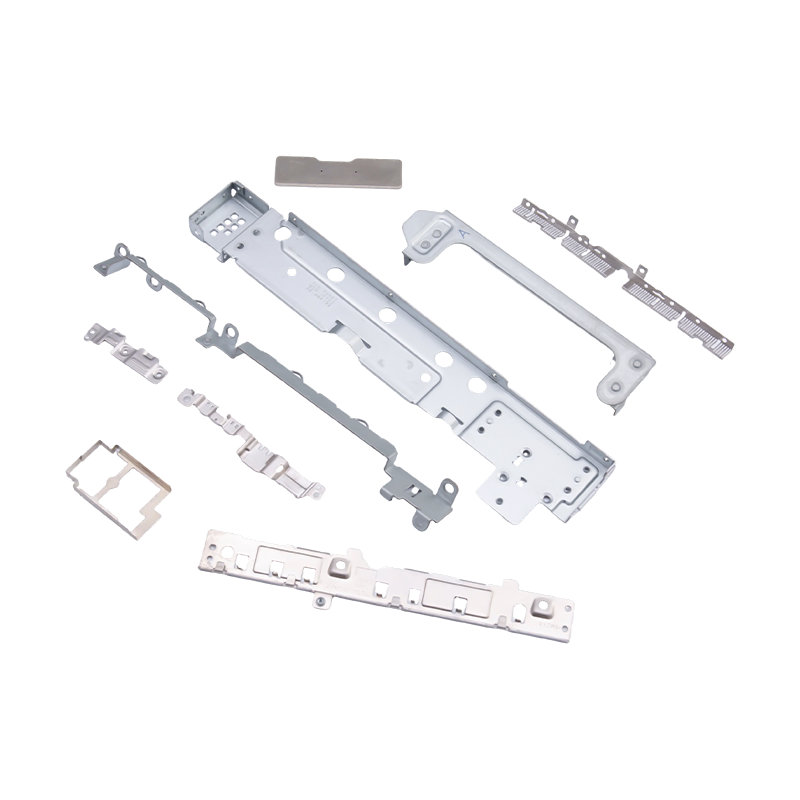
Home appliance stamping parts are widely applied in refrigerators, washing machines, air conditioners, and microwave ovens — and in each case, they serve as core structural or functional elements without which the appliance could not operate reliably. Their roles span three primary categories: structural support, mechanical linkage, and protective enclosure. Each category places different demands on material selection, dimensional tolerance, and surface finish.
Structural Support Components
Brackets and chassis components form the foundational skeleton of most major appliances. Brackets fix internal motors, compressors, and pumps in precise positions, absorbing vibration and preventing positional drift during long-term operation. Chassis support the entire appliance body, distributing load evenly and maintaining the geometric alignment required for doors, drawers, and panels to fit and function correctly. These parts must maintain their shape and dimensional integrity under continuous mechanical stress and thermal cycling — requirements that drive the use of high-strength steel and aluminum alloy in their production.
Mechanical Linkage and Connecting Pieces
Connecting pieces link key components within the appliance, transmitting mechanical force and maintaining positional relationships between moving parts. In washing machines, stamped metal linkages connect the drum suspension system to the outer tub structure. In refrigerators, connecting brackets align the compressor with the refrigerant line fittings. These parts must achieve tight dimensional tolerances — typically within ±0.1 mm or better — to ensure that assembly is consistent across production runs and that connected components function together without friction, misalignment, or premature wear.
Material Comparison: Choosing the Right Metal for Each Part
The selection of material for any given electronic stamping part involves a careful trade-off analysis across mechanical performance, environmental resistance, formability, and total production cost. The following table compares the three primary materials used in home appliance stamping parts across key performance dimensions:
| Property | Stainless Steel | Galvanized Sheet | Aluminum Alloy |
| Strength | High | Medium | Medium–High |
| Weight | Heavy | Medium | Light |
| Corrosion Resistance | Excellent | Good | Very Good |
| Formability | Moderate | High | High |
| Cost | High | Low | Medium |
| Best Application | High-stress structural parts | General enclosures and panels | Lightweight structural and thermal parts |
Quality Standards and Inspection Requirements
The reliability of electronic stamping parts is inseparable from the rigor of the quality control systems applied throughout their production. Strict quality checks for flatness and corrosion resistance are conducted during production to match the long service life demands of household devices. Flatness is particularly critical in parts that serve as mounting surfaces or sealing interfaces — a deviation of even fractions of a millimeter can cause misalignment during assembly, increased vibration during operation, or premature seal failure in appliances exposed to water or humidity.
Corrosion resistance testing is equally essential, especially for parts made from galvanized sheet or aluminum alloy that will be installed in environments with regular moisture exposure. Salt spray testing per ISO 9227 standards is commonly used to simulate years of real-world corrosion exposure in accelerated laboratory conditions, ensuring that surface treatments and base material selections will hold up throughout the appliance's intended service life. Dimensional inspection using coordinate measuring machines (CMMs) and optical scanning systems verifies that each part conforms to engineering drawings within specified tolerances before it is cleared for assembly.
In-line quality monitoring during the stamping process itself is increasingly common in high-volume facilities. Sensor systems embedded in stamping presses can detect abnormal force signatures that indicate die wear, material thickness variation, or feed misalignment — triggering automatic part rejection and alerting process engineers before a defect propagates across an entire production batch. This integration of real-time process monitoring with downstream inspection creates a multi-layer quality assurance framework that supports both high throughput and consistently high part quality.
Impact on Assembly Efficiency and Appliance Durability
As essential accessories, electronic stamping parts directly affect the assembly efficiency and overall durability of home appliances in ways that extend far beyond individual component performance. When parts are manufactured to tight tolerances with consistent surface finish and accurate hole positioning, assembly line workers and automated assembly systems can install them quickly and repeatably, without the need for manual adjustment, shimming, or rework. This directly reduces assembly cycle time, labor cost, and the risk of assembly-induced defects that would only manifest as field failures after the product reaches the consumer.
Durability at the system level depends on the cumulative performance of every stamped component in the assembly. A single bracket with inadequate strength or a connecting piece with poor dimensional accuracy can concentrate mechanical stress at unintended locations, accelerating fatigue failure in adjacent components and shortening the effective service life of the entire appliance. Conversely, when every electronic stamping part — whether stainless steel, galvanized sheet, or aluminum alloy — is produced to specification and validated through rigorous quality inspection, the assembled appliance delivers reliable, trouble-free performance across its full intended service life. This is the ultimate measure of value that high-quality stamping parts provide to both manufacturers and end users.
Trends Driving Innovation in Appliance Stamping Parts
The design and manufacturing of electronic stamping parts continues to evolve in response to broader trends in consumer electronics and home appliance engineering. Lightweighting initiatives are pushing engineers to replace steel components with aluminum alloy alternatives wherever structural requirements permit, driven by energy efficiency targets and rising material costs. Advanced high-strength aluminum alloys are enabling this transition without sacrificing the mechanical performance that structural parts require, allowing manufacturers to reduce product weight by 20–30% in some assemblies without compromising durability or service life.
- Progressive die stamping: Multi-stage progressive dies are replacing single-operation tooling in high-volume facilities, enabling complex part geometries to be completed in a single press stroke sequence with minimal material waste and handling.
- Laser-cut blank preparation: Laser cutting is increasingly used to prepare net-shape or near-net-shape blanks for aluminum alloy stamping, reducing edge defects and improving dimensional consistency compared to traditional mechanical blanking.
- Integrated surface treatment: Anodizing, powder coating, and chromate-free conversion coatings are being applied in-line with stamping operations for aluminum alloy parts, reducing lead time and ensuring coating adhesion on freshly formed surfaces.
- Digital twin simulation: CAE-based forming simulation is now standard practice in die development, enabling engineers to predict springback, thinning, and wrinkling in aluminum alloy stampings before the first physical prototype is produced, significantly reducing tooling development time and cost.
Previous Post
From Body Panels to Battery Casings: The Engineering Behind Automotive Deep Drawing Dies
Next Post
Precision Stamping Dies for Electronics & Home Appliances: High-Efficiency Manufacturing Solutions in 2026
Our Products.
Start Your Business with an OEM Manufacturer Right Here!

Provide global customers with complete turn-key solutions
through
innovation!
QUICK LINKS
CONTACT INFO.
-
 +86-139 1308 8972
 -

-
 No. 118 Yexin Road, Wujiang Economic Development Zone, Suzhou, China
Copyright © Suzhou Shuangqisi Mold Equipment Co., Ltd. All Rights Reserved. Custom Stamping Die Metal Stamping Die Manufacturers
