 English
 Español
 Deutsch
-
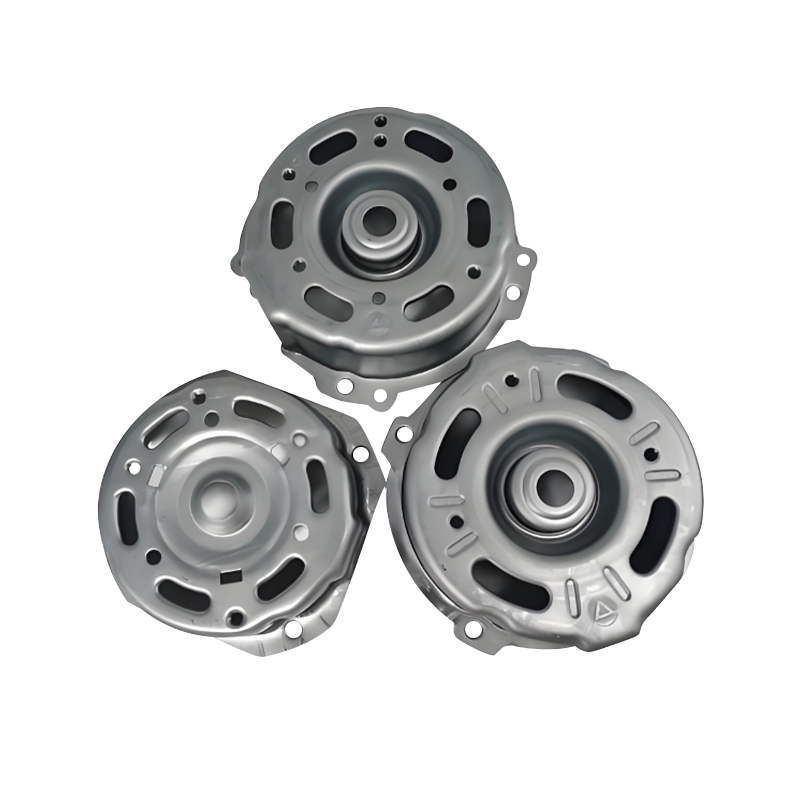
Automotive motor housing stamping parts
Automotive motor housing stamping parts are core c...
-

Deep drawing mold for front and rear wheels of two-wheeled electric vehicles
This Deep drawing mold for front and rear wheels o...
-

Battery cover stamping parts
Our Battery cover stamping parts are precision-man...
-
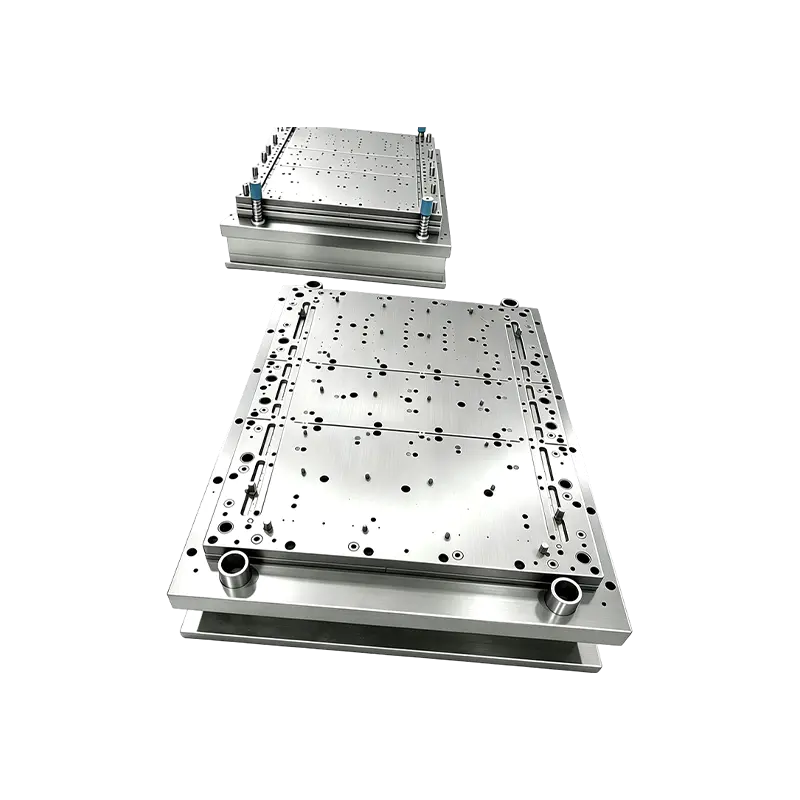
Progressive Stamping Die for Connector & Terminal Parts High Speed Progressive Stamping Die Precision Metal Hardware Stamping Tool mold for Connector Terminal Parts Automotive Components
Progressive Stamping Die for Connector & Termi...
-
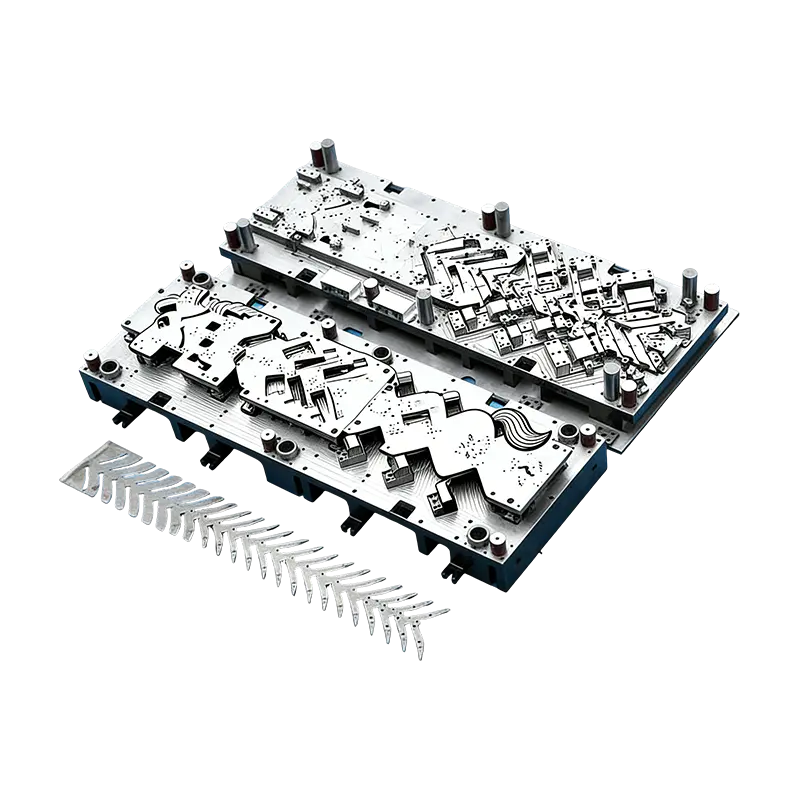
Progressive molds for automotive parts
This Continuous mold for automotive motor housing ...
-
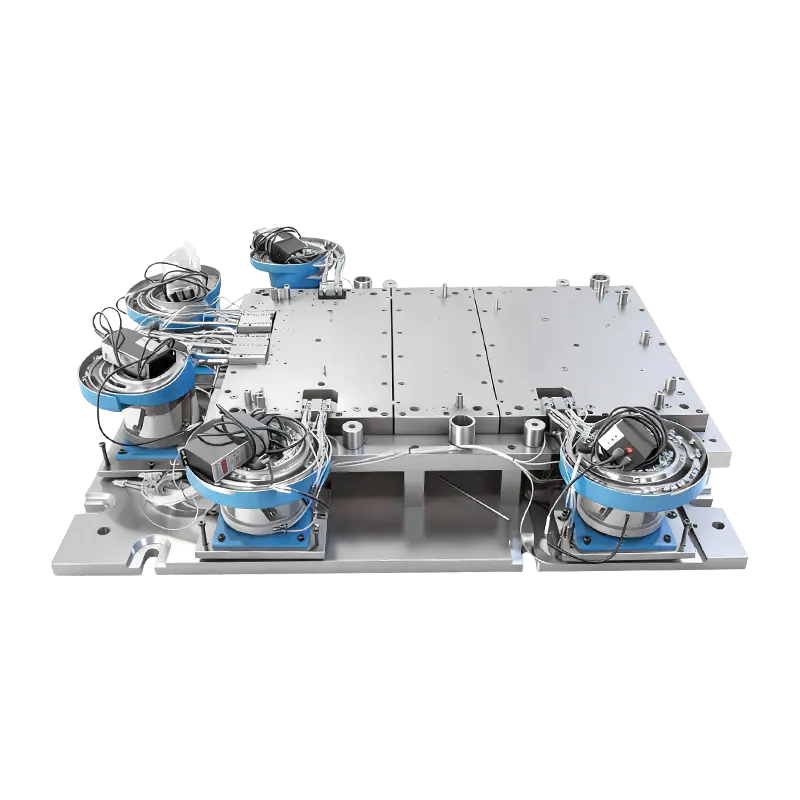
Automatic riveting mold for large computer machine base
This Automatic Riveting Mold for Large Computer Ma...
- E-mail us: [email protected]
- Call us: +86-139 1308 8972

Industry News
Home / News / Industry News / From Body Panels to Battery Casings: The Engineering Behind Automotive Deep Drawing Dies
From Body Panels to Battery Casings: The Engineering Behind Automotive Deep Drawing Dies
2026-04-21
Content
- 1 What Are Automotive Stamping Dies and How Do They Work
- 2 Key Design Criteria for High-Performance Deep Drawing Dies
- 3 Applications in Traditional Vehicles vs. Electric Vehicles
- 4 Simulation Technologies and Intelligent Monitoring in Die Engineering
- 5 Material Selection and Surface Treatment for Long Tool Life
- 6 Adapting Automotive Stamping Dies for Lightweighting and High-Strength Trends
What Are Automotive Stamping Dies and How Do They Work
Automotive stamping dies are precision tooling systems used to shape flat metal sheets into complex three-dimensional components through controlled plastic deformation. Among the various types, drawing dies and deep drawing dies are the most critical for producing hollow or cup-shaped parts — from door outer panels and hoods to battery enclosures and structural reinforcements.
The deep drawing process works by pressing a flat metal blank into a die cavity using a punch, while a blank holder applies controlled force to guide the metal flow and prevent defects. Unlike shallow forming, deep drawing achieves a drawing ratio — the ratio of blank diameter to punch diameter — that commonly exceeds 2.5:1, enabling the production of significantly deeper parts relative to their width. This capability is essential for automotive applications where complex geometry and structural integrity must coexist.
A complete die assembly typically includes four main components:
- The punch, which physically deforms the metal blank downward into the cavity
- The die (female mold), which defines the outer shape and dimensions of the formed part
- The blank holder, which exerts adjustable pressure on the sheet metal flange to manage material flow
- The die set (base and guide assembly), which ensures precise alignment and repeatability across production cycles
Together, these components must be engineered with tolerance levels typically held at ±0.02mm, ensuring dimensional accuracy across high-volume production runs that can reach hundreds of thousands of parts per year.
Key Design Criteria for High-Performance Deep Drawing Dies
Designing effective deep drawing dies for automotive use requires balancing multiple competing engineering demands. Poor design leads to cracking, wrinkling, springback, or premature tool wear — all of which directly increase production costs and downtime. The following parameters are central to achieving consistent, defect-free output.
Blank Holder Force Control
Blank holder force (BHF) is one of the most influential variables in the deep drawing process. Insufficient BHF causes the sheet metal to buckle and wrinkle as it flows inward; excessive BHF restricts material flow and leads to tearing or cracking at the punch radius. Modern automotive stamping dies use hydraulic or servo-controlled blank holders capable of dynamically adjusting pressure throughout the stroke cycle — often varying from 20% to 80% of maximum force depending on forming depth and material type.
Surface Finish and Friction Reduction
Die surfaces in contact with the metal sheet must achieve an ultra-smooth finish to minimize friction-induced thinning and galling. Industry standards for high-performance deep drawing dies require a surface roughness of Ra ≤ 0.05μm, achieved through polishing, hard chrome plating, or physical vapor deposition (PVD) coatings such as TiCN or DLC (diamond-like carbon). These coatings also significantly extend tool life, reducing replacement intervals in mass production environments.
Modular Tooling Architecture
Modular die structures allow individual components — such as punches, inserts, or blank holder segments — to be replaced independently rather than requiring full die replacement. For automotive OEMs running multiple model variants on shared platforms, modularity reduces tooling investment by 25–40% and shortens changeover time from hours to minutes. This design approach also simplifies maintenance scheduling and enables faster adaptation to engineering change orders (ECOs).
Applications in Traditional Vehicles vs. Electric Vehicles
While the fundamental mechanics of deep drawing remain consistent, the specific requirements for traditional vehicles and electric vehicles (EVs) differ substantially — reflecting differences in materials, geometries, and structural priorities.
| Parameter | Traditional Vehicles | Electric Vehicles |
|---|---|---|
| Primary materials | Mild steel, HSLA steel | Aluminum alloy, magnesium-aluminum alloy |
| Typical drawing ratio | 1.8:1 – 2.2:1 | 2.5:1 and above |
| Key formed components | Door panels, hoods, trunk lids | Battery casings, motor housings, floor trays |
| Tolerance requirement | ±0.05mm (body panels) | ±0.02mm (battery enclosures) |
| Die material challenge | Wear resistance for steel forming | Galling prevention with soft alloys |
For EV-specific applications, drawing dies designed for magnesium-aluminum alloy battery casings face unique challenges. These lightweight alloys have lower ductility than steel and are more prone to springback and surface scoring. Dies for these components are typically engineered with heated tooling (warm forming at 200–300°C) to improve material flow, along with specialized lubricant delivery channels integrated into the die structure to maintain consistent friction conditions across long production runs.
Simulation Technologies and Intelligent Monitoring in Die Engineering
Modern automotive stamping dies are developed in conjunction with advanced simulation platforms before any physical tooling is produced. Finite element analysis (FEA) software — including tools like AutoForm, Pam-Stamp, and LS-DYNA — allows engineers to virtually simulate the entire forming process, predicting thinning distribution, wrinkling risk zones, springback magnitude, and blank holder pressure requirements with high accuracy.
A typical simulation workflow for a complex deep drawn component includes:
- Material characterization input — yield strength, n-value (strain hardening exponent), r-value (plastic anisotropy ratio) for the specific alloy and temper
- Forming limit diagram (FLD) analysis — identifying safe, marginal, and failure zones within the formed part
- Springback compensation modeling — predicting elastic recovery and pre-compensating die geometry to achieve final net shape
- Die tryout virtual iteration — reducing physical tryout cycles from 10–15 to fewer than 5 per part, saving significant time and material cost
Beyond design, intelligent monitoring systems are increasingly embedded within production deep drawing dies themselves. Piezoelectric force sensors measure real-time blank holder force distribution, while acoustic emission sensors detect early signs of galling or material cracking before defective parts are produced. Data from these sensors feeds into manufacturing execution systems (MES), enabling closed-loop process control that adjusts press parameters dynamically — maintaining dimensional stability even as material batch properties vary between coil lots.
Material Selection and Surface Treatment for Long Tool Life
The service life of drawing dies in high-volume automotive production is a critical economic factor. A typical body panel die set may be expected to produce 500,000 to 1,000,000 parts before requiring major refurbishment. Achieving this requires careful selection of die materials and surface treatments matched to the workpiece material and production volume.
Common die materials used in automotive stamping include:
- Ductile cast iron (GGG70L) — cost-effective for low-to-medium volume dies, good machinability but lower hardness (58–62 HRC after treatment)
- Tool steel (D2, DC53) — higher hardness and wear resistance, preferred for high-volume steel forming dies
- Carbide inserts — applied at high-wear contact zones such as die radii and draw beads, extending local service life by 3–5× compared to tool steel alone
- Aluminum bronze alloys — used for dies forming aluminum or magnesium workpieces, preventing galling due to dissimilar material pairing
Surface treatments applied after machining and heat treatment further enhance performance. Nitriding increases surface hardness to 70+ HRC while maintaining core toughness. PVD coatings such as TiAlN offer hardness exceeding 3,000 HV and reduce friction coefficients from ~0.15 to below 0.05 — directly translating to reduced thinning in EV lightweight components where wall thickness uniformity is critical for battery casing sealing and structural performance.
Adapting Automotive Stamping Dies for Lightweighting and High-Strength Trends
The automotive industry's accelerating shift toward lightweighting — driven by both EV range efficiency and emissions regulations — is fundamentally reshaping the demands placed on automotive stamping dies. Advanced high-strength steels (AHSS) with tensile strengths above 1,000 MPa, as well as 6xxx and 7xxx series aluminum alloys, are increasingly replacing conventional mild steel in structural applications. These materials require significantly higher forming forces, more precise BHF control, and enhanced springback compensation strategies compared to their predecessors.
For manufacturers supplying dies into this evolving market, the response has been multi-directional. Die structures are being redesigned with higher rigidity to withstand increased forming loads without deflection-induced dimensional errors. Cooling and heating channels are being integrated into die bodies to enable warm or hot forming of aluminum and boron steel. And simulation-driven tryout processes are compressing development timelines even as part complexity increases.
Ultimately, deep drawing dies for next-generation automotive and EV components must simultaneously deliver tighter tolerances, longer service life, faster setup, and compatibility with a broader range of advanced materials. Achieving this balance demands an integrated engineering approach — combining precision manufacturing, advanced coatings, real-time process monitoring, and material science expertise — that positions deep drawing die technology as a core enabler of the automotive industry's transformation.

Previous Post
Metal Stamping Parts: Types & Applications
Next Post
Why Aluminum Alloy Is Replacing Steel in Electronic Stamping Parts?
Our Products.
Start Your Business with an OEM Manufacturer Right Here!

Provide global customers with complete turn-key solutions
through
innovation!
QUICK LINKS
CONTACT INFO.
-
 +86-139 1308 8972
 -

-
 No. 118 Yexin Road, Wujiang Economic Development Zone, Suzhou, China
Copyright © Suzhou Shuangqisi Mold Equipment Co., Ltd. All Rights Reserved. Custom Stamping Die Metal Stamping Die Manufacturers
