 English
 Español
 Deutsch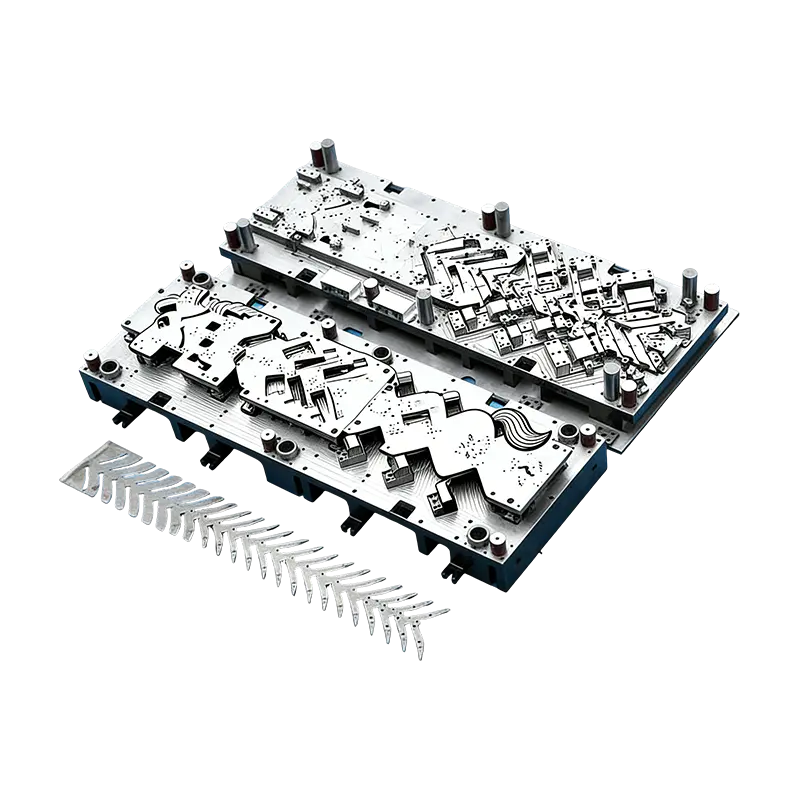
-
Progressive Stamping Die for Connector & Terminal Parts High Speed Progressive Stamping Die Precision Metal Hardware Stamping Tool mold for Connector Terminal Parts Automotive Components
Progressive Stamping Die for Connector & Termi...
-
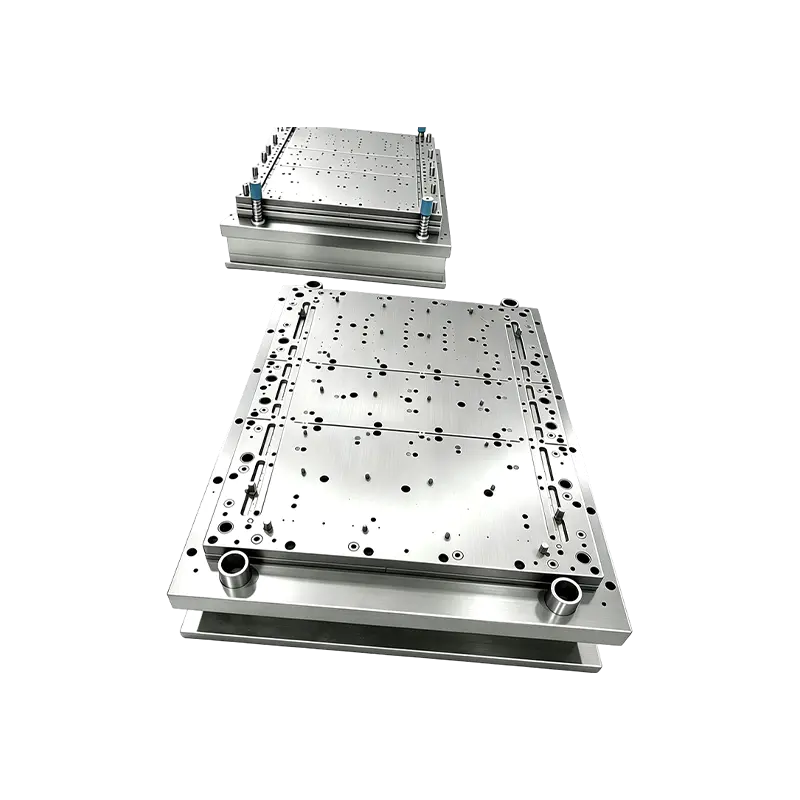
Long-Stroke Multi-Stage Progressive Die Automatic Strip Feed Progressive Die Long Travel Follow on Stamping Tool for Sheet Metal Hardware Press Moulding
Long-Stroke Multi-Stage Progressive DieOur custom ...
-
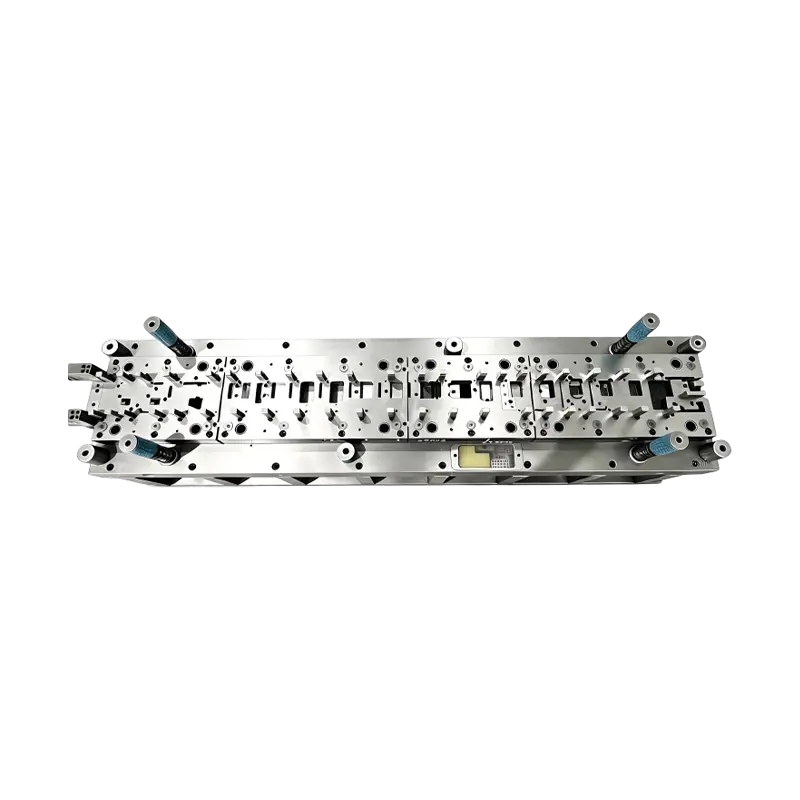
Multi-Station Progressive Stamping Die with Carbide Inserts Custom Multi Station Progressive Stamping Die Carbide Insert Metal Stamping Mold Tool for Equipment Appliances Device Hardware
High Speed Metal Stamping Tool for Precise Equipme...
-

Deep drawing mold for front and rear wheels of two-wheeled electric vehicles
This Deep drawing mold for front and rear wheels o...
-
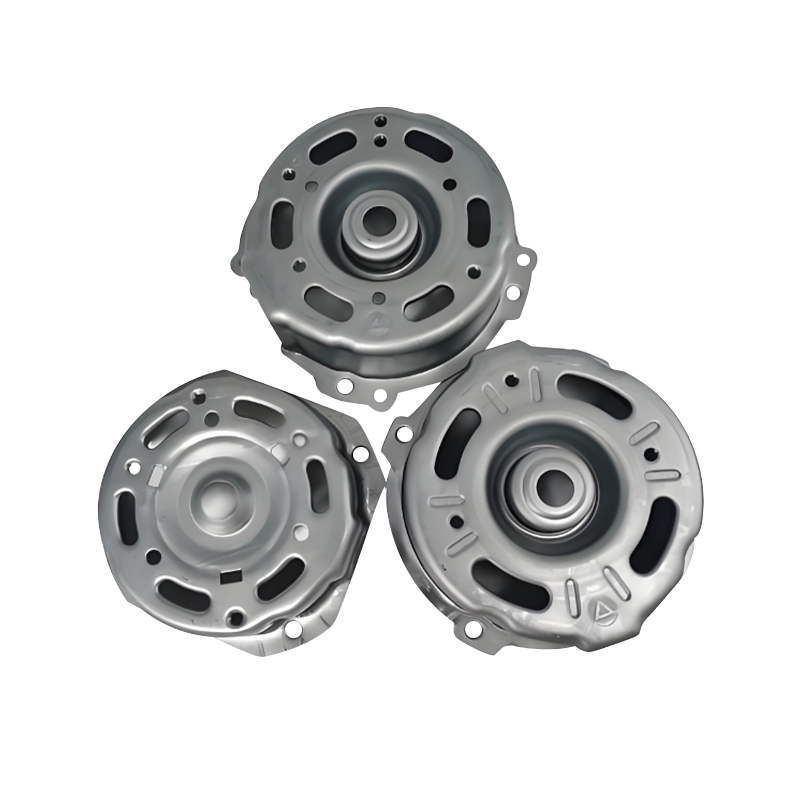
Automotive motor housing stamping parts
Automotive motor housing stamping parts are core c...
- E-mail us: [email protected]
- Call us: +86-139 1308 8972

Industry News
Guide to Deep Drawing Metal Stamping Dies for Automotive Parts
2026-03-30
Content
- 1 The Fundamentals of Deep Drawing in Metal Stamping Dies
- 2 Controlling Material Flow and Preventing Defects
- 3 Integration with Progressive Molds for Automotive Parts
- 4 Advanced Structural Designs for Complex Geometries
- 5 Enhancing Die Life and Surface Quality
- 6 Applications in Modern Automotive Manufacturing
The Fundamentals of Deep Drawing in Metal Stamping Dies
In the complex world of manufacturing, Metal Stamping Dies serve as the backbone for mass-producing precise metal components. Among the various types of stamping operations, deep drawing stands out as a critical process for transforming flat sheet metal into three-dimensional hollow shapes. Unlike simple bending or cutting, deep drawing involves a sophisticated interplay of forces where a punch forces a metal blank into a die cavity. The primary objective is to control the flow of material, ensuring that the sheet stretches and flows into the desired geometry without compromising its structural integrity or thickness uniformity. This process is essential for creating parts that require significant depth relative to their diameter, a common requirement in industries ranging from consumer goods to heavy machinery.
The mechanics of deep drawing rely heavily on the plastic deformation of the material. As the punch descends, the metal blank is drawn over the die radius. The area of the blank that lies over the die opening becomes the wall of the cup or part, while the outer flange is drawn radially inward. This radial drawing causes the flange diameter to shrink, which naturally induces compressive hoop stresses. If these stresses are not managed correctly, the material will buckle, leading to wrinkles. Conversely, if the tensile stress in the wall of the cup exceeds the material's yield strength, the part will tear or crack. Therefore, the design of Metal Stamping Dies for deep drawing is not just about shape; it is about stress management.
Controlling Material Flow and Preventing Defects
To achieve a successful deep draw, engineers must meticulously control parameters such as blank holder force and die clearance. The blank holder, or pressure pad, applies a specific amount of force to the flange of the blank. This force is a delicate balance: it must be high enough to prevent the material from wrinkling as it flows inward, but low enough to allow the material to slide freely into the die cavity. If the force is too high, the material cannot flow, leading to thinning and eventual fracture at the punch radius. If it is too low, the compressive stresses in the flange cause unsightly and structurally weak wrinkles.
Die clearance is another pivotal factor. This refers to the gap between the punch and the die wall. In standard deep drawing, the clearance is typically slightly larger than the sheet thickness to allow the material to flow without excessive ironing. However, in processes known as "thinning deep drawing" or "ironing," the clearance is intentionally set smaller than the initial material thickness. This reduces the wall thickness and increases the height of the part while improving surface finish and dimensional accuracy. To facilitate this flow and reduce friction, which generates heat and wear, lubrication is critical. Advanced lubricants and surface coatings on the die itself help extend die life and ensure consistent part quality.
Common Defects and Solutions
- Wrinkling: Caused by excessive compressive stress in the flange. Solved by increasing blank holder force or using draw beads to restrict flow.
- Fracture/Tearing: Occurs when tensile stress exceeds material limits. Solved by increasing die clearance, improving lubrication, or annealing the material to restore ductility.
- Earing: Uneven height at the top of the drawn part due to anisotropy in the metal grain structure. Controlled by optimizing blank orientation or trimming operations.
Integration with Progressive Molds for Automotive Parts
While single-stage deep drawing is common for large, simple parts, the automotive industry often demands high-volume production of complex components. This is where Progressive molds for automotive parts become indispensable. In a progressive die setup, a strip of metal feeds through multiple stations within a single die. Each station performs a different operation—piercing, bending, and drawing—until a finished part is produced at the final station. Integrating deep drawing into a progressive die is technically challenging because the material must be carried between stations without distorting the drawn shape.
Automotive manufacturers utilize these progressive molds to create everything from small connector brackets to larger structural elements. For instance, the production of fuel system components or exhaust parts often involves a series of drawing steps within a progressive line. The advantage lies in speed and consistency. By automating the transfer of the part from one drawing stage to the next, manufacturers can produce thousands of parts per hour with minimal human intervention. However, the design of Progressive molds for automotive parts requires careful consideration of the "carrier strip," which holds the part as it moves through the die. The carrier must be strong enough to withstand the drawing forces but easy to separate from the final part.
Advanced Structural Designs for Complex Geometries
As automotive designs become more aerodynamic and safety regulations stricter, the geometric complexity of stamped parts increases. Standard deep drawing dies often cannot achieve the required depths or shapes in a single hit. Consequently, specialized structural designs have been developed to meet these technical requirements. These designs allow for multi-stage forming within a single press stroke or across multiple operations, ensuring that even the most intricate hollow parts can be manufactured efficiently.
| Die Type | Function | Application |
| Inverted Initial Deep Drawing | The punch moves upward or the die moves downward to form the part from the inside out initially. | Used for parts requiring high stability in the first stage of forming. |
| Blank Holder-less Reverse Drawing | Redraws the part in the opposite direction without a traditional blank holder, relying on die geometry. | Ideal for reducing diameter while increasing height in subsequent stages. |
| Double-Die Thinning Drawing | Uses two concentric dies to thin the wall thickness significantly while elongating the part. | Manufacturing of high-pressure cylinders or precise automotive housings. |
Reverse Drawing Techniques
Reverse drawing is a powerful technique used when a part needs to be drawn deeper than the material allows in a single forward draw. In this process, the partially drawn cup is turned inside out or drawn in the opposite direction in the next station. This work-hardens the material differently and allows for greater depth-to-diameter ratios. Blank holder-less reverse deep drawing dies are particularly useful here, as they simplify the tooling structure while maintaining control over the material flow during the inversion process.
Enhancing Die Life and Surface Quality
The longevity of Metal Stamping Dies is directly correlated to the surface quality of the produced parts and the cost-effectiveness of the manufacturing line. Deep drawing involves significant friction and pressure, which can lead to galling (material sticking to the die) and wear. To combat this, modern die manufacturing employs advanced polishing and coating techniques. Polishing the die radii to a mirror finish reduces friction, allowing the metal to flow smoothly. Furthermore, coatings such as Titanium Nitride (TiN) or Diamond-Like Carbon (DLC) are applied to the working surfaces of the die.
These coatings provide a hard, low-friction surface that resists abrasion and corrosion. In the context of Progressive molds for automotive parts, where uptime is critical, coated dies reduce the frequency of maintenance stops and part rejection rates. Additionally, the selection of die materials is crucial. High-carbon, high-chromium tool steels are often used for their wear resistance, while tungsten carbide inserts may be used in high-volume applications where extreme durability is required. By combining robust structural design with surface engineering, manufacturers can ensure that deep drawing dies perform reliably over millions of cycles.
Applications in Modern Automotive Manufacturing
The application of deep drawing technology is ubiquitous in the automotive sector. One of the most classic examples is the manufacturing of automotive fuel tanks. These components require complex, hollow shapes that can withstand internal pressure and external impact. Deep drawing allows for the creation of these seamless containers from sheet metal, ensuring leak-proof integrity. Similarly, enamel basins and sinks, while consumer goods, share the same manufacturing principles, demonstrating the versatility of the process.
In the era of electric vehicles (EVs), the demand for deep drawn parts has surged. Battery casings, motor housings, and structural crash boxes often utilize deep drawing processes to achieve lightweight yet strong enclosures. The ability to thin the material during the drawing process (thinning deep drawing) helps reduce the overall weight of the vehicle, which is critical for extending battery range. As the industry moves towards lighter materials like aluminum and high-strength steel, the role of specialized Metal Stamping Dies becomes even more prominent. Engineers must adapt die designs to handle the different spring-back characteristics and formability limits of these advanced alloys, ensuring that the next generation of vehicles is both safe and efficient.
Previous Post
Precision Stamping Dies for Electronics & Home Appliances: High-Efficiency Manufacturing Solutions in 2026
Next Post
Metal Stamping & Drawing Parts Guide
Our Products.
Start Your Business with an OEM Manufacturer Right Here!

Provide global customers with complete turn-key solutions
through
innovation!
QUICK LINKS
CONTACT INFO.
-
 +86-139 1308 8972
 -

-
 No. 118 Yexin Road, Wujiang Economic Development Zone, Suzhou, China
Copyright © Suzhou Shuangqisi Mold Equipment Co., Ltd. All Rights Reserved. Custom Stamping Die Metal Stamping Die Manufacturers
