 English
 Español
 Deutsch
-
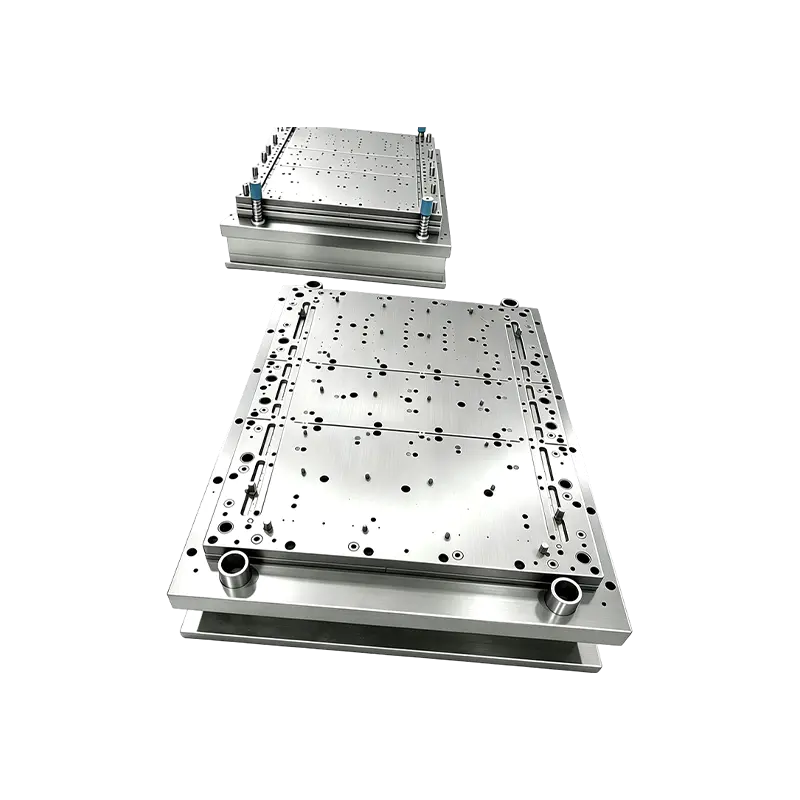
Progressive Stamping Die for Connector & Terminal Parts High Speed Progressive Stamping Die Precision Metal Hardware Stamping Tool mold for Connector Terminal Parts Automotive Components
Progressive Stamping Die for Connector & Termi...
-
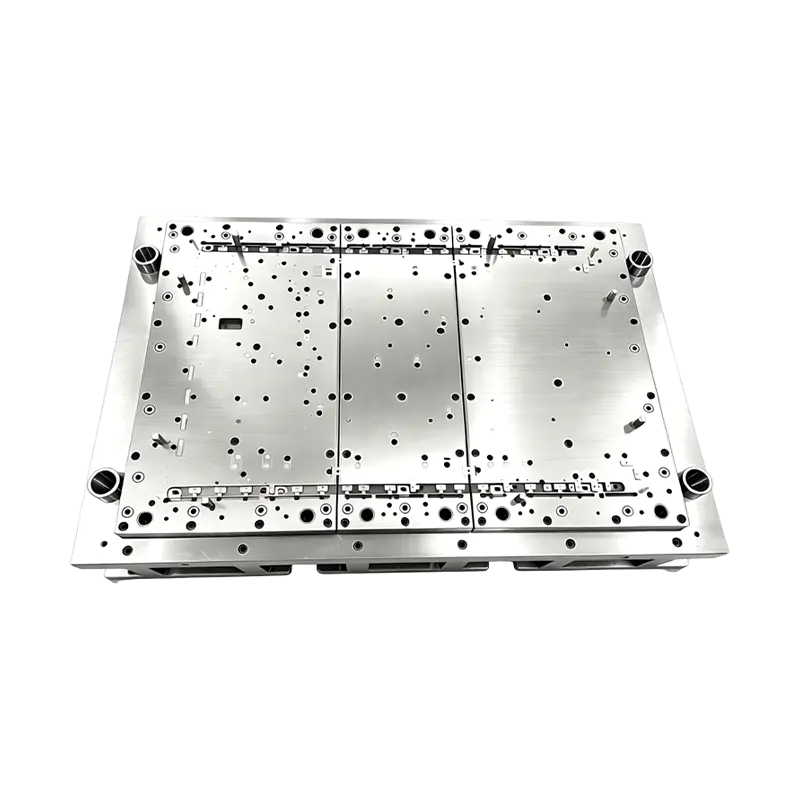
High Precision Stamping Die Multi Station Hardware Progressive Mold Tooling
Precision Metal Stamping Tool for Automotive &...
-
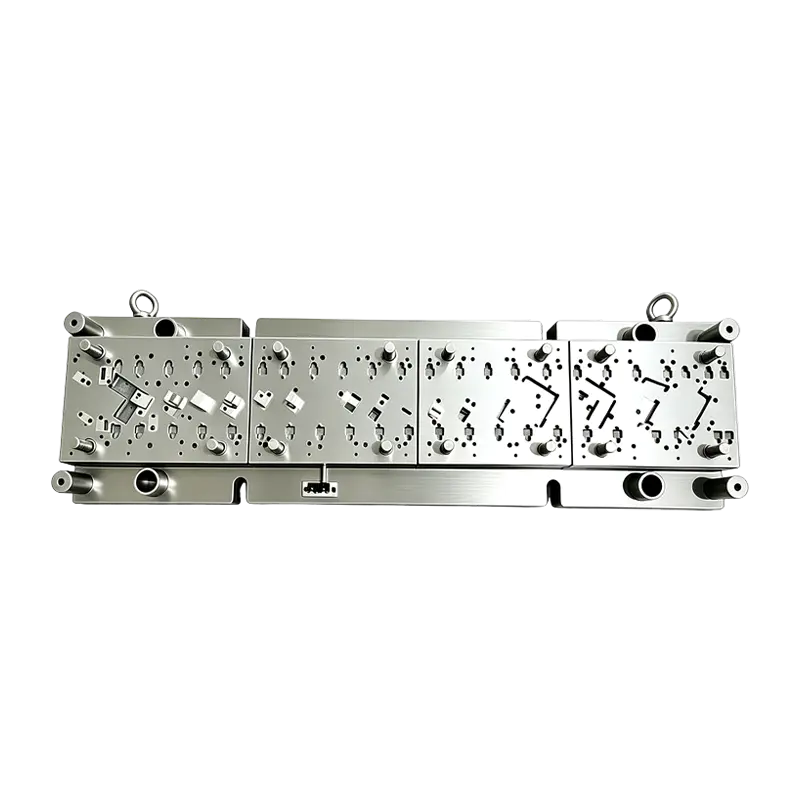
High Speed Progressive Stamping Die Sheet Metal Follow on Press Tool
Multi-operation Metal Stamping Tool for Continuous...
-
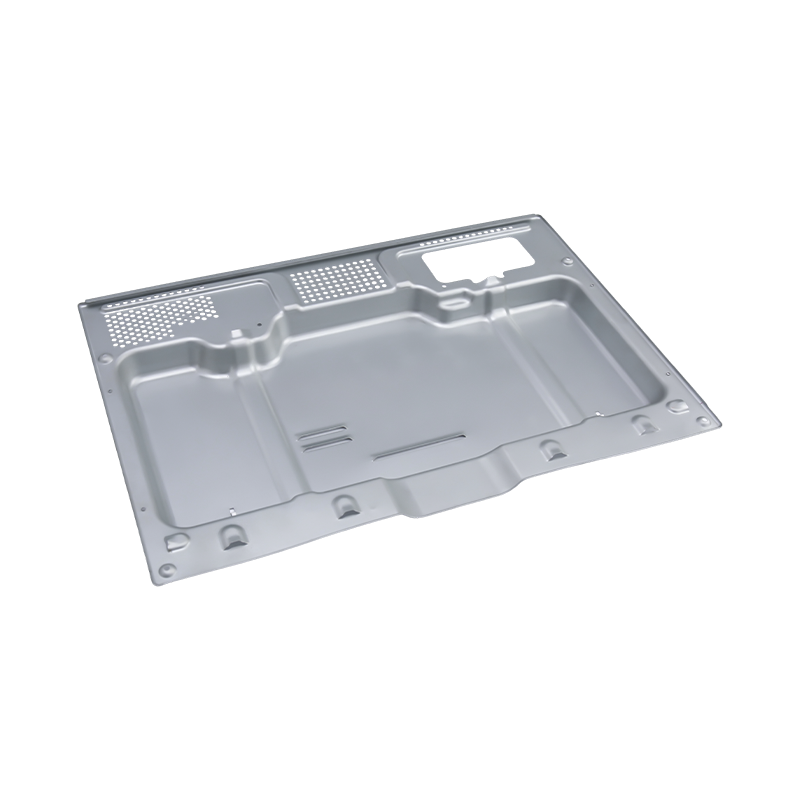
High-end oven stamping parts
Our High-end oven stamping parts are precision-man...
-
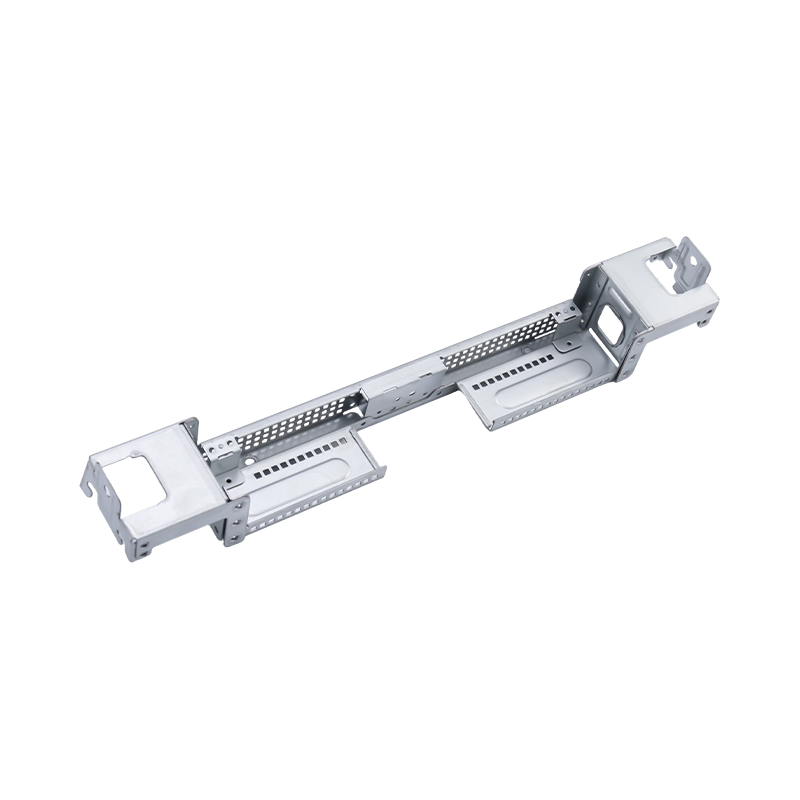
High-end large computer stamping parts
Our High-end large computer stamping parts are pre...
- E-mail us: [email protected]
- Call us: +86-139 1308 8972

Industry News
Home / News / Industry News / How Do Advanced High-Strength Steels Change Automotive Stamping Parts Manufacturing?
How Do Advanced High-Strength Steels Change Automotive Stamping Parts Manufacturing?
2026-02-25
Content
- 1 What AHSS Grades Are Actually Used in Automotive Stamping Parts
- 2 Springback Severity and Compensation in AHSS Automotive Stamping Parts
- 3 How AHSS Accelerates Die Wear and Changes Tooling Requirements
- 4 Press Selection and Tonnage Requirements for AHSS Automotive Stamping Parts
- 5 Hot Press Forming: A Separate Process for the Highest-Strength Automotive Stamping Parts
What AHSS Grades Are Actually Used in Automotive Stamping Parts
Advanced high-strength steels are not a single material but a family of distinct alloy systems, each engineered with a specific microstructural mechanism to achieve its strength-ductility combination. Understanding which grades appear in which automotive stamping parts applications is the starting point for understanding why these materials change the manufacturing process so fundamentally. Dual-phase (DP) steels — the most widely deployed AHSS family — consist of a ferrite matrix with dispersed martensite islands, giving grades like DP600, DP780, and DP980 a combination of high initial work-hardening rate and good elongation that suits them for structural members such as B-pillars, floor cross-members, and roof rails. Transformation-induced plasticity (TRIP) steels use metastable retained austenite that transforms to martensite progressively during forming, providing exceptional energy absorption that makes them appropriate for crash-critical components like longitudinal rails and bumper reinforcements. Martensitic steels (MS1300, MS1500) are used where maximum strength is the priority and formability requirements are modest — rocker panel reinforcements and door intrusion beams are typical applications. Hot-press-formed (HPF) steels, particularly 22MnB5 with an AlSi coating, are austenitized and then formed and quenched simultaneously in a cooled die, producing as-formed tensile strengths above 1,500 MPa that no cold-forming process can match for parts like A-pillar inners and tunnel reinforcements.
The selection of which grade to use for a given automotive stamping part is driven by the part's position in the vehicle safety structure, its required crash energy management behavior, and the forming severity of its geometry. A component that must absorb energy progressively through controlled folding — like a front rail — benefits from the high work-hardening rate of DP or TRIP steel, while a component that must remain rigid and resist intrusion under load — like a B-pillar — may be better served by the extreme strength of a hot-press-formed part. This application-specific grade selection means that a single vehicle body-in-white may incorporate five or six different AHSS grades, each processed through different tooling and press conditions.
Springback Severity and Compensation in AHSS Automotive Stamping Parts
Springback is the single most consequential manufacturing challenge that AHSS introduces into automotive stamping parts production, and its severity in these materials is substantially greater than anything experienced with mild steel or even conventional high-strength low-alloy (HSLA) grades. The fundamental cause is the high yield-to-tensile ratio characteristic of AHSS: DP980, for example, has a yield strength of approximately 700–900 MPa and a tensile strength of 980 MPa, giving a yield ratio of 0.71–0.92. Mild steel DC04 has a yield ratio of approximately 0.45. Because springback magnitude is proportional to the ratio of yield strength to elastic modulus (Young's modulus for steel is approximately 210 GPa regardless of grade), and AHSS has a yield strength two to four times higher than mild steel at the same modulus, the elastic strain that recovers after die opening is proportionally two to four times larger. On a 90° channel section formed from DP980, angular springback of 10°–16° at the side walls is common before compensation, compared to 2°–4° for an equivalent mild steel part.
The compensation strategies used in practice for AHSS automotive stamping parts are more complex than the simple geometric overbend that suffices for mild steel. Three approaches are typically combined:
- FEA-guided geometric compensation: Forming simulation software (AutoForm, Dynaform, or PAM-STAMP) with a calibrated material card for the specific AHSS grade predicts the springback distribution across the part surface. The die geometry is then morphed in the opposite direction by the predicted springback amount — a process called die compensation — so that the part springs back to the nominal geometry after tool opening. For complex automotive structural parts, this process typically requires two or three simulation-compensation-tryout cycles before the die geometry converges to the correct compensated shape.
- Post-form restrike: A dedicated restrike station applies a coining or ironing load to the most springback-prone regions of the part — typically the sidewalls and flanges of channel sections — converting additional elastic strain to plastic strain and reducing the recoverable springback. Restrike forces for DP980 can reach 150–200% of the forming force for the same geometry in mild steel, which directly affects press tonnage selection.
- Draw bead geometry optimization: Increasing draw bead restraining force stretches the material beyond its yield point as it flows over the bead, leaving it in a higher tension state at the end of forming. Higher tension at die opening means less differential stress recovery and more predictable, more uniform springback that is easier to compensate geometrically. For AHSS, draw bead heights and radii are tuned more aggressively than for mild steel, and the resulting increase in blank holder force must be accounted for in press capacity planning.
How AHSS Accelerates Die Wear and Changes Tooling Requirements
The forming forces required to plastically deform AHSS are two to four times higher than those for mild steel of the same thickness, and those elevated forces are transmitted directly to the die surfaces as contact pressure. The result is a significant acceleration in abrasive die wear — particularly on draw radii, binder surfaces, and cutting edges — that shortens maintenance intervals and raises the total tooling cost per part produced. A die producing mild steel automotive stamping parts might be reground after 200,000–300,000 strokes; the same die geometry forming DP780 may require regrinding after 80,000–120,000 strokes if the die material and surface treatment are not upgraded to match the higher contact pressures.
The tooling material and surface treatment strategy for AHSS automotive stamping parts differs from mild steel practice in several specific ways. The comparison below summarizes the key upgrades commonly applied:
| Die Component | Mild Steel Practice | AHSS Practice |
| Draw die material | Ductile iron (GGG70L) | D2/SKD11 or DC53 tool steel |
| Draw radius surface treatment | Chrome plating or flame hardening | TiAlN or TiCN PVD coating (2,800–3,200 HV) |
| Cutting punch material | SKD11 at 58–60 HRC | DC53 or PM tool steel at 60–63 HRC |
| Binder surface treatment | None or nitriding | Nitriding + PVD top coat, or thermal spray cermet |
| Regrind interval | 200,000–300,000 strokes | 100,000–200,000 strokes (with upgraded materials) |
Galling — the adhesive transfer of workpiece material onto the die surface — is a particularly damaging failure mode when forming galvanized AHSS. The zinc coating on galvanized DP or TRIP steel transfers readily to the die surface under the high contact pressures of AHSS forming, and the accumulated zinc buildup then scores subsequent parts. DLC (diamond-like carbon) coatings have demonstrated the best anti-galling performance for galvanized AHSS because the extremely low surface energy of DLC inhibits zinc adhesion, but DLC's limited temperature stability (degradation begins above 300°C) must be managed by ensuring adequate lubrication to keep the die surface temperature below this threshold during production.
Press Selection and Tonnage Requirements for AHSS Automotive Stamping Parts
The forming force required for AHSS automotive stamping parts has a direct and significant impact on press selection. The blanking force for a given perimeter cut is proportional to the material's ultimate tensile strength, meaning that blanking DP980 requires approximately 2.5 times the tonnage of blanking DC04 at the same thickness and perimeter. For a large structural automotive part — a B-pillar outer or a floor longitudinal rail — the blanking force alone can reach 800–1,200 tonnes for DP980, necessitating presses in the 1,500–2,500 tonne range that incorporate additional capacity margin to avoid operating at peak rating. Running a press consistently at 90%+ of its rated tonnage with AHSS accelerates press frame fatigue, connection bolt wear, and crankshaft bearing wear at rates that maintenance schedules calibrated to mild steel production will not anticipate.
Servo press technology has provided meaningful advantages for AHSS automotive stamping parts over conventional flywheel-driven eccentric presses. The ability to program arbitrary ram motion profiles — rather than following a fixed sinusoidal curve — allows servo presses to slow the ram through the forming zone where AHSS springback is most sensitive to forming speed, improving dimensional consistency. It also allows the press to dwell at bottom dead center for a programmable time, which has been shown to reduce springback in AHSS by 15–25% compared to an equivalent part formed without dwell, because the sustained pressure allows additional stress relaxation in the formed geometry before the die opens.
Hot Press Forming: A Separate Process for the Highest-Strength Automotive Stamping Parts
Hot press forming (HPF), also called press hardening or hot stamping, represents a fundamentally different manufacturing approach for the highest-strength automotive stamping parts — those requiring tensile strengths above 1,000 MPa that cannot be achieved through cold forming without catastrophic springback or fracture. In the direct HPF process, a blank of 22MnB5 boron steel is heated to approximately 900–950°C (above the austenitizing temperature), transferred to a water-cooled die, formed in the soft austenitic condition, and then quenched in the closed die at a controlled cooling rate above 27°C/second to achieve a fully martensitic microstructure with tensile strength of 1,500–1,600 MPa in the finished part.
The implications for automotive stamping parts manufacturing infrastructure are substantial. HPF requires roller hearth furnaces capable of heating blanks uniformly to within ±10°C of the target austenitizing temperature, transfer systems that move the hot blank from furnace to press in under 7 seconds to prevent excessive temperature drop, water-cooled dies with precisely engineered cooling channel layouts that achieve the required quench rate uniformly across the part surface, and press controls that maintain die closure pressure during the quench cycle — typically 10–20 seconds — rather than immediately opening after forming. The investment in this infrastructure is an order of magnitude higher than a conventional cold-stamping line of equivalent part size, but it is the only process that reliably produces the 1,500 MPa tensile strength parts that modern vehicle safety structures require in intrusion-critical locations.
For manufacturers of automotive stamping parts navigating the transition to AHSS and HPF, the key operational reality is that material knowledge, simulation capability, tooling investment, and press technology must all advance together. Upgrading one element in isolation — for example, switching to AHSS without upgrading die materials or press tonnage — consistently produces disappointing results in die life, part quality, and production stability. The manufacturers who have mastered AHSS automotive stamping parts production treat material selection, forming simulation, die design, surface treatment, and press programming as an integrated engineering system rather than a sequence of independent decisions.
Previous Post
What's the Difference Between Traditional and Simulation-Optimized Automotive Stamping Dies?
Next Post
Why Do Electronic Stamping Dies Require Tighter Tolerances Than Home Appliance Stamping Dies?
Our Products.
Start Your Business with an OEM Manufacturer Right Here!

Provide global customers with complete turn-key solutions
through
innovation!
QUICK LINKS
CONTACT INFO.
-
 +86-139 1308 8972
 -

-
 No. 118 Yexin Road, Wujiang Economic Development Zone, Suzhou, China
Copyright © Suzhou Shuangqisi Mold Equipment Co., Ltd. All Rights Reserved. Custom Stamping Die Metal Stamping Die Manufacturers
