 English
 Español
 Deutsch
-
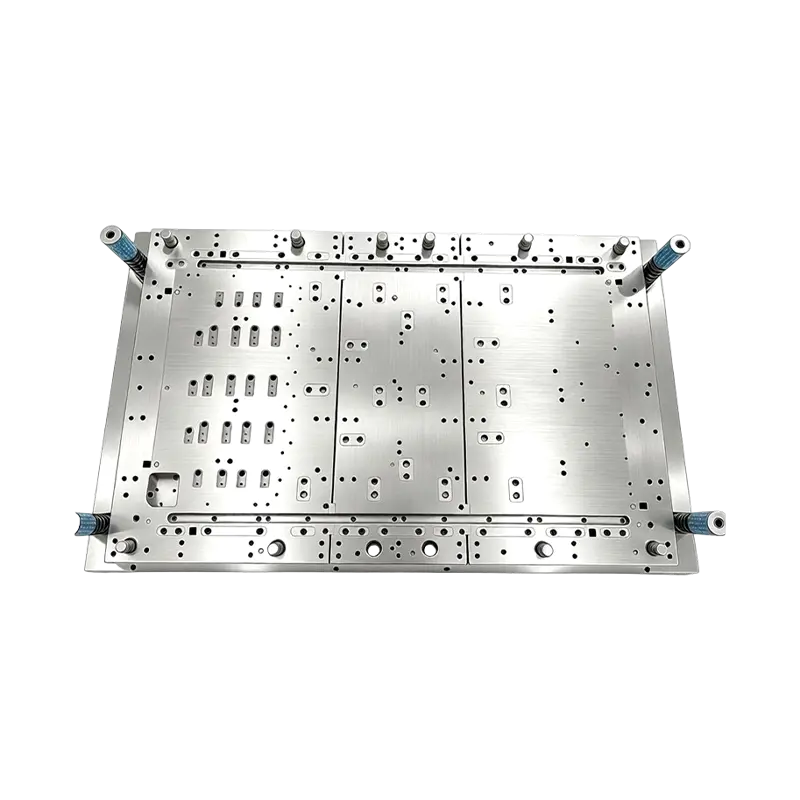
Multi-Station Progressive Stamping Die with Carbide Inserts Custom Multi Station Progressive Stamping Die Carbide Insert Metal Stamping Mold Tool for Equipment Appliances Device Hardware
High Speed Metal Stamping Tool for Precise Equipme...
-
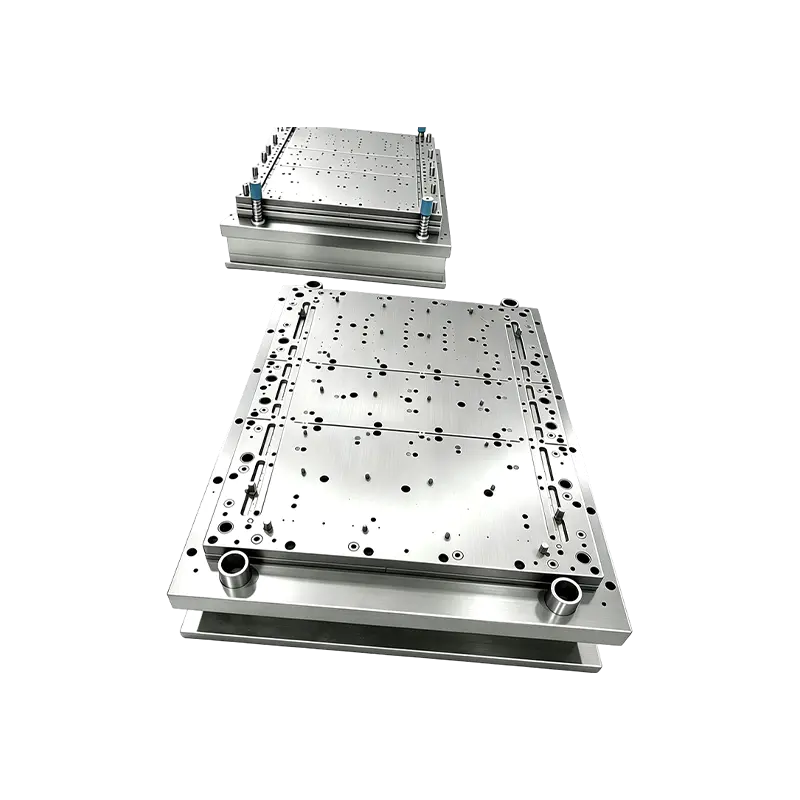
Progressive Stamping Die for Connector & Terminal Parts High Speed Progressive Stamping Die Precision Metal Hardware Stamping Tool mold for Connector Terminal Parts Automotive Components
Progressive Stamping Die for Connector & Termi...
-
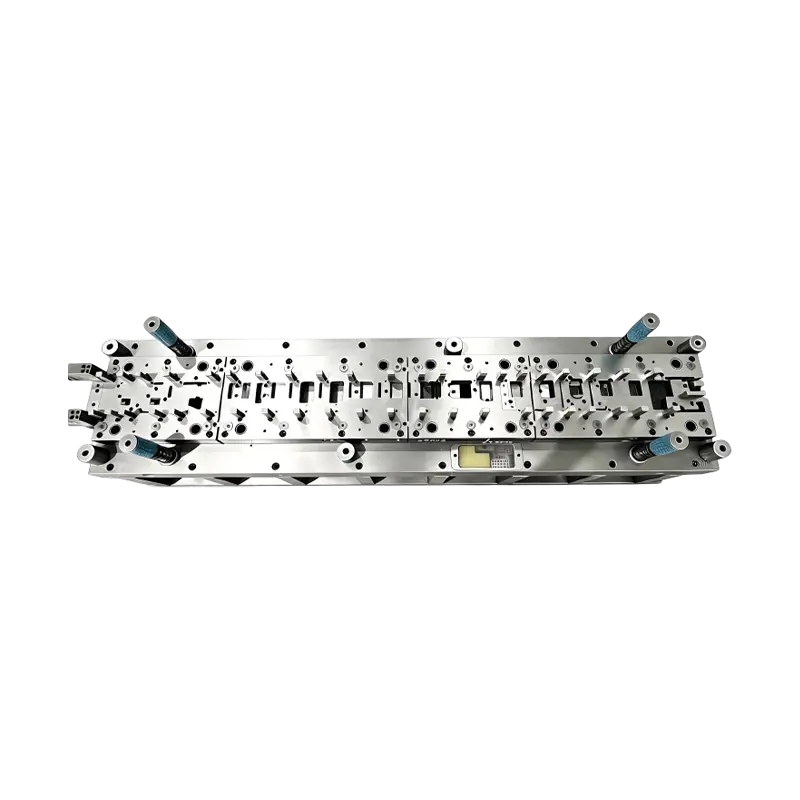
Long-Stroke Multi-Stage Progressive Die Automatic Strip Feed Progressive Die Long Travel Follow on Stamping Tool for Sheet Metal Hardware Press Moulding
Long-Stroke Multi-Stage Progressive DieOur custom ...
-
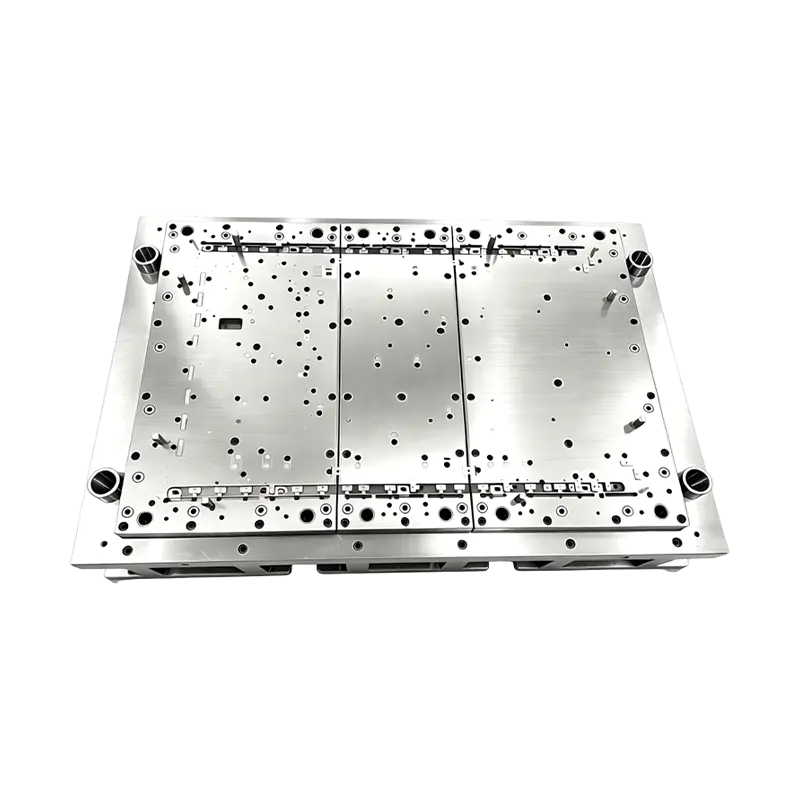
High Precision Stamping Die Multi Station Hardware Progressive Mold Tooling
Precision Metal Stamping Tool for Automotive &...
-
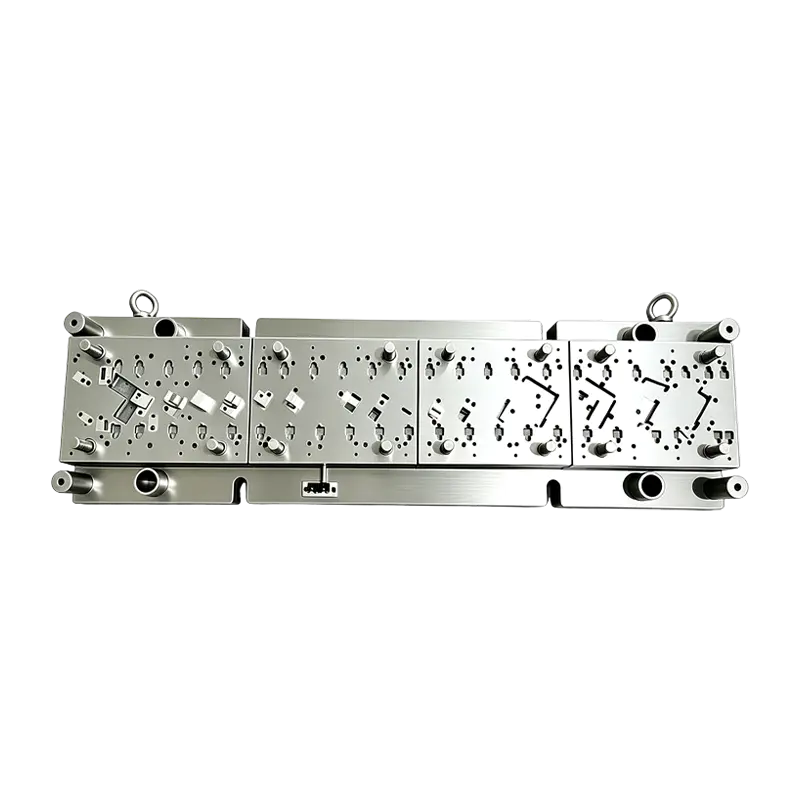
High Speed Progressive Stamping Die Sheet Metal Follow on Press Tool
Multi-operation Metal Stamping Tool for Continuous...
- E-mail us: [email protected]
- Call us: +86-139 1308 8972

Industry News
Home / News / Industry News / Metal Stamping Parts for Home Appliances: Materials, Precision & Custom Solutions
Metal Stamping Parts for Home Appliances: Materials, Precision & Custom Solutions
2026-06-10
Content
- 1 The Hidden Precision Behind Every Home Appliance
- 2 Key Metal Stamping Parts Used in Home Appliances
- 3 Material Selection: Stainless Steel, Aluminum, and Galvanized Sheet
- 4 Precision Standards That Home Appliance Manufacturing Demands
- 5 Why Die Design and Stamping Need to Be Integrated
- 6 Custom Stamping Solutions for Appliance Manufacturers
The Hidden Precision Behind Every Home Appliance
A refrigerator runs for a decade without a hinge failure. A washing machine drum spins tens of thousands of cycles without losing alignment. An air conditioner bracket holds its load through years of vibration and thermal expansion. None of this happens by accident. Behind each of these outcomes is a metal stamping part machined to tolerances that most people never think about — until something goes wrong.
Home appliance manufacturers operate under relentless pressure: tighter assembly tolerances, longer warranty commitments, and supply chains that leave no room for rework. The stamped metal components that form the structural and functional backbone of these products — brackets, chassis panels, motor mounts, connecting pieces — are where that pressure lands first. A part that is 0.1mm out of specification does not just fit poorly; it can compromise the entire assembly line.
This article breaks down the key metal stamping parts used across major appliance categories, how material selection affects performance, what precision standards actually mean in practice, and why the relationship between die design and part quality cannot be separated.
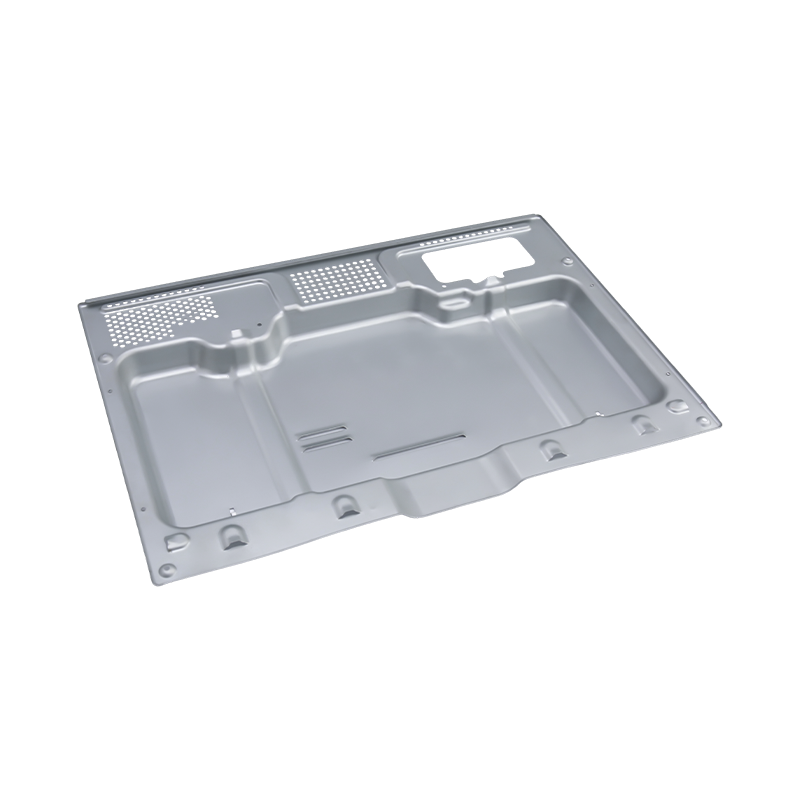
Key Metal Stamping Parts Used in Home Appliances
Each appliance category places distinct demands on its stamped components. Understanding what those parts actually do — not just what they are called — helps appliance manufacturers specify correctly and avoid costly redesigns downstream.
Refrigerators
Refrigerator stamping parts span a wide range of functions. Shelving brackets must carry variable loads without deflecting, which requires consistent flatness and tight hole positioning. Door hinges experience repeated stress cycling and need surface treatments that resist both corrosion and wear. Compressor mounts transmit vibration continuously, demanding high dimensional accuracy so they can be assembled without shimming or adjustment. Inner liner frames and rear backplates are typically large, thin stampings where warping tolerance is critical to achieving proper sealing.
Washing Machines
Drum support structures and outer tub brackets in washing machines are among the most mechanically demanding stamped parts in the appliance category. They must maintain dimensional stability under dynamic loading — not just static weight — and resist fatigue over years of high-speed spin cycles. Panel enclosures and door frames, by contrast, are primarily structural and cosmetic, but require consistent edge quality and flatness to support clean assembly with plastic trim components.
Air Conditioners
Air conditioner stamping parts include heat sink fins, air duct brackets, and chassis panels for both indoor and outdoor units. Fin stampings require extreme consistency in pitch and depth — variation directly affects thermal transfer efficiency. Outdoor unit brackets must handle structural loads while resisting atmospheric corrosion, making material and surface treatment choices particularly important.
Microwave Ovens
Microwave components involve a combination of structural stamping (chassis, door frames, control panel housings) and functionally critical parts such as waveguide covers and magnetron brackets, where dimensional accuracy affects electromagnetic performance as much as mechanical fit. For the full range of stamped components across these categories, see our complete precision stamping parts offering. Appliances with integrated electronic control systems — including inverter air conditioners and smart refrigerators — also require electronic stamping parts for appliance control and circuit housing assemblies.
Material Selection: Stainless Steel, Aluminum, and Galvanized Sheet
Material choice for home appliance stamping parts is not simply a cost decision. Each material brings a specific set of mechanical and surface properties that determine where it can and cannot be used. Getting this wrong at the design stage is far more expensive than getting it right upfront.
| Material | Key Properties | Typical Applications | Considerations |
|---|---|---|---|
| Stainless Steel | High strength, excellent corrosion resistance, durable surface | Door panels, structural brackets, motor mounts, hinges | Higher tooling wear; requires harder die materials |
| Galvanized Sheet | Good corrosion resistance, cost-effective, weldable | Chassis panels, rear backplates, inner structural frames | Coating can affect tight-tolerance fits; edge treatment needed |
| Aluminum Alloy | Lightweight, good thermal conductivity, natural corrosion resistance | Heat sinks, air duct components, fin stampings | Lower strength than steel; springback must be accounted for in die design |
Stainless steel is the default choice wherever corrosion resistance and surface appearance both matter — exposed brackets, door structures, and any component that will be visible in the finished product. Galvanized sheet dominates internal structural applications where cost efficiency is the priority and the part will be protected by the appliance enclosure. Aluminum is the clear choice wherever weight and thermal performance are the design drivers, particularly in HVAC and refrigeration components where heat transfer is a functional requirement, not just a side effect.
The material also determines the die design. Aluminum's springback behavior, stainless steel's work hardening rate, and galvanized sheet's coating thickness all affect how a die must be engineered to produce a dimensionally accurate part. This is why material selection and tooling design must be considered together, not in sequence.
Precision Standards That Home Appliance Manufacturing Demands
Home appliance manufacturers typically operate on assembly lines where components from multiple suppliers must fit together with minimal adjustment. This places real, specific demands on stamping accuracy — not just general statements about "high precision."
Dimensional Accuracy
Critical fit features — hole positions, edge-to-edge distances, flange heights — are typically held to tolerances in the range of ±0.05mm to ±0.2mm depending on the function. Motor mount holes, for example, require tighter tolerances than chassis panel cutouts, because misalignment translates directly into vibration and noise in the finished appliance. Parts produced with inconsistent tolerances from batch to batch create the most difficult problems: assembly lines calibrated to one batch fail when the next arrives slightly out of spec.
Flatness and Surface Quality
Flat stamping parts are not automatically flat. Residual stress from the stamping process can cause warping, particularly in thin, large-format parts like chassis panels and rear backplates. Flatness is checked against defined tolerances, and parts outside those tolerances are rejected — not because they look wrong, but because they prevent proper mating with adjacent components or gaskets.
Corrosion Resistance
Home appliances are warrantied for years and expected to last longer. Corrosion in structural parts — particularly in washing machines and refrigerators where moisture is present — can compromise both function and safety. Quality checks for corrosion resistance are not a formality; they are a direct test of whether the material specification and surface treatment have been correctly applied and maintained through production.
Why Die Design and Stamping Need to Be Integrated
The most common source of dimensional inconsistency in stamped appliance parts is not the press — it is the gap between whoever designed the die and whoever is running production. When die design and stamping are handled by different organizations, problems at the boundary are inevitable: dies that produce accurate first-article samples but drift over production runs, tooling that was not designed for the material actually used, or spring-back compensation that was estimated rather than engineered.
Integrating die design and stamping production under the same roof eliminates this gap. Engineers who design the tooling are accountable for the parts it produces. Feedback from production directly informs die maintenance and correction decisions. The result is tighter part-to-part consistency across long production runs — which is exactly what appliance assembly lines require.
Shuangqisi Mold provides this integration as standard. With in-house precision wire EDM equipment capable of ±0.002mm processing accuracy, combined die design and manufacturing capabilities, and direct production of stamping parts on those same tools, the entire process from initial design to finished part is controlled and optimized within a single operation. For appliance manufacturers evaluating stamping suppliers, this is one of the most meaningful capability questions to ask. Learn more about our custom stamping die design and manufacturing for high-volume production.
Custom Stamping Solutions for Appliance Manufacturers
No two appliance programs are identical. Motor bracket geometry changes between product generations. A new refrigerator platform requires a different inner liner frame. An air conditioner redesign moves from galvanized to aluminum for weight reduction. Each change requires tooling that is engineered for the new specification — not adapted from something close.
Shuangqisi Mold provides OEM custom metal stamping parts for home appliance manufacturers, covering stainless steel, galvanized sheet, and aluminum alloy stampings across the full range of structural and functional components. From initial drawing review and die design through first-article validation and volume production, our team works to the dimensional and surface quality standards that appliance assembly lines require.
If you are sourcing metal stamping parts for refrigerators, washing machines, air conditioners, or microwave ovens, contact us for a technical review and quotation. We welcome both new program inquiries and second-source evaluations for existing parts.
Previous Post
Battery Cover Stamping Parts for EV & Energy Storage Battery Enclosures
Next Post
Automotive Seat Stamping Parts: High-Precision Manufacturing, Load Bearing & Material Selection
Our Products.
Start Your Business with an OEM Manufacturer Right Here!

Provide global customers with complete turn-key solutions
through
innovation!
QUICK LINKS
CONTACT INFO.
-
 +86-139 1308 8972
 -

-
 No. 118 Yexin Road, Wujiang Economic Development Zone, Suzhou, China
Copyright © Suzhou Shuangqisi Mold Equipment Co., Ltd. All Rights Reserved. Custom Stamping Die Metal Stamping Die Manufacturers
