 English
 Español
 Deutsch
-
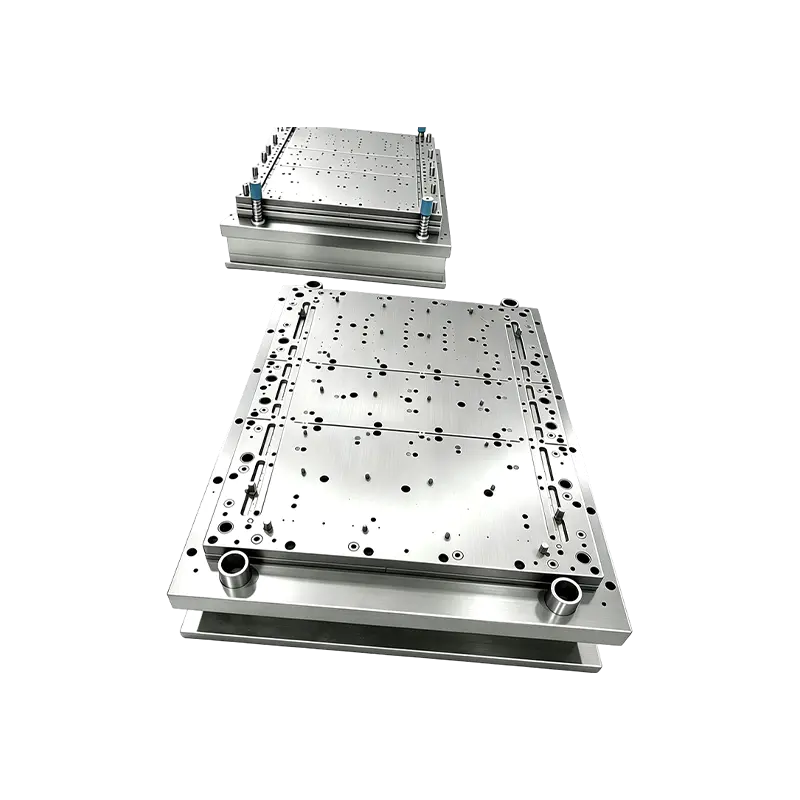
Progressive Stamping Die for Connector & Terminal Parts High Speed Progressive Stamping Die Precision Metal Hardware Stamping Tool mold for Connector Terminal Parts Automotive Components
Progressive Stamping Die for Connector & Termi...
-
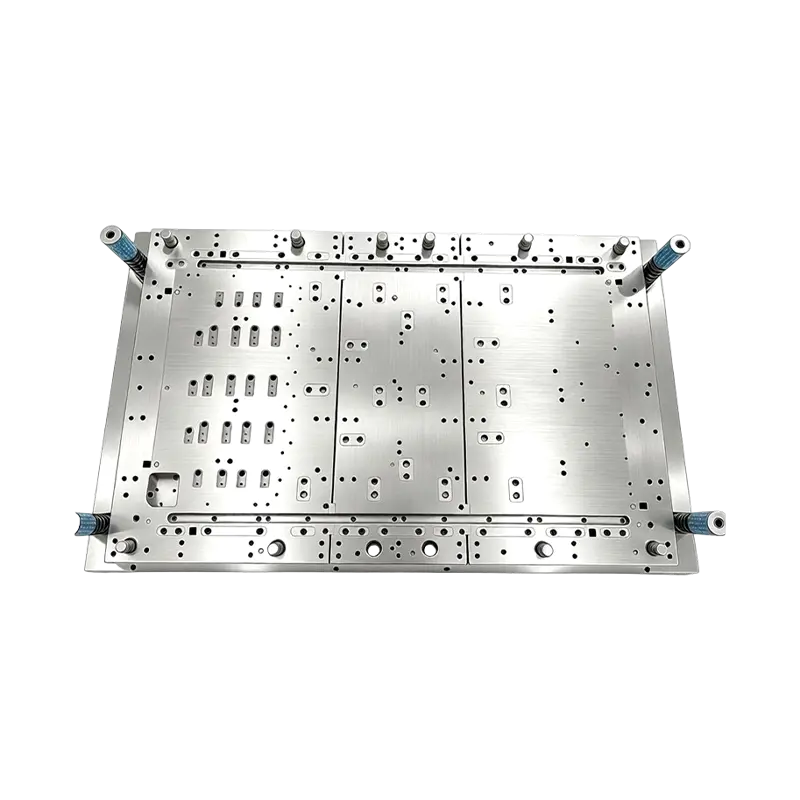
Multi-Station Progressive Stamping Die with Carbide Inserts Custom Multi Station Progressive Stamping Die Carbide Insert Metal Stamping Mold Tool for Equipment Appliances Device Hardware
High Speed Metal Stamping Tool for Precise Equipme...
-
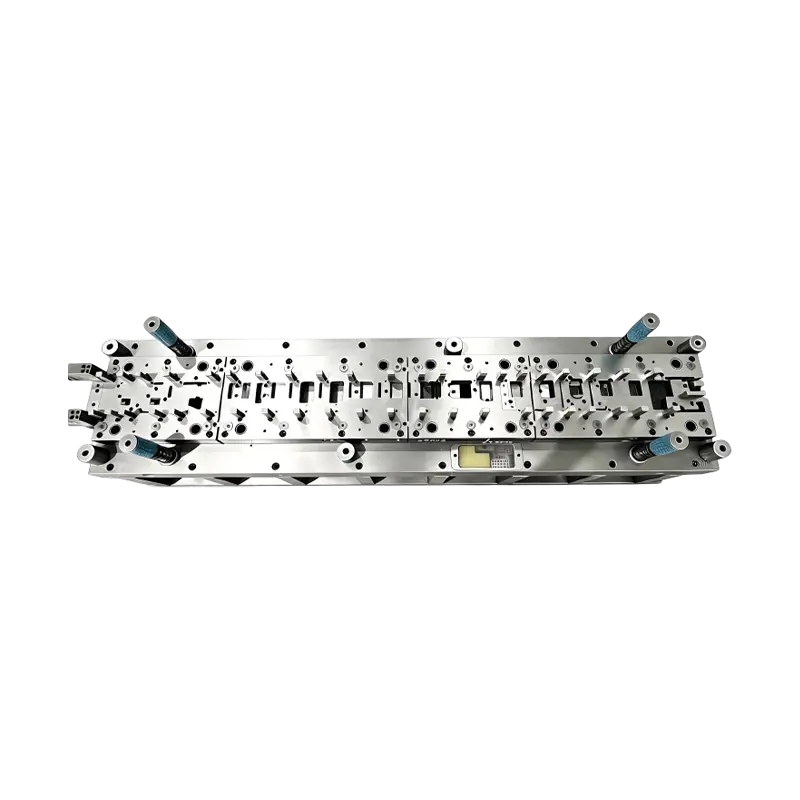
Long-Stroke Multi-Stage Progressive Die Automatic Strip Feed Progressive Die Long Travel Follow on Stamping Tool for Sheet Metal Hardware Press Moulding
Long-Stroke Multi-Stage Progressive DieOur custom ...
-
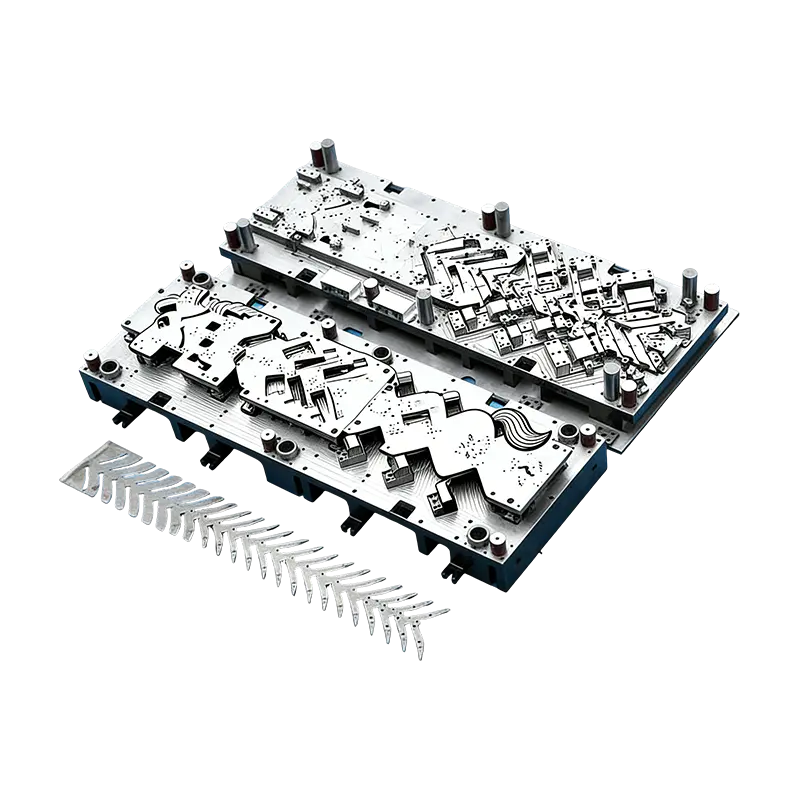
Progressive molds for automotive parts
This Continuous mold for automotive motor housing ...
-
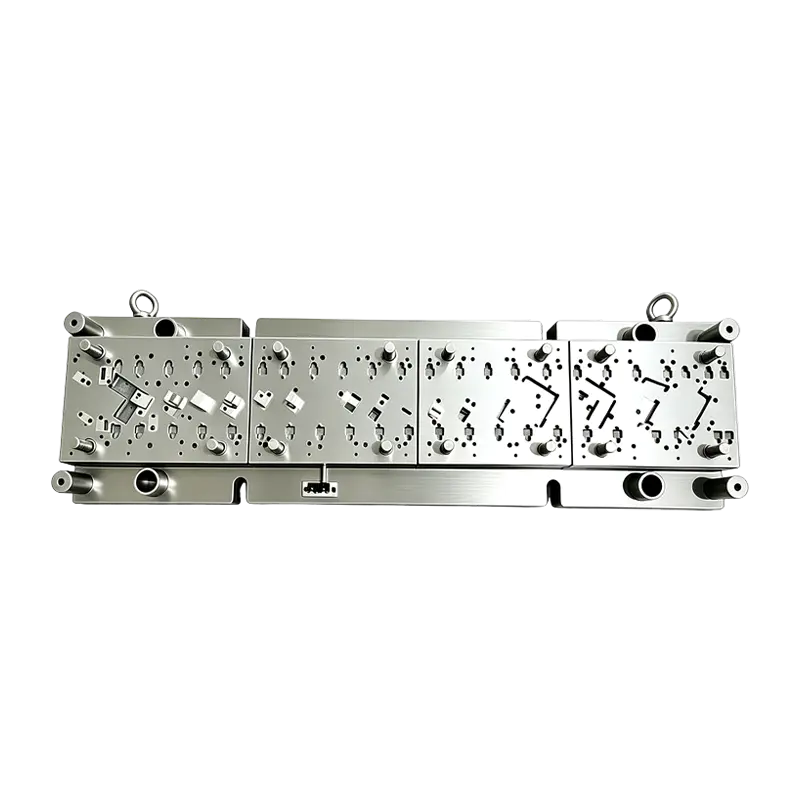
High Speed Progressive Stamping Die Sheet Metal Follow on Press Tool
Multi-operation Metal Stamping Tool for Continuous...
-
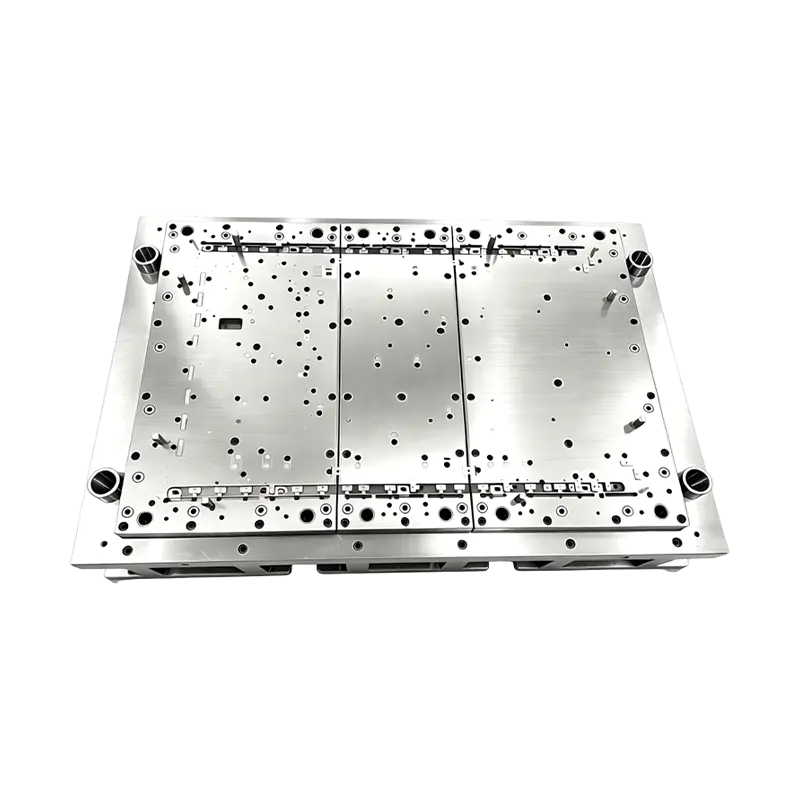
High Precision Stamping Die Multi Station Hardware Progressive Mold Tooling
Precision Metal Stamping Tool for Automotive &...
- E-mail us: [email protected]
- Call us: +86-139 1308 8972

Industry News
Home / News / Industry News / Compound Die vs Progressive Die: Differences, Applications and How to Choose
Compound Die vs Progressive Die: Differences, Applications and How to Choose
2026-09-24
Content
- 1 Compound Die vs Progressive Die: The Core Difference
- 2 How Each Die Works
- 3 Precision and Tolerance Control
- 4 Forming Capability
- 5 Production Speed and Volume
- 6 Tooling Cost and Maintenance
- 7 Typical Applications
- 8 Material and Part Design Considerations
- 9 Common Mistakes When Choosing a Die
- 10 When Both Die Types Work Together
- 11 How to Choose the Right Die for Your Part
- 12 Working With Suzhou Shuangqisi Mold Equipment Co., Ltd. on Stamping Dies and Parts
Compound Die vs Progressive Die: The Core Difference
A compound die can turn a strip into a finished washer in a single press stroke. A progressive die may carry the same strip through a dozen stations before a connector terminal is finally cut free. Both are precision stamping tools built for mass production, yet they solve very different problems.
The difference comes down to process logic. A compound die completes several operations simultaneously at one station. A progressive die completes them sequentially across multiple independent stations. That single distinction drives everything else: precision, forming capability, output speed and cost. Buyers often treat the two as interchangeable, and that assumption is where many tooling budgets go wrong.
How Each Die Works
A compound die has one working station. In a single stroke, operations such as piercing and blanking happen at the same position. The workpiece stays on one datum and never shifts, so it leaves the die as a finished part after one press cycle. The logic is simple: one station, several operations at once.
A progressive die arranges dozens of stations, in complex cases, along the feeding direction. The strip advances one step with every stroke, and each station handles its own task: piercing, bending, forming, riveting or cutting. The part stays attached to the carrier strip throughout and is separated only at the final station.
In practical terms, a compound die behaves like a single precise cut, while a progressive die behaves like a compact production line built inside one tool. Each approach has a natural home, and the sections below show where the boundary sits.
Precision and Tolerance Control
Because every cutting edge in a compound die works from the same datum, hole-to-hole position, concentricity and flatness can be held very tightly. There is no pitch accumulation, since the part never moves between operations. This makes the compound die the natural choice for flat parts where hole location is critical, such as precision cover plates or thin flat terminals.
Flatness deserves a special mention. In a compound die the workpiece is pressed and ejected as a whole, which helps keep thin flat parts free of distortion. Parts that must sit flush against a mating surface often benefit from this.
Progressive dies feed the strip forward step by step, so a small pitch tolerance can build up between stations. Single-hole accuracy is therefore slightly lower than a compound die can deliver. For most precision hardware the difference stays well within tolerance, and it is the price paid for far greater process flexibility. When holes must be located relative to each other with extreme accuracy, good die design can also pierce them at the same station to keep them on one reference.
Forming Capability
A compound die concentrates every cutting structure into one station, and that limits what it can do. Structural interference rules out complex bending, deep drawing and in-die riveting, so its scope is essentially flat blanking and piercing.
Progressive dies split the work into separate stations that do not interfere with each other. This allows bending, drawing, shaping, in-die riveting and even in-line detection. For irregular parts with multiple bends and features, the progressive die is the only practical way to reach automated volume production.
A useful rule of thumb: if the finished part is flat, a compound die is worth considering. If it has a bend, a form or an assembled feature, the conversation almost always moves to progressive tooling.
Production Speed and Volume
A compound die delivers one finished part per stroke, but it depends on single-piece feeding and discharging, so its rhythm is moderate. It suits low-to-medium volumes of high-precision flat parts. It is also easy to debug, and its accuracy stays stable over long runs.
A progressive die runs on continuous strip feeding at high stamping frequency. Once the strip is loaded, the press can run for long stretches with little supervision. That is why progressive tooling dominates high-volume, high-speed work in automotive electronics, new energy and connector terminal manufacturing.
Volume also affects material use. A progressive die needs a carrier to hold the part in the strip, which can consume more material on simple shapes. On a very large run this is usually outweighed by speed and labor savings, but on a small run of flat parts it can tip the balance back toward a compound die.
Tooling Cost and Maintenance
Compound dies are simple in structure, inexpensive to build, quick to deliver and easy to maintain. For small-batch orders they offer excellent value, although their process range is narrow.
Progressive dies involve a complex multi-station design, higher engineering difficulty, greater upfront cost and a longer lead time. In return they offer long service life and stable running. Once the tooling investment is spread across a large run, the unit cost drops very low, which suits long-term, stable batch projects.
Maintenance follows the same pattern. A compound die can usually be serviced with routine sharpening and inspection. A progressive die needs professional maintenance and careful debugging, because a worn punch at one station can affect every station after it.
Typical Applications
Compound dies are used for gaskets, washers, flat sheets, precision cover plates, flat terminals and other ultra-thin flat parts with strict hole concentricity and flatness requirements.
Progressive dies are used for connector terminals, relay contacts, new energy shrapnels, battery connectors, bent clips, irregular shielding cans and in-die riveted assemblies. If your project involves these formed components, our range of custom metal stamping parts is a good place to start.
| Comparison | Compound Die | Progressive Die |
|---|---|---|
| Process logic | Simultaneous operations at one station | Sequential operations across multiple stations |
| Precision | Very high, no cumulative tolerance | High, with minor pitch error |
| Forming capacity | Flat blanking and piercing only | Bending, drawing, riveting and more |
| Production mode | Single-piece output, medium speed | Continuous strip feeding, high speed |
| Volume | Small to medium | High to very high |
| Tooling cost | Lower initial cost | Higher initial cost, lower unit cost in mass production |
| Maintenance | Easy | Requires professional maintenance and debugging |
Material and Part Design Considerations
Material thickness and type influence the decision as much as part shape. Very thin stock is easy to distort when it is pushed through many stations, which is one reason ultra-thin flat parts are often kept in a compound die. Harder or springier materials, on the other hand, may need the controlled forming steps that only a progressive layout can provide.
Part design also matters. Placing holes too close to an edge or to a bend line can cause deformation in either die type. Reviewing the drawing for manufacturability before tooling starts is far cheaper than correcting the die afterward, and small design adjustments can often move a part from a complex tooling route to a simpler one.
Finally, consider what happens after stamping. Plating, heat treatment or assembly steps may set additional limits on burr height, flatness and dimensional stability, and these limits should be agreed before the die is designed.
Common Mistakes When Choosing a Die
Most tooling problems trace back to a mismatch between the die type and the real requirements of the project. Four patterns come up repeatedly:
- Choosing a progressive die for a short run, then discovering that the tooling cost dominates the price of every part.
- Choosing a compound die for a part that later gains a small bend or embossed feature, which forces a costly redesign.
- Specifying tolerances tighter than the function requires, which pushes the project toward more expensive tooling without a real benefit.
- Ignoring the annual forecast. A part that starts at a few thousand pieces may grow into a long-term program, and the tooling plan should allow for that.
Sharing the expected volume and the full set of features with your tooling partner at the start avoids most of these problems.
When Both Die Types Work Together
The choice is not always either-or. Some projects use a compound die to produce a flat blank with tightly located holes, and a separate forming die to add bends afterward. Others use a progressive die for the formed body and a secondary operation for a critical feature.
These hybrid routes make sense when one feature demands compound-level positional accuracy while the rest of the part needs forming. An experienced tooling engineer will weigh the extra handling against the accuracy gained and recommend the simplest route that meets the drawing.
How to Choose the Right Die for Your Part
Start with three questions. Is the part flat, or does it need bending and forming? How tight are the hole-position and flatness tolerances? And what is the expected annual output?
Choose a compound die for high-precision flat parts and small batches. Choose a progressive die for complex-shaped parts and high-speed automatic mass production. Neither is better in every case; each fits a different scenario, and the best solution is the one matched to the part structure, tolerance requirements and annual volume.
Working With Suzhou Shuangqisi Mold Equipment Co., Ltd. on Stamping Dies and Parts
At Suzhou Shuangqisi Mold Equipment Co., Ltd., we approach die selection as an engineering decision rather than a sales one. Our engineers review your drawing, tolerance requirements and annual volume, then recommend the tooling route that balances precision, efficiency and production cost.
You can explore our precision metal stamping dies if you need tooling for your own production line, or work with us on finished components through our metal stamping parts service. Send us your part drawing and expected volume, and Suzhou Shuangqisi Mold Equipment Co., Ltd. will come back with a tooling and quotation proposal.
Previous Post
In-Die Riveting for Progressive Stamping Dies: Principles and Applications
Next Post
Copper Progressive Stamping: Alloys, Tolerances, Tooling and Cost Guide
Our Products.
Start Your Business with an OEM Manufacturer Right Here!

Provide global customers with complete turn-key solutions
through
innovation!
QUICK LINKS
CONTACT INFO.
-
 +86-139 1308 8972
 -

-
 No. 118 Yexin Road, Wujiang Economic Development Zone, Suzhou, China
Copyright © Suzhou Shuangqisi Mold Equipment Co., Ltd. All Rights Reserved. Custom Stamping Die Metal Stamping Die Manufacturers
