 English
 Español
 Deutsch
-
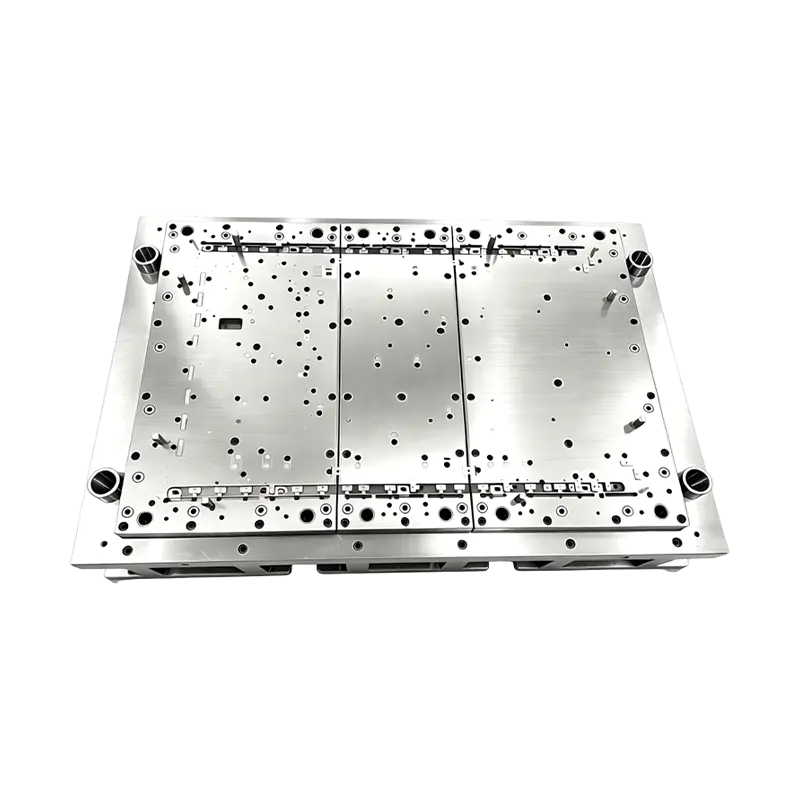
High Precision Stamping Die Multi Station Hardware Progressive Mold Tooling
Precision Metal Stamping Tool for Automotive &...
-
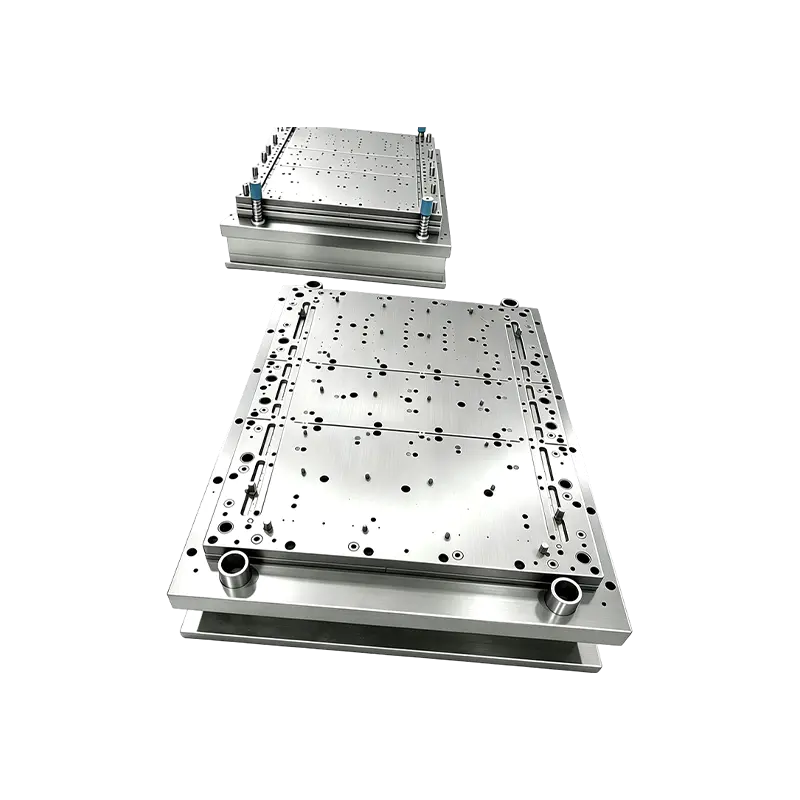
Progressive Stamping Die for Connector & Terminal Parts High Speed Progressive Stamping Die Precision Metal Hardware Stamping Tool mold for Connector Terminal Parts Automotive Components
Progressive Stamping Die for Connector & Termi...
-
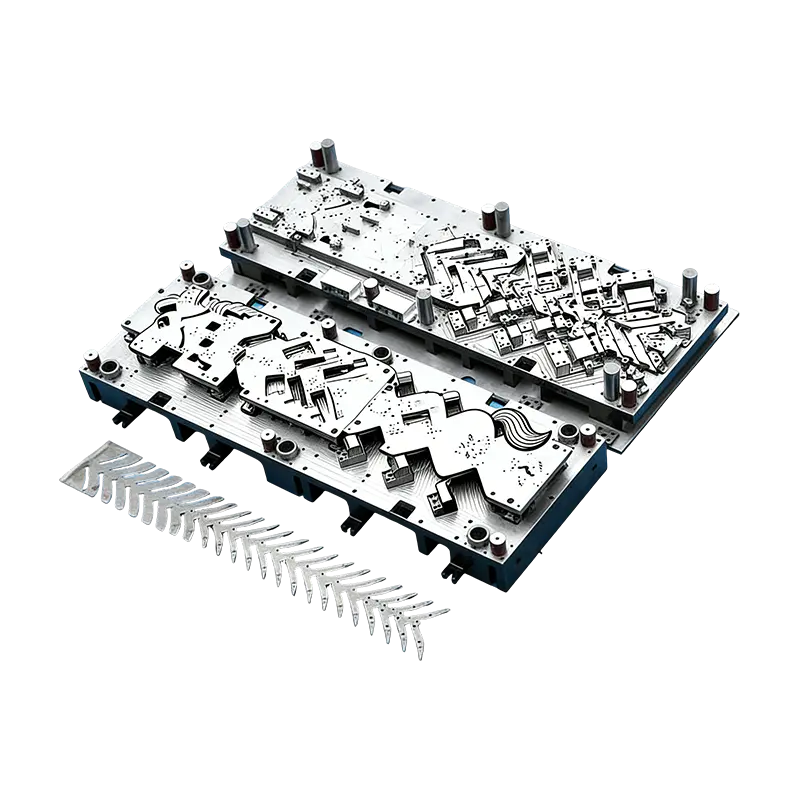
Progressive molds for automotive parts
This Continuous mold for automotive motor housing ...
-
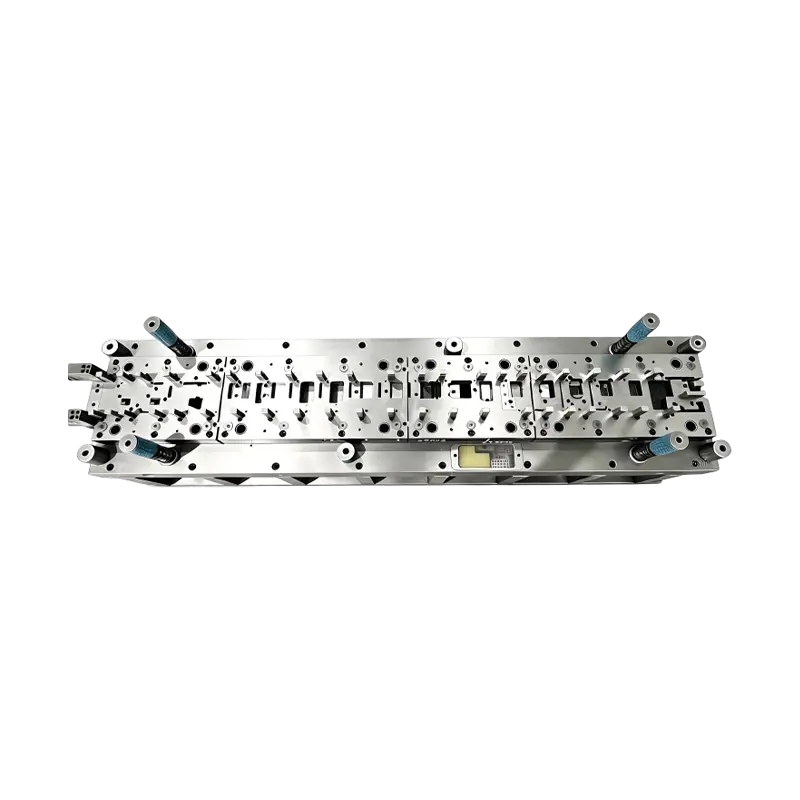
Long-Stroke Multi-Stage Progressive Die Automatic Strip Feed Progressive Die Long Travel Follow on Stamping Tool for Sheet Metal Hardware Press Moulding
Long-Stroke Multi-Stage Progressive DieOur custom ...
-
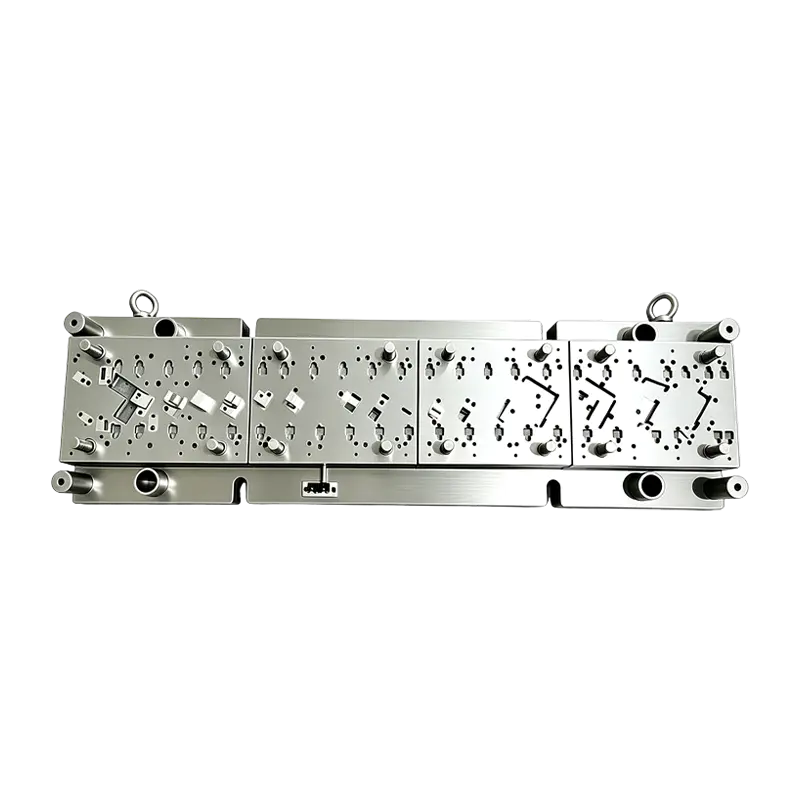
High Speed Progressive Stamping Die Sheet Metal Follow on Press Tool
Multi-operation Metal Stamping Tool for Continuous...
-
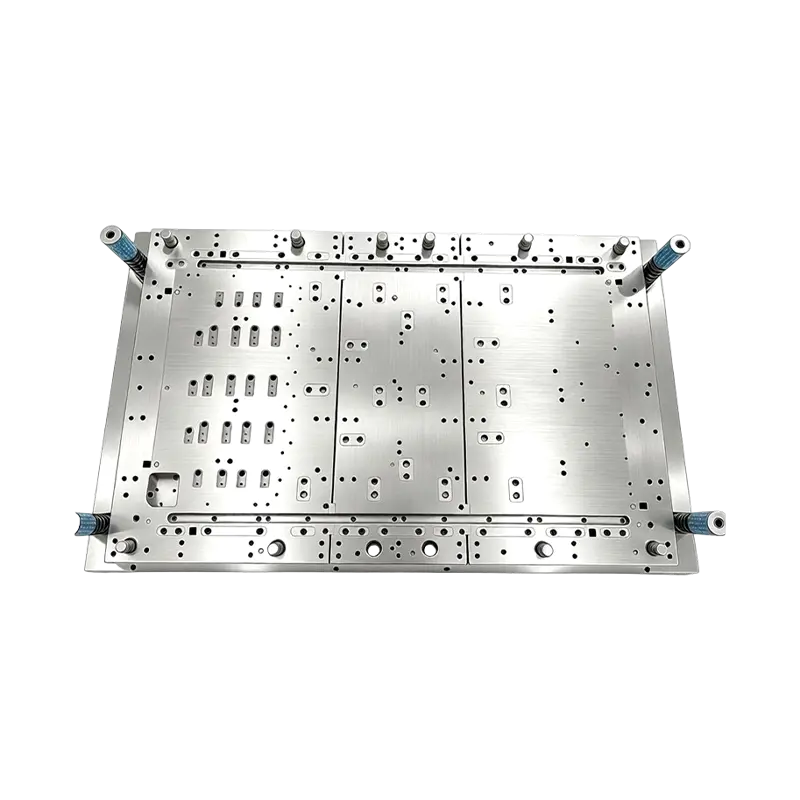
Multi-Station Progressive Stamping Die with Carbide Inserts Custom Multi Station Progressive Stamping Die Carbide Insert Metal Stamping Mold Tool for Equipment Appliances Device Hardware
High Speed Metal Stamping Tool for Precise Equipme...
- E-mail us: [email protected]
- Call us: +86-139 1308 8972

Industry News
Home / News / Industry News / Copper Progressive Stamping: Alloys, Tolerances, Tooling and Cost Guide
Copper Progressive Stamping: Alloys, Tolerances, Tooling and Cost Guide
2026-09-21
If your part is a copper busbar, a leadframe, a connector terminal, or a motor housing, copper progressive stamping is normally the cheapest route at volume — but only when the die is designed around copper's habits instead of mild steel's. The short answer: run 5 to 10 percent clearance per side on annealed tempers, expect 150 to 1,200 strokes per minute depending on strip width and station count, and plan on the tooling paying for itself somewhere between 30,000 and 60,000 parts per year.
The three numbers that decide a copper progressive stamping project
- Strip utilization: 58 to 75 percent on a well-planned progression; every point below that is copper scrap you buy at metal price and sell at scrap price.
- Effective stroke rate: the slower of the press limit and the feed-and-pilot limit — not the number on the press nameplate.
- Break-even volume: die cost divided by per-part savings against a single-stage or outsourced alternative, usually reached in 6 to 18 months.
Copper is not a hard material to stamp. It is an unforgiving one. Soft tempers shear cleanly but cold-weld to tool steel, age-hardened tempers hold their shape but fight every bend, and thin strip moves fast enough that a single misaligned pilot pin can destroy a station before anyone hears it. The rest of this guide covers the decisions that actually move cost and yield.
Content
How Copper Behaves Inside a Progressive Die
Progressive stamping feeds a coil through a series of stations, where the strip carries the part on a web or carrier while piercing, forming, coining, bending, and final separation happen in sequence. In copper, three material behaviors dominate die design.
- Clearance: annealed C11000 ETP copper needs roughly 5 to 10 percent of thickness per side to break cleanly. Running a steel-numbered clearance of 4 to 6 percent on soft copper produces torn edges, heavy burrs, and accelerated punch wear.
- Galling and pickup: copper cold-welds to tool steel under pressure. Polished D2 or carbide inserts with a PVD coating, plus a lubricant with the right extreme-pressure additive package, keep stations clean through a full shift.
- Springback: soft tempers release only 1 to 3 degrees, but phosphor bronze and beryllium copper in spring tempers can return 5 degrees or more, so over-bend is designed into the form station rather than corrected at tryout.
- Heat at speed: above roughly 600 strokes per minute the strip itself carries heat away from the shear zone. Lubricant viscosity and a stable die temperature matter more than press tonnage.
Strip layout comes first
Carrier type, web width, and part rotation are fixed before a single die plate is cut. Rotating a narrow terminal by 90 degrees in a wide carrier is often worth 4 to 6 points of material utilization.
Pilot before pierce
Pilot holes hold position through every station. In thin copper, a 0.02 mm pilot error compounds into a visible offset at the last form station.
Die protection is not optional
Station-level sensors catch misfeeds, slug stacking, and short feeds. On a 12-station copper die, a single missed slug can cost more than the sensor package.
The comparison that matters most at the quoting stage is progressive versus transfer stamping: transfer dies handle larger, deeper parts with separate blanks, while progressive tooling wins on thin copper, high volume, and integrated operations such as automatic riveting. A closer look at progressive and transfer metal stamping helps buyers frame that choice before tooling is committed.
Choosing the Copper Alloy Before You Cut Steel
Alloy choice cascades through clearance, springback compensation, coating decisions, and eventually the price per part. Conductivity is usually the customer's requirement; formability is the stamper's constraint.
Conductivity figures are typical values for the listed tempers. Always confirm against the mill certificate before finalizing clearance and bend allowance.
 New energy vehicle copper busbar stamping partsNew energy vehicle copper busbar stamping parts are core conductive components engineered for high-voltage power transmission in electric vehicles. Made from high-puri...View Product →
Copper busbars for high-voltage battery and inverter connections are a good example of the trade-off: they need 99.9 percent conductivity, but they also need flatness within 0.1 mm and a burr-free edge so the plating line does not reject them. Specify the temper and the edge condition together, or the stamper will optimize the one that shows up in the drawing.
Tolerances and the Hidden Cost Drivers
A realistic capability window on 0.5 mm copper strip: plus or minus 0.05 mm on formed features, plus or minus 0.025 mm on pierced holes with pilots, burr height under 5 percent of material thickness, and a process capability index of 1.33 or better once the die is stable. Anything tighter than that should be challenged in the design review, because tightening tolerance in copper usually means adding a station rather than adjusting one.
Over a three-year program, the cost of a copper progressive stamping part rarely sits where buyers expect. Across typical programs, the spend distribution looks like this:
28%
Die maintenance
22%
Scrap and start-up
19%
Inspection
17%
Lube and tool wear
14%
Changeover
Typical three-year cost distribution for a copper progressive stamping program, excluding raw material purchase price.
Two implications follow. First, die maintenance is the largest controllable line: scheduled sharpening at a fixed stroke count costs far less than an unplanned station repair, and a copper die that is allowed to dull will start producing burrs before it starts making noise. Second, inspection cost tracks directly to how well the first article and the control plan were written, not to how many parts are measured.
Where Copper Progressive Stamping Is Used
Demand concentrates in applications where conductivity, thermal performance, or corrosion resistance justify copper's price premium over steel or aluminum.
Automotive and EV — busbars, motor housings, battery covers: 44%
Electrical and electronics — terminals, leadframes, shielding: 26%
Industrial equipment — servo drives, compressors, controls: 18%
Appliances and consumer devices: 12%
Automotive and electric vehicle work dominates because a single battery pack or traction inverter uses dozens of stamped copper connections, from flexible busbars to cell contact plates. Vehicle electrification adds copper content per vehicle even as it removes fuel-system parts, which is why copper stamping capacity is being expanded rather than retired.
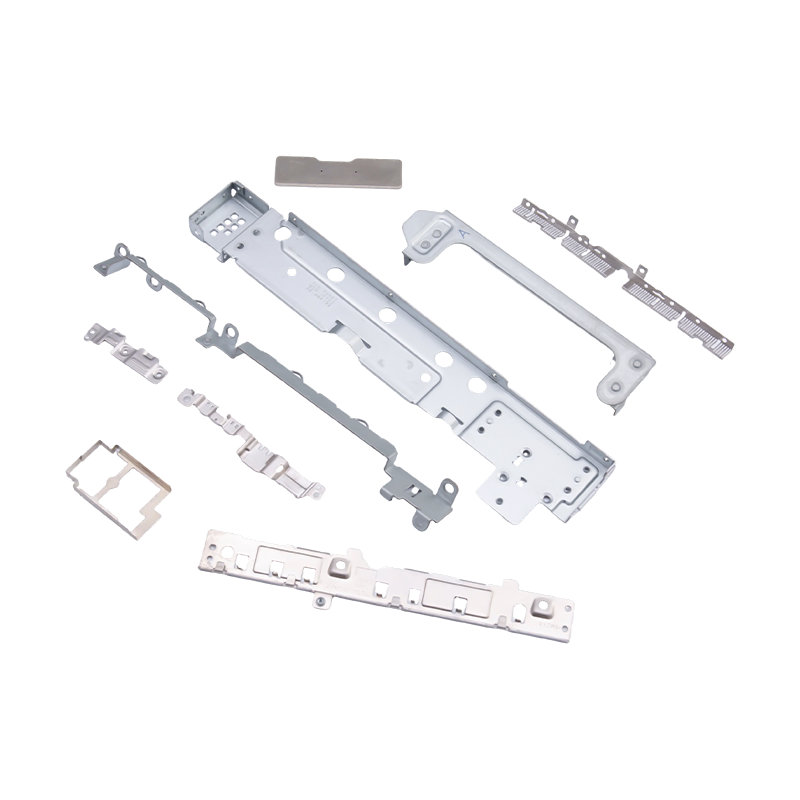 Small stamped parts for laptops and mobile phonesAs essential internal components for modern portable electronics, Small stamped parts for laptops and mobile phones play a silent yet critical role in ensuring device ...View Product →
On the electronics side, the parts are small but the tolerance bands are narrow. Laptop and mobile phone shielding and contact parts often run on strip thinner than 0.3 mm, where strip camber, edge burr, and reel-to-reel handling quality decide whether the part survives automated assembly.
Die Cost, Volume and the Break-Even Point
Tooling is the fixed cost that makes or breaks the business case. A 10 to 14 station copper progressive die typically lands between 15,000 and 45,000 USD depending on station count, carbide content, and whether sensors and in-die tapping or riveting are included. Spread over 40,000 parts per year, that is 0.38 to 1.13 USD per part; over 400,000 parts per year it drops below 0.11 USD.
A disciplined project runs through five gates, and skipping any one of them tends to surface as cost later:
1. Strip layout and simulation
Confirm material utilization, station sequence, and bend allowance against the actual temper. This gate decides 60 percent of the final part price.
2. Die design review
Lock clearance, coating, spring and stripper design, and sensor placement with the stamper and the part engineer in the same room.
3. First article and capability
Measure the full drawing, not a sample of convenient features. Burr height and hole position drive most downstream assembly failures.
4. Run at rate
Prove the quoted stroke rate for a full shift, including coil changes and reel handling, before the price is fixed.
5. Ramp and control plan
Freeze the process window, set sharpening intervals, and hand over an inspection plan tied to real failure modes.
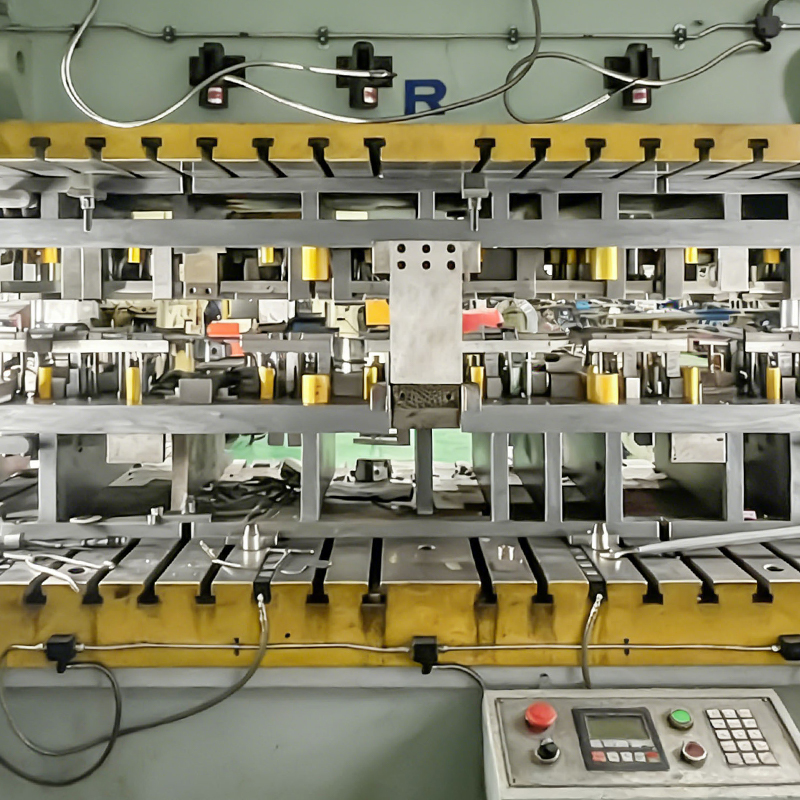 Progressive molds for automotive partsThis Continuous mold for automotive motor housing is engineered specifically for high-volume, precision production of automotive motor housings and small-sized auto pa...View Product →
Where volume is high enough to justify linking presses, coil handling, and output handling into one line, automation changes the labor equation entirely. Suppliers who build both dies and the surrounding stamping automation equipment can accept a single responsibility for output rate instead of splitting it between two vendors.
Maintenance, Traceability and Compliance
A copper progressive die is a production asset with a maintenance schedule, not a tool that gets fixed when it breaks. Four practices keep it predictable.
- Stroke-count-based sharpening: record the interval at which burr height reaches 5 percent of thickness and sharpen before that, not after a defect escape.
- Slug and misfeed detection: verify sensor function at every setup change; a disabled sensor is the most common root cause of catastrophic die damage.
- Material traceability: tie each coil lot number to the production run so conductivity or hardness complaints can be traced to a mill certificate within hours.
- Alloy-specific handling: beryllium copper demands dust extraction and personal protective equipment during grinding and deburring; the finished part is safe, the machining dust is not.
On the compliance side, copper stamping programs usually need ISO 9001 as a baseline, and automotive or EV customers will expect IATF 16949 plus PPAP documentation for production parts. Electrical and electronic applications also require RoHS and REACH declarations for the alloy, plating, and any passivation chemistry. Because copper is a recycled commodity, buyers increasingly ask for recycled content data — a request worth answering in the quality documents rather than in a separate email chain.
Copper progressive stamping rewards front-end decisions. Fix the alloy and temper against the mill certificate, design clearance and springback compensation for that specific temper, prove the stroke rate before quoting, and put the die on a maintenance schedule before the first defect appears. Do those four things and the per-part cost curve keeps falling with volume, which is the entire reason progressive tooling exists. Skip them and the savings get absorbed by scrap, rework, and unplanned die repair.
Previous Post
Compound Die vs Progressive Die: Differences, Applications and How to Choose
Next Post
Aluminum Stamping Suppliers: How to Evaluate Capability, Risk, and Fit
Our Products.
Start Your Business with an OEM Manufacturer Right Here!

Provide global customers with complete turn-key solutions
through
innovation!
QUICK LINKS
CONTACT INFO.
-
 +86-139 1308 8972
 -

-
 No. 118 Yexin Road, Wujiang Economic Development Zone, Suzhou, China
Copyright © Suzhou Shuangqisi Mold Equipment Co., Ltd. All Rights Reserved. Custom Stamping Die Metal Stamping Die Manufacturers
