 English
 Español
 Deutsch
-
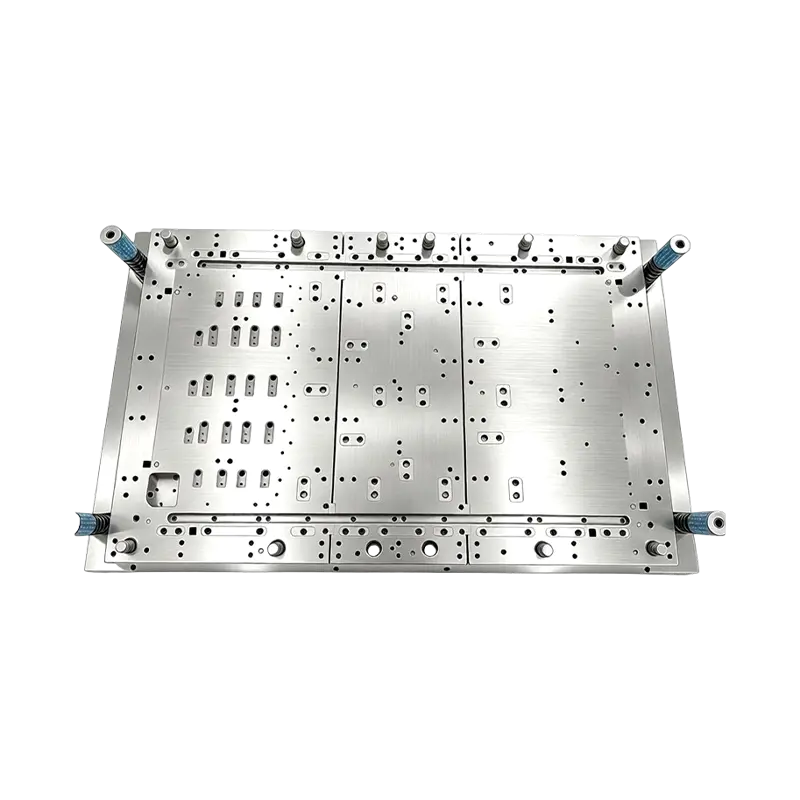
Multi-Station Progressive Stamping Die with Carbide Inserts Custom Multi Station Progressive Stamping Die Carbide Insert Metal Stamping Mold Tool for Equipment Appliances Device Hardware
High Speed Metal Stamping Tool for Precise Equipme...
-
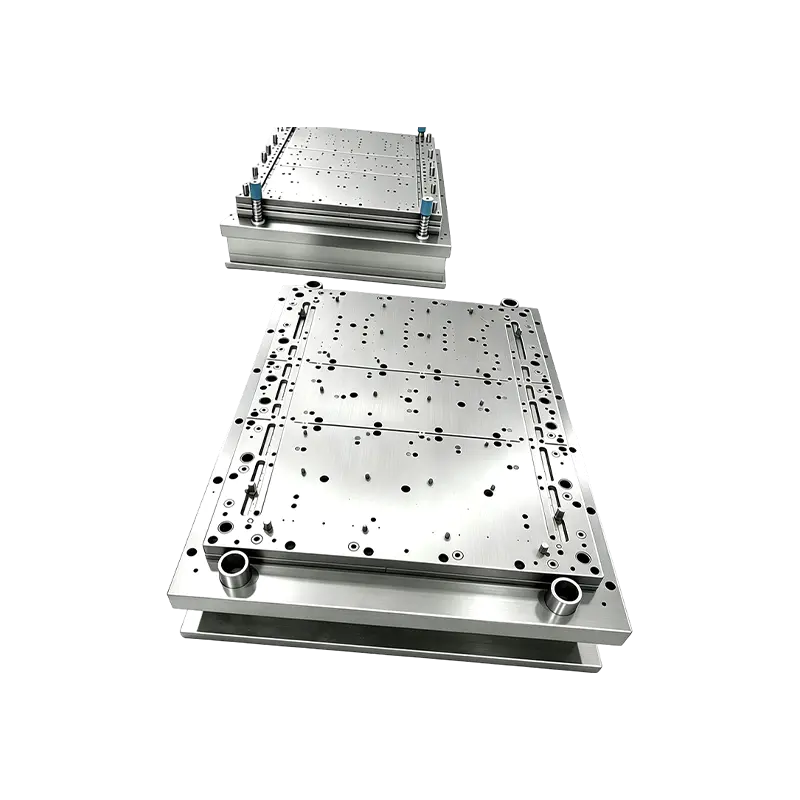
Progressive Stamping Die for Connector & Terminal Parts High Speed Progressive Stamping Die Precision Metal Hardware Stamping Tool mold for Connector Terminal Parts Automotive Components
Progressive Stamping Die for Connector & Termi...
-
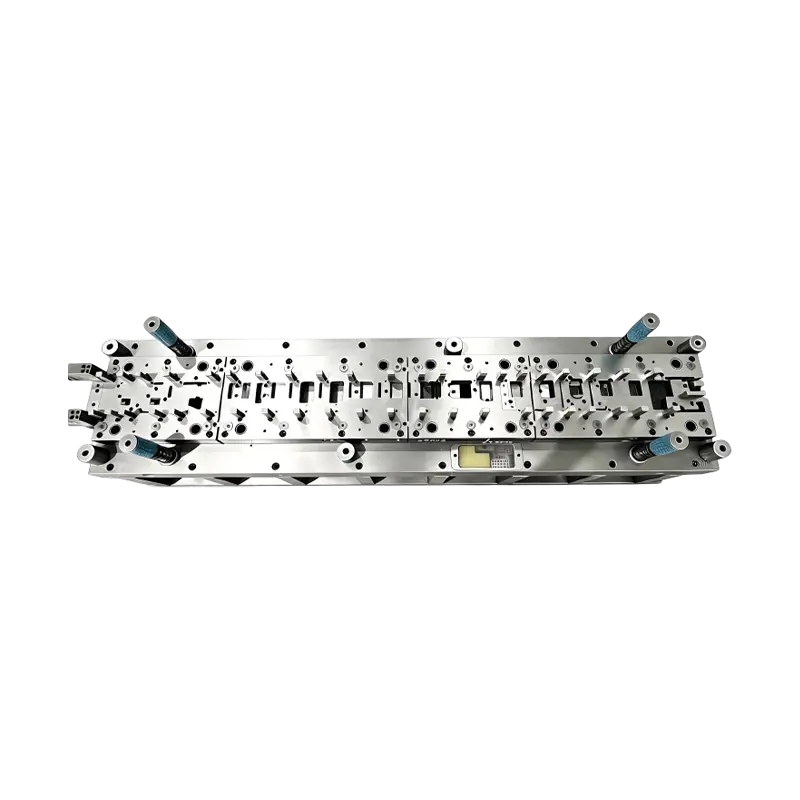
Long-Stroke Multi-Stage Progressive Die Automatic Strip Feed Progressive Die Long Travel Follow on Stamping Tool for Sheet Metal Hardware Press Moulding
Long-Stroke Multi-Stage Progressive DieOur custom ...
-
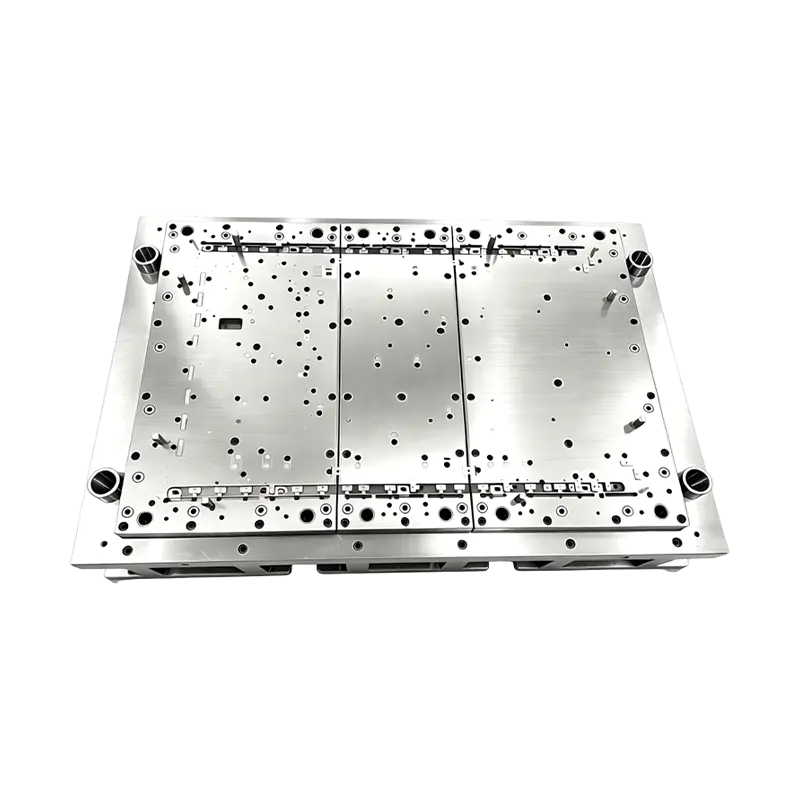
High Precision Stamping Die Multi Station Hardware Progressive Mold Tooling
Precision Metal Stamping Tool for Automotive &...
-
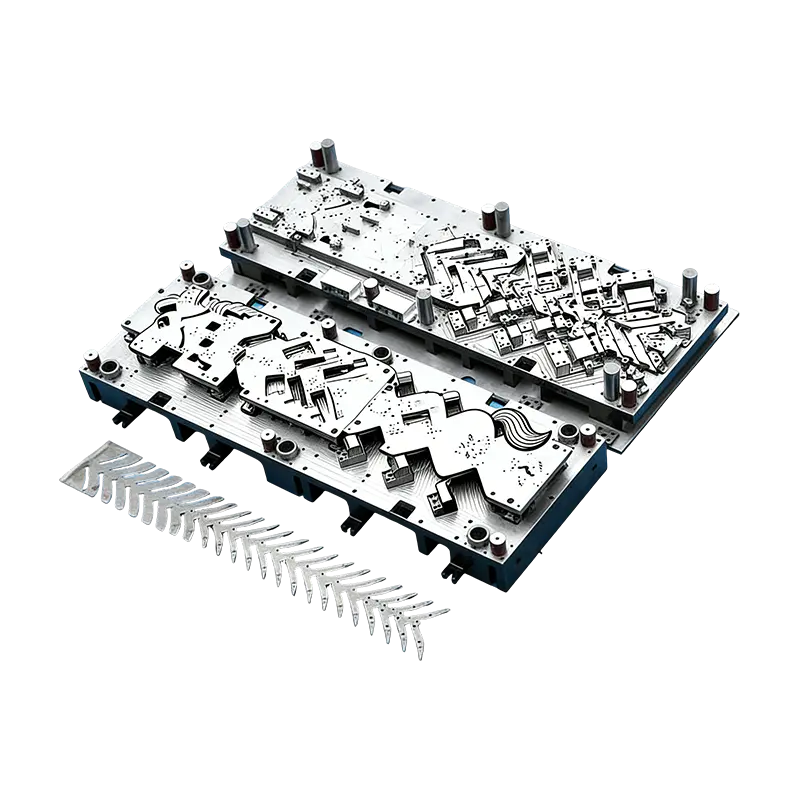
Progressive molds for automotive parts
This Continuous mold for automotive motor housing ...
-
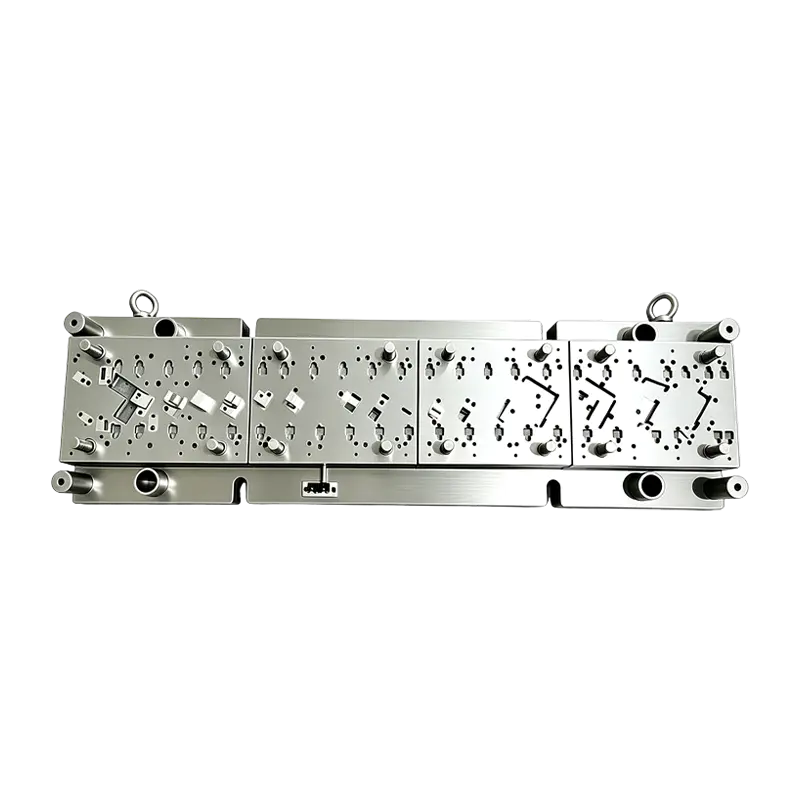
High Speed Progressive Stamping Die Sheet Metal Follow on Press Tool
Multi-operation Metal Stamping Tool for Continuous...
- E-mail us: [email protected]
- Call us: +86-139 1308 8972

Industry News
Home / News / Industry News / In-Die Riveting for Progressive Stamping Dies: Principles and Applications
In-Die Riveting for Progressive Stamping Dies: Principles and Applications
2026-09-24
Content
- 1 What In-Die Riveting Does Inside a Progressive Die
- 2 The Four-Stage Working Cycle
- 3 Core Modules of an In-Die Riveting System
- 4 Why One Positioning Reference Improves Accuracy
- 5 Protecting Conductive Coatings
- 6 Choosing Between Semi-Tubular and Solid Rivets
- 7 Typical Applications
- 8 Design Points That Decide Whether the Die Performs
- 9 Where In-Die Riveting Fits in a Stamping Program
- 10 Building Riveting Dies and Parts with Suzhou Shuangqisi
- 11 Getting a Riveting Project Started
What In-Die Riveting Does Inside a Progressive Die
Most stamped assemblies travel through two separate operations: the parts are formed in one die, then carried to a press or a fixture where they are joined. In-die riveting removes that second trip. The riveting station sits inside a multi-station progressive die, so piercing, bending, stacking, rivet feeding, riveting, shaping and blanking all happen in one continuous tool.
The result is a finished, permanently joined multi-layer component in a single press stroke. Because the joint is made with a prefabricated, independent rivet, the process differs from welding, from clinching, and from offline press riveting. There is no thermal input and no separate assembly cell, and no operator has to move partly finished parts from one machine to the next.
The logic is the same as in any progressive stamping process compared with transfer stamping: the strip advances by a fixed pitch, and each station does one job. What makes in-die riveting distinctive is that one of those jobs is a mechanical joining operation, timed to the press stroke and controlled by the rigidity of the die itself.
The Four-Stage Working Cycle
Every riveting station follows the same sequence, whatever the part. Understanding it makes it easier to see where accuracy is won or lost.
Pre-forming and positioning
The carrier strip is guided into position with precision pilots. Piercing and bending stations then work in sequence, stacking the sheet layers and aligning the rivet holes so they are coaxial before a rivet is ever introduced. If the holes are not aligned at this point, no riveting punch can rescue the joint later.
Automatic rivet feeding
An external vibratory bowl feeder sorts the rivets and delivers them one at a time, by air, to a positioning station in the lower die. Sensors watch for missing or jammed rivets. When they detect a fault, they trigger press protection immediately, so a bad feed stops the press rather than damaging the tool or producing a defective part.
Cold riveting and forming
As the press descends, the riveting punch applies vertical force. The rivet shank passes through the pre-pierced holes, and the tail spreads and upsets against the die restriction to form a solid rivet head. The layers are locked together with no gap between them, and the entire event is cold plastic deformation.
Shaping and discharge
After the die opens, the assembly moves on to shaping, dimensional calibration and inspection stations, then to final blanking. The finished component leaves the die already riveted and already checked.
Core Modules of an In-Die Riveting System
A reliable riveting die is really four systems working as one. Weakness in any of them shows up quickly in the scrap bin.
| Module | Main components | What it controls |
|---|---|---|
| Main stamping die | Piercing, bending, shaping and blanking stations | Strip positioning and layer alignment |
| Automatic rivet feeding | Vibratory bowl, separation and pneumatic delivery | One rivet, in the right place, every stroke |
| Precision riveting unit | Riveting punch, positioning insert, high-pressure blank holder, guiding parts | Head shape, joint tightness and consistency |
| Detection and protection | Sensors for missing, loose or jammed rivets | Prevents defects and die collision |
The riveting unit deserves particular attention. Its punch, insert, blank holder and guides decide how stable the joint is from the first stroke to the millionth. A rigid die structure and a high-precision guiding system are what keep riveting accuracy and locking strength inside tolerance, because nothing in the process relies on operator skill.
Why One Positioning Reference Improves Accuracy
In offline assembly, every handling step introduces a new clamping error. The part is picked up, placed in a fixture, located again, and joined. Small offsets accumulate at each of those steps.
In-die riveting avoids this because the carrier strip acts as a single positioning reference from the first station to the last. The rivet is always placed relative to features that were pierced in the same die, on the same strip, moments earlier. That is why the process delivers such consistent rivet position, head height and tensile strength across very long production runs.
The same integration supports high output. With feeding, joining and inspection automated inside the die, labor content falls, turnover of semi-finished parts disappears, and continuous production at million-piece volumes becomes practical.
Protecting Conductive Coatings
For electrical parts, the joining method matters as much as the joint. Welding heat can burn off or oxidize a plated surface, and a damaged coating means higher contact resistance exactly where the part needs to conduct.
Cold riveting avoids that problem. The process uses no heat, so nickel, silver and gold plating stay intact without oxidation or burn loss, and the sheet is not ablated. This is one of the main reasons the process suits precision electrical components and new energy conductive parts, where stable conductivity is a design requirement rather than a preference.
Choosing Between Semi-Tubular and Solid Rivets
Both rivet types can be fed automatically in the die and upset by cold forming, so the choice comes down to the load the joint must carry.
- Semi-tubular rivets are the mainstream choice. Their hollow shank needs less forming force, which suits most thin-sheet precision hardware connections.
- Solid rivets are used where the joint faces heavy duty or high tensile loads and a fuller, stronger shank is worth the additional forming force.
Material compatibility is broad. Common stamping materials such as cold-rolled steel, stainless steel, copper, brass and aluminum alloy can all be joined this way. Because these metals differ in springback and hardness, the riveting punch and die insert are normally tuned to the specific material stack.
Typical Applications
In-die riveting is most common where dimensional accuracy, conductivity and repeatability all matter at the same time. The main industries are automotive electronics, new energy electrical systems, precision home appliances and industrial control switches.
Typical parts include:
- Relay silver contact assemblies
- Battery connection shrapnels
- Busbars
- Connector terminal assemblies
- Switch conductive hardware
- Precision shielding components
What these parts share is a small, thin geometry produced in very high volumes, with a joint that has to be electrically and mechanically dependable. That is the profile in which a single-stroke, fully automated riveting die pays back fastest.
Design Points That Decide Whether the Die Performs
In-die riveting looks simple once it is running, but the details are set long before the first tryout. A few decisions carry most of the weight.
- Strip layout. The riveting station needs enough room for the punch, insert and feeding path, and the strip must remain stable through the bending and stacking stations that come before it.
- Hole alignment. Pierced holes in every layer must line up within the rivet's clearance, so the pilot and guide design has to be considered together with the strip pitch.
- Feeding reliability. Rivet orientation, separation and delivery need to be repeatable at full press speed. Feeding faults are the most common cause of stoppages.
- Sensor coverage. Detection should confirm rivet presence before the stroke and catch loose or jammed rivets after it, so faults never travel downstream.
- Maintenance access. Riveting punches and inserts wear. A die designed for quick change keeps uptime high over a long production life.
Teams that treat the riveting station as an afterthought tend to discover these limits during tryout. Teams that plan the whole progression together tend to avoid them.
Where In-Die Riveting Fits in a Stamping Program
In-die riveting is one member of a broader family of integrated operations. It shares its philosophy with in-die tapping and other joining steps that move assembly work into the press, a topic covered in more detail in this explanation of how stamping and joining merge in one press.
Whether it is the right choice depends on the part. It rewards high volumes and stable designs, since the tooling investment is spread over many parts. It is less attractive for very low volumes or for assemblies whose geometry changes often. For programs in the right range, though, eliminating a secondary assembly step can shorten lead time and cut handling damage at the same time.
Building Riveting Dies and Parts with Suzhou Shuangqisi
A riveting die only performs as well as the tool behind it. Suzhou Shuangqisi designs and builds precision progressive tooling, and the company's electronic stamping dies for small, high-precision components are a natural starting point for terminal, contact and busbar programs that call for integrated riveting.
Where the part is a connector or terminal, the high-speed progressive stamping die for connector and terminal parts shows the type of multi-station tooling that this work builds on. For more complex layouts with many stations, the multi-station progressive stamping die with carbide inserts addresses long tool life in demanding, high-volume production.
Rivet feeding, sensing and press protection are automation problems as much as tooling problems, and they can be supported by stamping automation equipment for feeding and handling. Buyers who prefer to source finished components rather than tooling can browse electronic stamping parts made to customer drawings, or review the complete range of stamping parts.
The same joining principles extend to new energy hardware. Programs that pair conductive connections with formed housings, for example, can look at battery cover stamping parts for electric vehicles as a reference for large-format flatness and forming control.
Getting a Riveting Project Started
The quickest way to assess feasibility is to send drawings, the rivet specification, the sheet material and thickness, and the annual volume. From those four inputs, an engineering team can advise on strip layout, feeding method and whether a semi-tubular or solid rivet suits the load.
If you have a riveted assembly that is currently joined offline, or a new conductive component still at the concept stage, contact the Suzhou Shuangqisi engineering team to discuss your riveting die requirements. An early conversation about the joint usually saves more time than any later change to the die.
Previous Post
Automotive Part Progressive Stamping: Dies, Tolerances, Costs, and Volume Guide
Next Post
Compound Die vs Progressive Die: Differences, Applications and How to Choose
Our Products.
Start Your Business with an OEM Manufacturer Right Here!

Provide global customers with complete turn-key solutions
through
innovation!
QUICK LINKS
CONTACT INFO.
-
 +86-139 1308 8972
 -

-
 No. 118 Yexin Road, Wujiang Economic Development Zone, Suzhou, China
Copyright © Suzhou Shuangqisi Mold Equipment Co., Ltd. All Rights Reserved. Custom Stamping Die Metal Stamping Die Manufacturers
