 English
 Español
 Deutsch
-
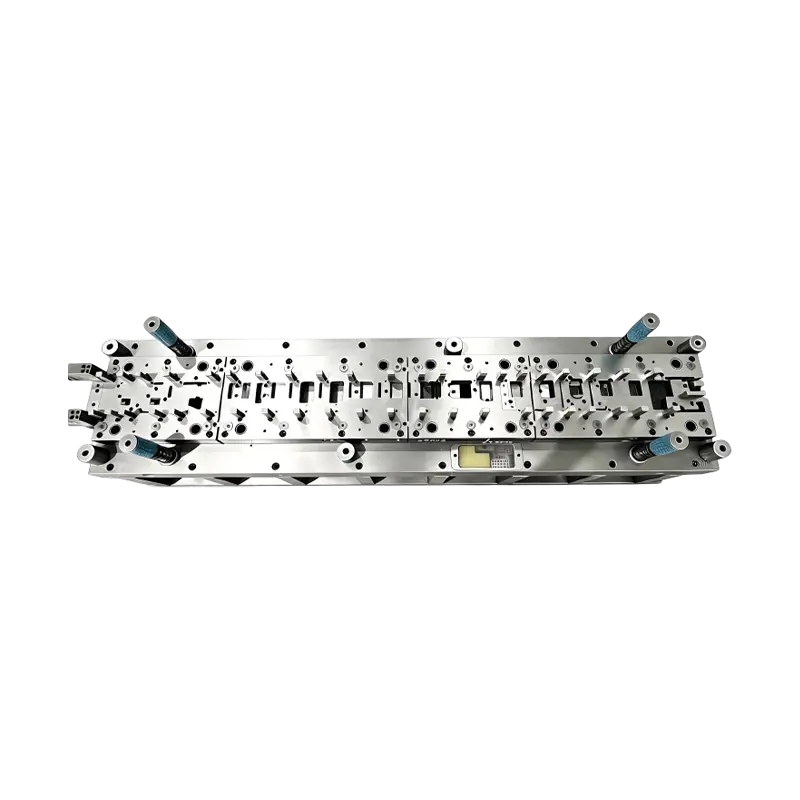
Long-Stroke Multi-Stage Progressive Die Automatic Strip Feed Progressive Die Long Travel Follow on Stamping Tool for Sheet Metal Hardware Press Moulding
Long-Stroke Multi-Stage Progressive DieOur custom ...
-
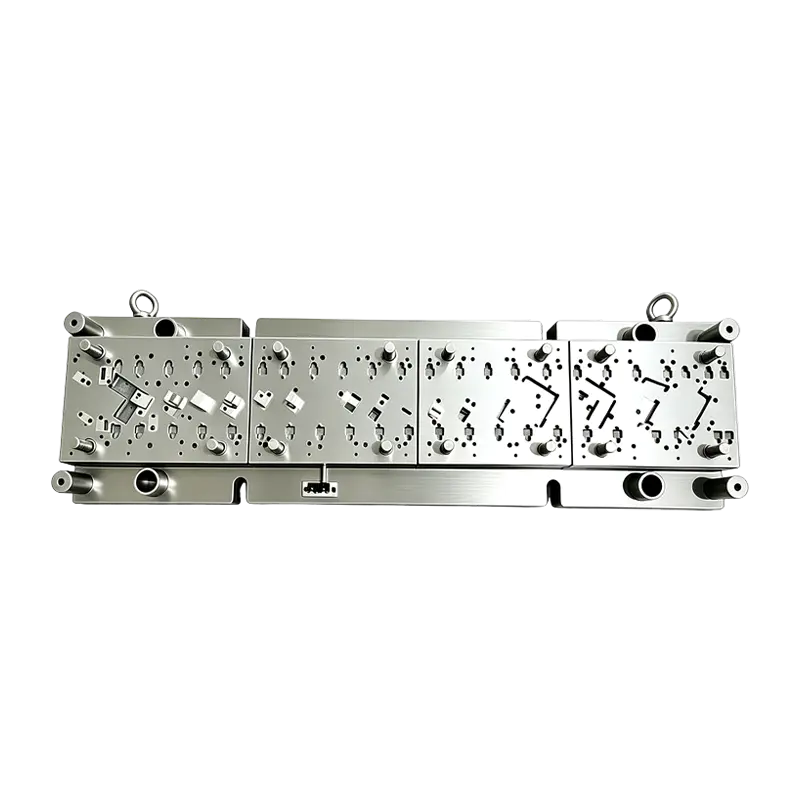
High Speed Progressive Stamping Die Sheet Metal Follow on Press Tool
Multi-operation Metal Stamping Tool for Continuous...
-
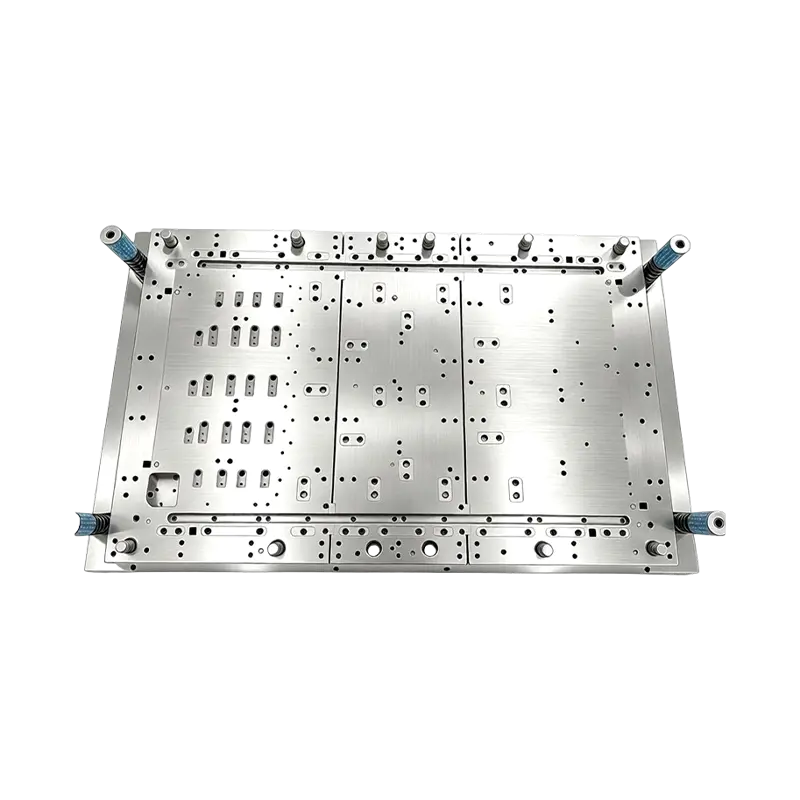
Multi-Station Progressive Stamping Die with Carbide Inserts Custom Multi Station Progressive Stamping Die Carbide Insert Metal Stamping Mold Tool for Equipment Appliances Device Hardware
High Speed Metal Stamping Tool for Precise Equipme...
-
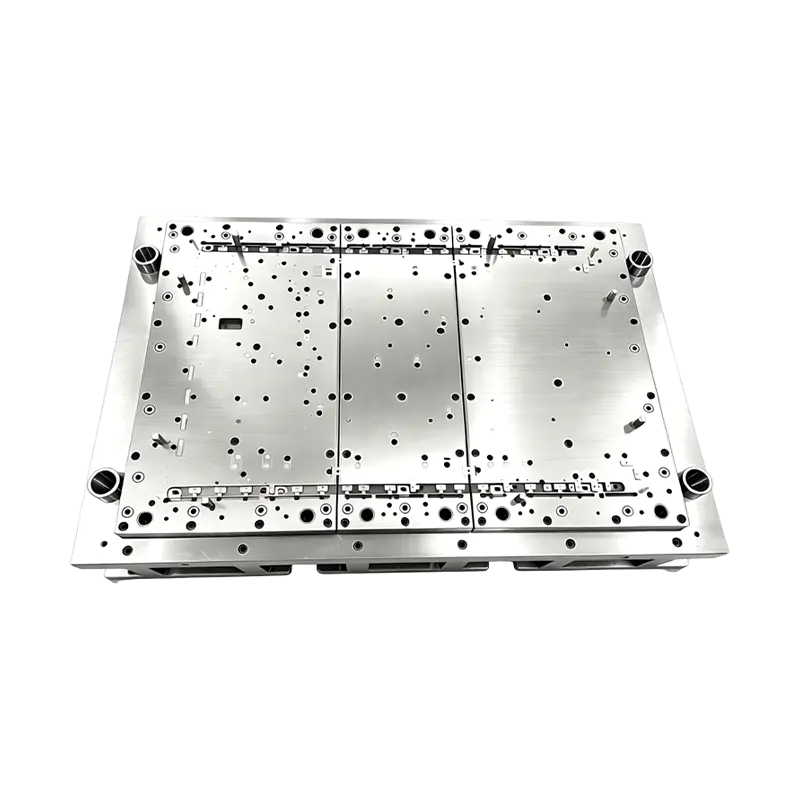
High Precision Stamping Die Multi Station Hardware Progressive Mold Tooling
Precision Metal Stamping Tool for Automotive &...
-
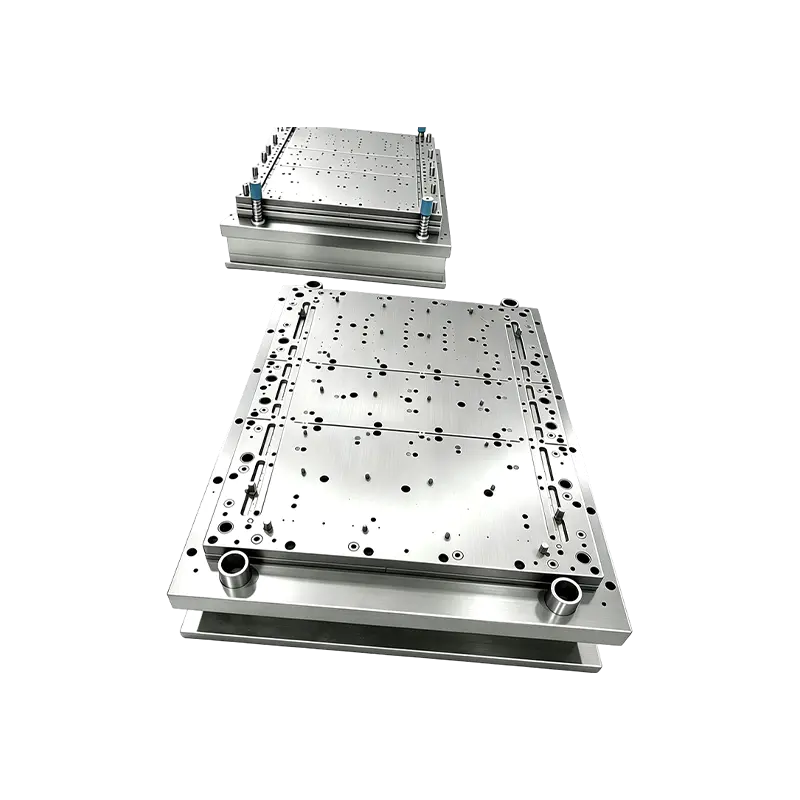
Progressive Stamping Die for Connector & Terminal Parts High Speed Progressive Stamping Die Precision Metal Hardware Stamping Tool mold for Connector Terminal Parts Automotive Components
Progressive Stamping Die for Connector & Termi...
- E-mail us: [email protected]
- Call us: +86-139 1308 8972

Industry News
Home / News / Industry News / In-Die Assembly Explained: How Stamping and Joining Merge in One Press
In-Die Assembly Explained: How Stamping and Joining Merge in One Press
2026-08-12
Content
What Is In-Die Assembly?
A manufacturer producing terminal brackets used to run two separate operations: a progressive stamping line that formed the brackets, and a bench where operators inserted self-clinching nuts, checked alignment, and stacked the parts. The assembly bench was the bottleneck, and the press frequently waited on finished work. Replacing both steps with a single progressive die that inserts the nut and stakes the surrounding metal closed cut the total cycle time per finished bracket by roughly half.
In-die assembly is the practice of joining two or more parts, or a part and a fastener, inside the stamping die instead of in a downstream operation. Depending on the joining mechanism, manufacturers call it in-die staking, in-die riveting, in-die clinching, or simply in-die joining. Whatever the name, the press becomes an assembly machine: the finished assembly leaves the die complete, and the die that controls the part's shape also controls the position of every inserted element.
The decision rule is straightforward. In-die assembly delivers its largest advantage when volumes are high, the assembly fits within a practical strip width, and the joint can be made with the material's ductility as it comes off the coil. For the right part family, it removes an entire class of handling, alignment, and labor problems.
How In-Die Assembly Works on a Progressive Die
In-die assembly is almost always built on a progressive die platform. The strip advances through a sequence of stations, each performing one step: piercing a pilot hole, drawing a pocket, trimming a contour, then, at the assembly station, feeding a nut, pin, or secondary stamped part into the formed feature. A later station stakes, curls, or clinches the surrounding metal so the inserted component cannot shift, and the final station separates the completed assembly from the strip.
Because every operation is registered against the same die and the same strip, tolerance stack-up is much smaller than when a loose stamped part is re-located in a fixture on an assembly machine. Station sequencing also differs between progressive and transfer dies, which changes how assembly stations are arranged; the comparison of progressive and transfer metal stamping explains both architectures and their limits.
In-Die Staking and Riveting
In-die staking is the most common mechanism. A punch displaces a small portion of the stamped part over the inserted component: for example, a nut or pin is pushed into a pre-formed pocket, and a staking punch curls the pocket edge over to trap it. Staking works best in ductile materials; high-strength steel or heavily work-hardened parts may need a heated stake or a switch to riveting.
In-die riveting and clinching form a permanent mechanical joint between two sheet-metal parts using a small punch-and-die set inside the main tool. A solid or semi-tubular rivet can be fed at the station, or one part can be clinched directly into another without any fastener. Some dies also integrate laser welding to close sleeves, connector pins, and bearing rings formed in earlier stations, although heat management makes that the most demanding option.
The mechanisms can be combined in one tool. A computer chassis base, for instance, often requires several pressed-in fasteners in a single part; tools such as our automatic riveting mold for large computer bases perform multiple riveting operations in one press stroke.
 Automatic riveting mold for large computer machine base Suppliers, Custom CompanShuangqisi is Automatic riveting mold for large computer machine base Suppliers and Company in China, Custom Automatic riveting mold for ...View Product →
Main Benefits of In-Die Assembly
The clearest benefit is that two operations, plus their buffers and operators, collapse into one press cycle. For part families that would otherwise run through a separate riveting or nut-insertion station, the cycle-time comparison is unambiguous.
| Metric | Stamping plus separate assembly | In-die assembly |
|---|---|---|
| Cycle time per finished part | 4-8 s including transfer between stations | 1-3 s at typical stamping speed |
| Direct labor | Operators at press, bins, and assembly station | One operator watching a die-complete process |
| Work in progress | Batches waiting between operations | Part completed in one pass |
| Dimensional control | Assembly fixture defines joint position | Die stations define joint position |
| Floor space | Press plus separate assembly bench | One press cell |
| Tooling investment | Two tools plus fixtures | One complex die, higher build cost |
| Maintenance | Separate press and assembly tool | Single die with more stations to service |
Cycle-time savings of 50 percent or more are realistic for small parts, and the quality benefit is often more valuable than the time saving. When the staking punch is guided by the same pillar set as the forming tools, the alignment that holds the part's outline also holds the joint. There is no re-location error, so staked positions stay at the die's own repeatability instead of at the combined repeatability of a fixture and a separate assembly machine.
On the cost side, the trade-off is front-loaded: the die costs more and takes longer to build than a simple blanking tool. At sufficient volume, the higher tool cost is recovered through lower labor and the elimination of a separate assembly machine. Quality engineers should also note that in-die assembly removes part hand-offs entirely; every move to another fixture introduces a chance of damage, dirt, or mis-orientation.
The same principle carries into automotive subassemblies. Progressive molds for automotive parts are laid out with assembly stations, sensors, and tonnage requirements planned from the first design review, so the benefit is built into the tool rather than added later.
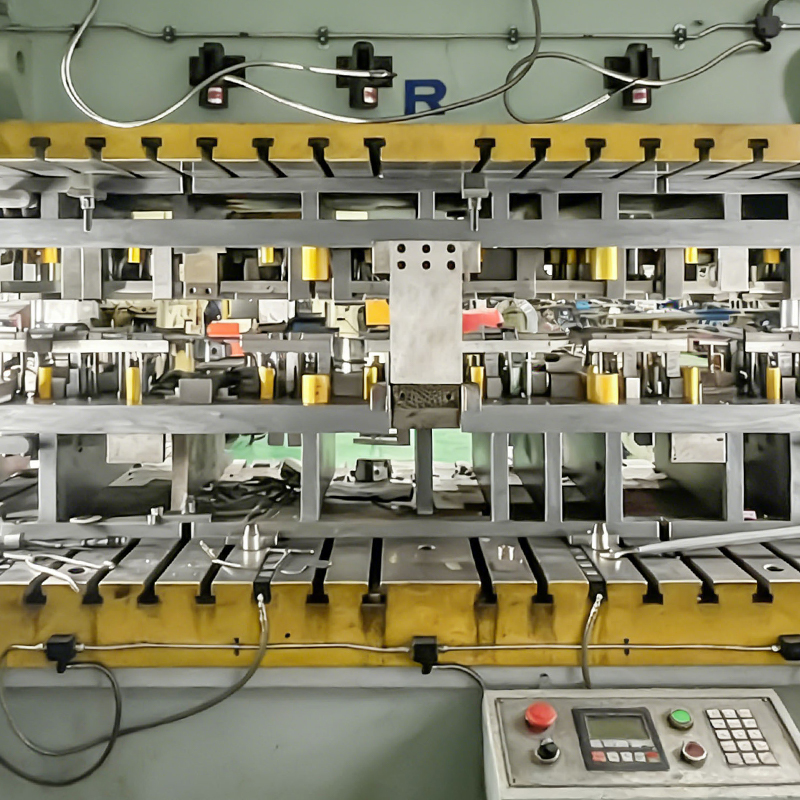 Progressive molds for automotive parts Suppliers, Custom Company - Suzhou ShuangShuangqisi is Progressive molds for automotive parts Suppliers and Company in China, Custom Progressive molds for automotive parts Design...View Product →
Limitations and When In-Die Assembly Makes Sense
In-die assembly is not a universal answer. The tooling is more complex, so the practical decision depends on volume, part geometry, and how the plant already organizes its assembly work.
Key Limitations
- Tooling complexity: assembly stations add moving parts, sensors, and longer tryout time. A die with staking or riveting stations can take 20-30 percent longer to debug than a simple progressive die.
- Press speed: staking, inserting, and riveting stations run slower than pure blanking, typically 40-60 strokes per minute for medium parts instead of 100 or more.
- Material limits: staking requires ductility. High-strength or heavily work-hardened metal may crack at the staked edge, forcing a change in joint design or material grade.
- Strip layout constraints: the parts of an assembly must fit and stay aligned within one strip, which is impractical for very large or bulky components.
- Repair access: a worn assembly station may require removing the die from the press, so spare inserts and clear maintenance procedures are essential.
When to Choose In-Die Assembly
- Annual volume is high enough to amortize complex tooling. With medium-size parts, demand of roughly 100,000 pieces per year or more is a common starting point.
- The assembly would otherwise need a dedicated riveting or nut-insertion station with its own operator.
- The joint position is a functional dimension, such as an electrical contact height or a hinge alignment, that must be held tightly part after part.
- Product design permits feeding fasteners from the accessible side and leaves clearance for staking or riveting punches.
Tolerance and Quality Considerations
The main quality risk in an in-die assembly process is a missing or mis-located component. A feeding problem that goes unnoticed for a few press strokes can damage the die, which is why well-built tools include detection in every assembly station: a missing-nut sensor, a displacement probe on the staking punch, or a force monitor that flags a joint made with the wrong material thickness.
The tolerances that matter are the ones that define the final assembly, not the raw blank. Staked positions are typically held to a few hundredths of a millimeter because the punch and the locating surfaces sit in the same die set; perpendicularity and flatness of an inserted fastener stay at the level of the die's own alignment. This matters especially in electronic housings and current-carrying parts, where a small positional error becomes a contact or insulation problem. The reasons why electronic stamping dies demand tighter tolerances apply with even more force when assembly stations are added to those dies.
Combining In-Die Assembly with Line Automation
An in-die assembly cell rarely runs alone. The press is fed by a coil line, completed assemblies are checked by sensors, and robots orient parts for packing or for the next welding operation. In our experience, the die and the automation around it should be designed as one system: strip feed, lubrication, part counting, and defect rejection all have to match the die's pitch and cycle time.
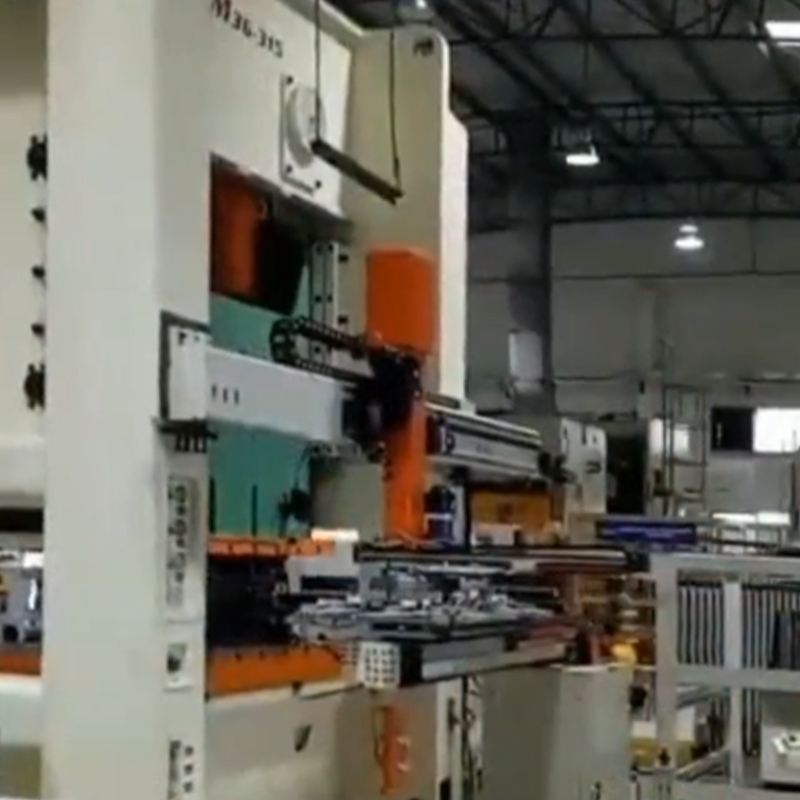
This is where a die maker with automation experience creates the most value. Our stamping automation deployment in recent projects is a concrete example: die design, press control, and handling equipment were coordinated on a single timeline. Stamping automation equipment such as reel feeders, stackers, and in-press detection can be specified together with the die from the start, which avoids the cycle-time and layout surprises that appear when automation is retrofitted after the tool is built.
 Stamping Automation Equipment Suppliers, Custom Company - Suzhou Shuangqisi MoldShuangqisi is Stamping Automation Equipment Suppliers and Company in China, Custom Stamping Automation Equipment Design & Manufacturing,View Product →
What to Ask When Evaluating In-Die Assembly
When you compare in-die assembly against a stamping-plus-assembly process, base the decision on total cost per completed part at the planned volume, not on press-hour rates. Ask the die maker how missing-component detection is handled, how many stations are accessible for setup and repair, and what strip utilization remains after the assembly stations are added. Also ask to see a similar assembly tool: the difference between a die designed for assembly and a blanking die with a riveting station bolted on shows up in tryout time and in long-term maintenance.
The practical starting point is a part drawing and a volume forecast. With those two documents, a die maker can estimate the strip layout, the press tonnage, and the additional cost of the assembly stations. For parts that fit the process, in-die assembly is one of the most reliable ways to take labor, handling, and tolerance stack-up out of a stamped product.
Previous Post
Dual Sourcing Metal Stamping: Strategy, Tooling Alignment, and Supplier Selection
Next Post
Car Seat Stamping Parts: High-Precision Metal Components
Our Products.
Start Your Business with an OEM Manufacturer Right Here!

Provide global customers with complete turn-key solutions
through
innovation!
QUICK LINKS
CONTACT INFO.
-
 +86-139 1308 8972
 -

-
 No. 118 Yexin Road, Wujiang Economic Development Zone, Suzhou, China
Copyright © Suzhou Shuangqisi Mold Equipment Co., Ltd. All Rights Reserved. Custom Stamping Die Metal Stamping Die Manufacturers
