 English
 Español
 Deutsch
-
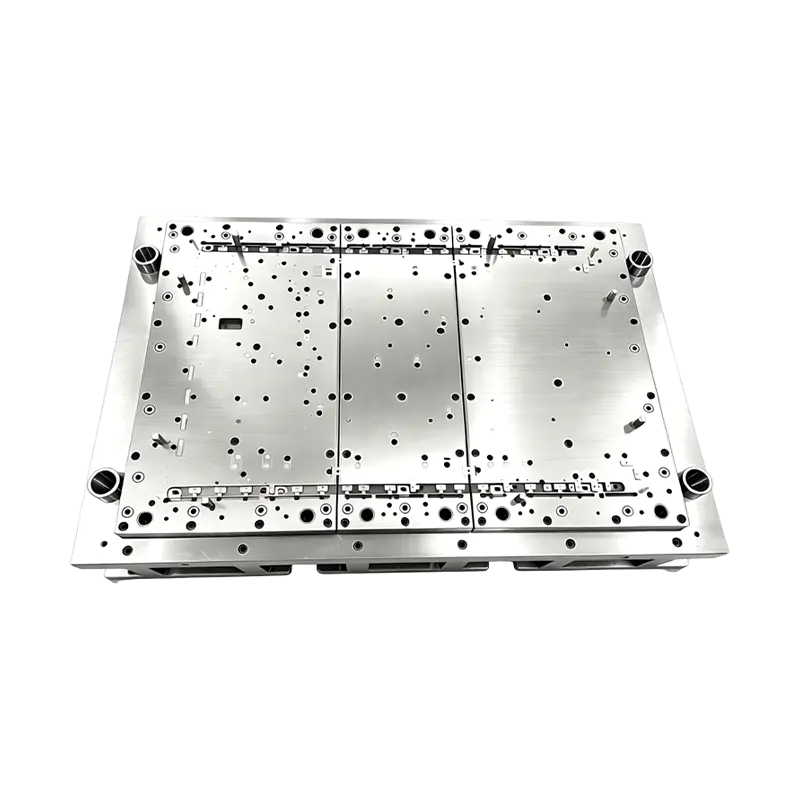
High Precision Stamping Die Multi Station Hardware Progressive Mold Tooling
Precision Metal Stamping Tool for Automotive &...
-
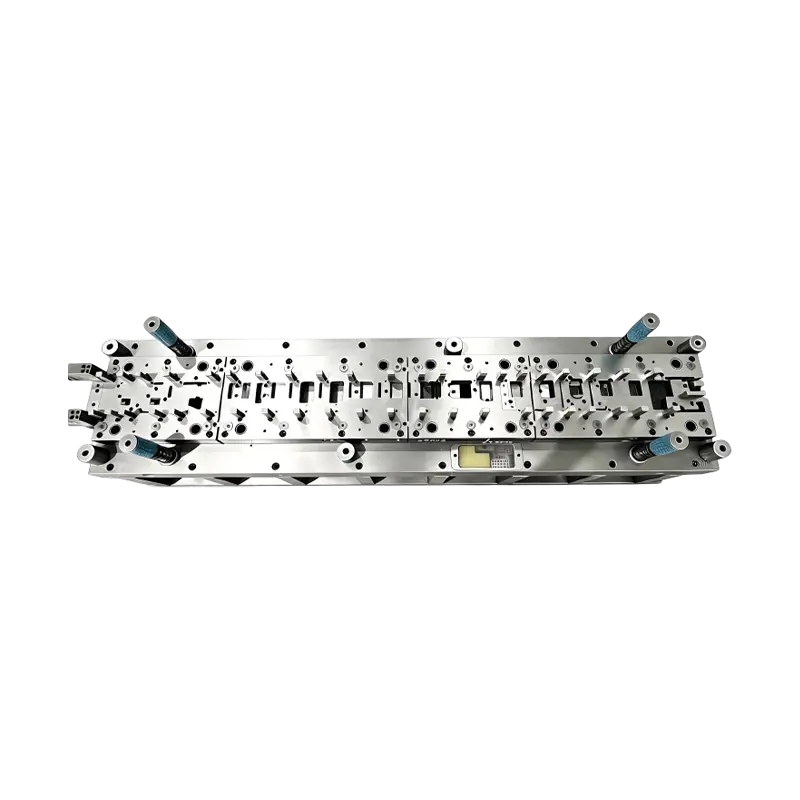
Long-Stroke Multi-Stage Progressive Die Automatic Strip Feed Progressive Die Long Travel Follow on Stamping Tool for Sheet Metal Hardware Press Moulding
Long-Stroke Multi-Stage Progressive DieOur custom ...
-
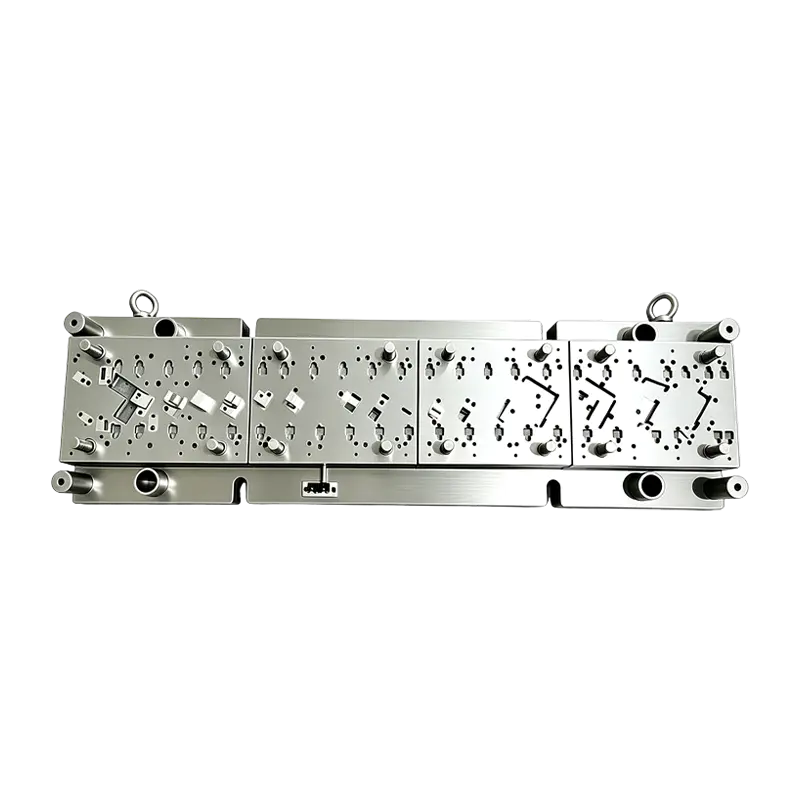
High Speed Progressive Stamping Die Sheet Metal Follow on Press Tool
Multi-operation Metal Stamping Tool for Continuous...
-
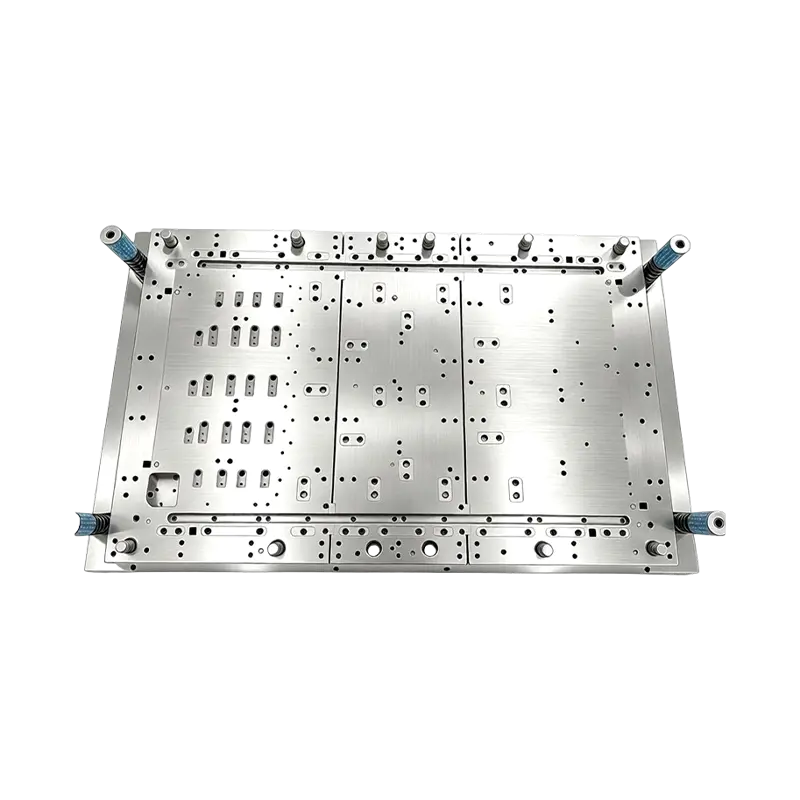
Multi-Station Progressive Stamping Die with Carbide Inserts Custom Multi Station Progressive Stamping Die Carbide Insert Metal Stamping Mold Tool for Equipment Appliances Device Hardware
High Speed Metal Stamping Tool for Precise Equipme...
-
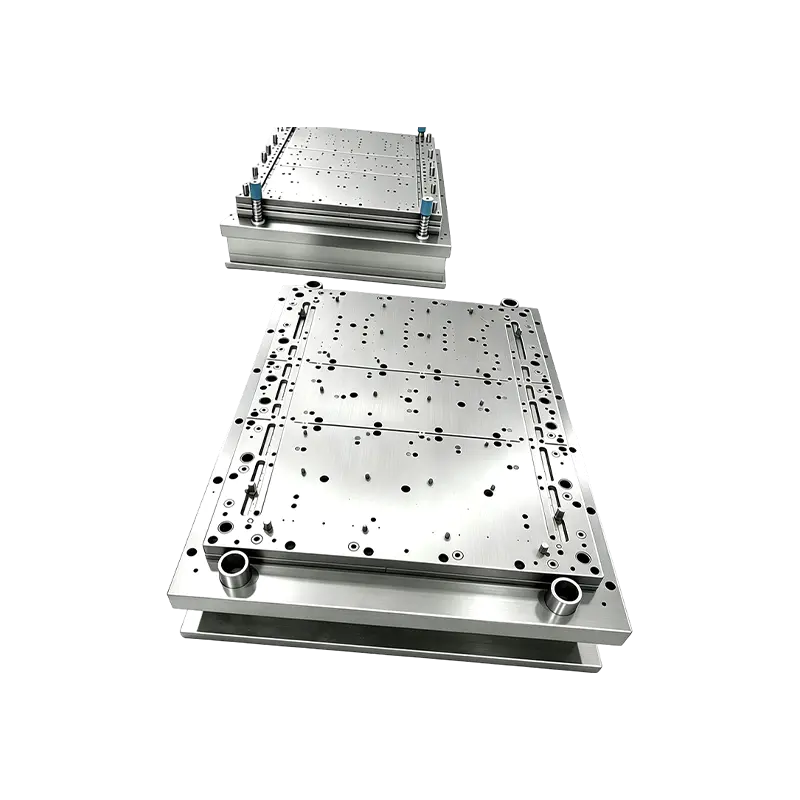
Progressive Stamping Die for Connector & Terminal Parts High Speed Progressive Stamping Die Precision Metal Hardware Stamping Tool mold for Connector Terminal Parts Automotive Components
Progressive Stamping Die for Connector & Termi...
- E-mail us: [email protected]
- Call us: +86-139 1308 8972

Industry News
Home / News / Industry News / Dual Sourcing Metal Stamping: Strategy, Tooling Alignment, and Supplier Selection
Dual Sourcing Metal Stamping: Strategy, Tooling Alignment, and Supplier Selection
2026-08-14
Content
Why Metal Stamping Needs a Deliberate Dual Sourcing Strategy
Any purchasing manager who has watched a single stamping line go down knows the feeling. A die fails, a press schedule slips, a material certificate arrives late, and the whole assembly plan stalls because one part family depended on one supplier. Dual sourcing metal stamping closes that exposure by qualifying two independent production paths for the same component. Done well, it improves supply continuity and price stability at the same time. Done poorly, it doubles tooling cost, complicates quality control, and produces two suppliers whose parts do not quite match.
The difference between those two outcomes sits in three areas: tooling, process capability, and a qualification sequence that treats the second source as an engineering project rather than a procurement exercise. Get those three right, and dual sourcing becomes one of the most effective risk controls available to a manufacturer of motors, vehicles, battery packs, or electronic devices.
What a working dual sourcing plan actually includes
Dual sourcing means two approved suppliers, two validated tool sets, and a clear volume split, usually 70/30 or 60/40, instead of one captive vendor. In metal stamping the logic is straightforward. Stampings sit inside motors, gearboxes, battery packs, seat frames, and enclosures, and they are rarely held in deep inventory because they are heavy, bulky, and made to order. A stoppage at the only approved plant becomes a stoppage at your assembly line within days.
A workable plan therefore goes beyond naming a backup vendor. Both sources must run the same drawing, hold the same critical dimensions, and deliver in the same packaging and sequence. You also need a governance process: who owns each die, how engineering changes reach both plants, how defect rates are compared, and how volume shifts when one side underperforms.
Why qualification shortcuts undo the strategy
Most dual sourcing failures trace back to qualification shortcuts. Buyers accept a second source on the strength of a few sample parts, then discover that the supplier's process window is narrower than the first source's. The first production batch passes; the next one drifts. The fix is to qualify the process, not the samples: measure capability over multiple runs, different material lots, and realistic cycle times.
What to Qualify in a Second Metal Stamping Supplier
Tooling compatibility and die ownership
Tooling is the main asset in any stamping program, and it is the main source of divergence between suppliers. If you transfer an existing die, the second supplier must prove it can set up, maintain, and repair that die without degrading the part. If you build a second set, the new die normally starts from the same CAD, but how it is built determines whether the parts actually match. Steel grade, heat treatment, blank holder settings, and lubrication all influence springback and dimensional drift.
This is why understanding the difference between progressive and transfer metal stamping has direct consequences for dual sourcing. Progressive dies run a part through a continuous strip at high speed; transfer dies move individual blanks through separate stations. They set up differently, run at different rates, and generate different stress patterns in the material. A supplier that understands both approaches is much better positioned to match output between your two locations.
When a part family runs on progressive tooling, the die design itself becomes a dual sourcing decision. A supplier that designs and builds progressive molds for automotive parts in-house can replicate tooling faster and advise on strip layout changes that balance utilization between your two sources.
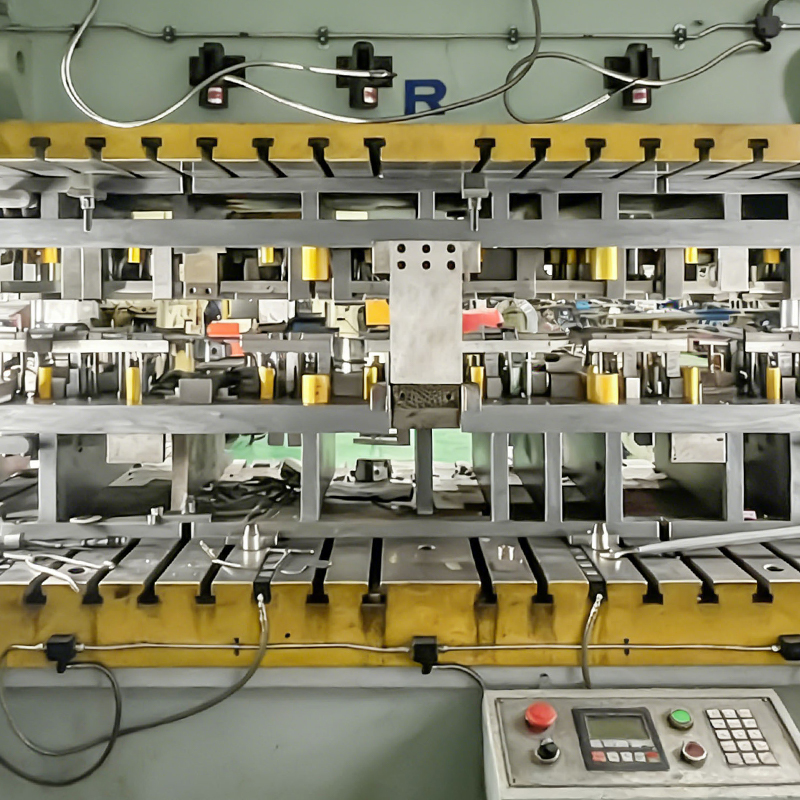 Progressive molds for automotive parts Suppliers, Custom Company - Suzhou ShuangShuangqisi is Progressive molds for automotive parts Suppliers and Company in China, Custom Progressive molds for automotive parts Design...View Product →
Process capability beyond the press
Stamping does not stop at the die. Most production stampings also need deburring, tapping, riveting, welding, surface treatment, or assembly. In electronic stamping, automatic riveting is common, and tolerances are measured in hundredths of a millimeter. A second source that only operates presses will send those operations to subcontractors, adding handling, lead time, and variation. Integrated suppliers who combine dies, stamping, and automation under one roof control the joining and finishing steps as tightly as the stamping step itself.
Production equipment and press tonnage
Before a technical audit, you can screen candidates by their press fleet. Tonnage determines the part envelope a plant can form, and the spread matters more than the largest single press. A plant with a wide range can absorb work across several part families without constantly rescheduling.
| Press range | Typical part size and material | Common applications |
|---|---|---|
| 80-160 T | Small and medium parts in light to medium gauge steel | Brackets, small enclosures, connection terminals |
| 160-250 T | Medium panels, deeper draws, thicker materials | Seat parts, motor housings, appliance panels |
| 250-400 T | Large draws, high-strength steel, multi-stage forming | Battery covers, heavy truck parts, structural members |
A supplier running 25 presses from 80 T to 400 T, for example, covers that envelope internally. When two sources share similar tonnage curves, capacity planning and scheduling align more easily across both plants.
Applying Dual Sourcing to Automotive and Electronics Parts
Automotive and electric vehicle stampings
Automotive stampings place the harshest demands on a dual sourcing arrangement because they combine high volumes, safety relevance, and complex geometry. Motor housings need multi-stage drawing and tight roundness control; seat components require consistent mechanical properties after forming; heavy truck parts demand the strength to survive high service loads. A secondary source with running production in the same part family is worth far more than one with impressive marketing material. When a supplier already ships automotive motor housing stamping parts, you can audit an active process, review its control plan, and benchmark real defect data before you commit a single die.
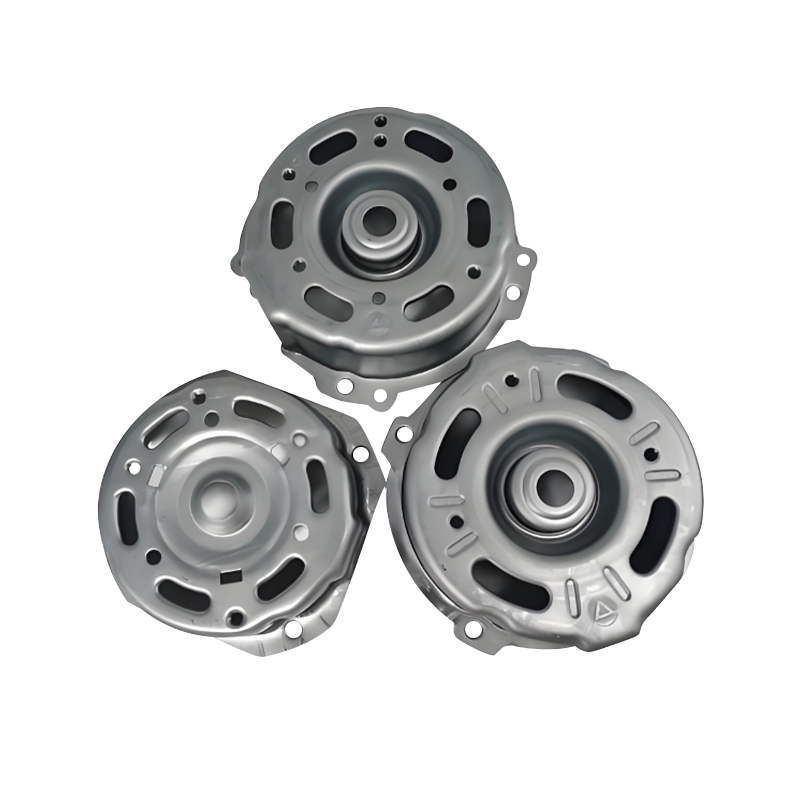 Automotive motor housing stamping parts Suppliers, Custom Company - Suzhou ShuanShuangqisi is Automotive motor housing stamping parts Suppliers and Company in China, Custom Automotive motor housing stamping parts Desi...View Product →
Battery and enclosure programs
Electric vehicle programs add another layer. Battery cover stamping parts require flatness over wide surfaces, resistance to edge cracking, and clean surfaces for sealing and bonding. Because many EV programs are new and volumes are still ramping, starting dual sourcing early makes sense: it spreads the learning curve across two capable teams. Battery cover stamping parts from a qualified producer give you a concrete reference for what a second source can achieve on flatness and dimensional stability before the program reaches full speed.
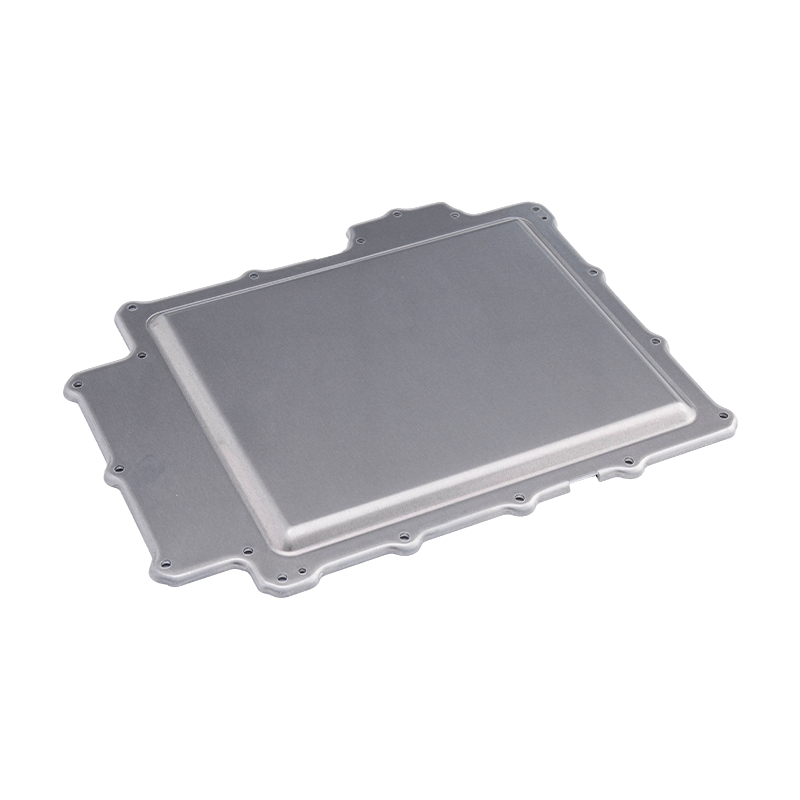 Battery cover stamping parts Suppliers, Custom Company - Suzhou Shuangqisi Mold Shuangqisi is Battery cover stamping parts Suppliers and Company in China, Custom Battery cover stamping parts Design & Manufacturing, Ou...View Product →
Electronics and precision small parts
Electronic stampings sit at the other end of the spectrum: smaller, thinner, and often more precise. Laptop and phone parts run in high volumes with fine-pitch features, while large computer base frames need riveting and flatness control across a big surface. Here dual sourcing is often driven by capacity as much as by risk. The qualifying question is whether the second supplier can hold the same die clearance and surface requirements day after day, which comes back to tooling maintenance discipline and metrology rather than the press itself.
A Qualification Sequence That Produces a Reliable Second Source
The most reliable way to build a second source is to follow a staged sequence that mirrors the logic of PPAP, adapted to your part family. Five steps cover most metal stamping programs.
- Define the critical-to-quality characteristics for each part: dimensions, material grade, surface finish, and process capability targets. Without this written baseline, you cannot compare two sources objectively.
- Audit the supplier's tooling competence, including die maintenance records, modification history, and whether they build dies in-house or rely on outside tool shops.
- Run a tool tryout with your actual die or a matched new die, using the same material grade and coil thickness you specify in production.
- Complete a short production run across multiple shifts, measure the parts in-house, and compare the spread against your baseline supplier's data.
- Ramp volumes gradually, starting at 10 to 20 percent of requirements, with defect tracking and weekly communication, before moving to the target split.
This sequence sounds formal, but it compresses into about six to ten weeks for an established supplier with existing tooling competency. The payoff shows up in production: a properly qualified second source becomes a competitive tool rather than an insurance policy, giving you negotiation leverage on piece price, a natural buffer during demand spikes, and the confidence to hold less safety stock. Scanning a supplier's complete stamping product range before you begin the audit will tell you immediately whether they work across the same part families, materials, and volumes you buy.
Turning Dual Sourcing into an Operating Advantage
Dual sourcing metal stamping does not guarantee redundancy just because two suppliers exist. It guarantees redundancy when both can produce equivalent parts on a sustained basis. That demands disciplined tooling decisions, honest capability assessments, and a qualification process that measures consistency rather than first-article luck.
For buyers who want a hands-on partner rather than a distant vendor list, a supplier that designs, builds, and runs its own dies in the same facility shortens the feedback loop between tooling problems and tooling fixes. That integration of dies, stampings, and automation under one roof is exactly what Suzhou Shuangqisi's engineering and manufacturing setup is built around. It will not replace your existing source overnight, and it should not. But as the second source in a dual sourcing plan, it offers the process depth that makes dual sourcing a working system rather than a spreadsheet entry.
Previous Post
Metal Stamping for Automotive: Process, Applications, and Supplier Selection
Next Post
In-Die Assembly Explained: How Stamping and Joining Merge in One Press
Our Products.
Start Your Business with an OEM Manufacturer Right Here!

Provide global customers with complete turn-key solutions
through
innovation!
QUICK LINKS
CONTACT INFO.
-
 +86-139 1308 8972
 -

-
 No. 118 Yexin Road, Wujiang Economic Development Zone, Suzhou, China
Copyright © Suzhou Shuangqisi Mold Equipment Co., Ltd. All Rights Reserved. Custom Stamping Die Metal Stamping Die Manufacturers
