 English
 Español
 Deutsch
-
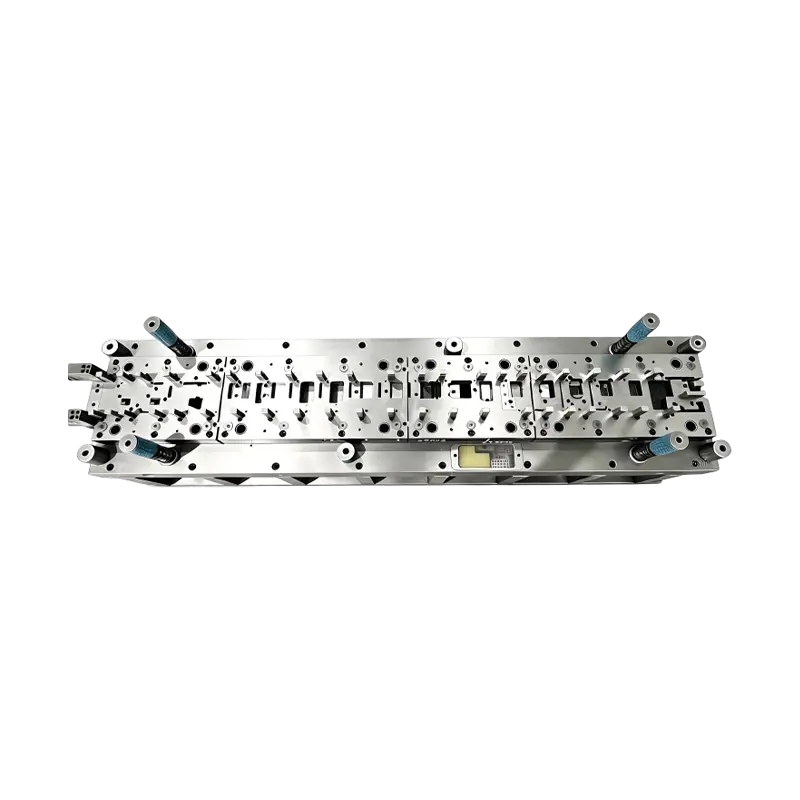
Long-Stroke Multi-Stage Progressive Die Automatic Strip Feed Progressive Die Long Travel Follow on Stamping Tool for Sheet Metal Hardware Press Moulding
Long-Stroke Multi-Stage Progressive DieOur custom ...
-
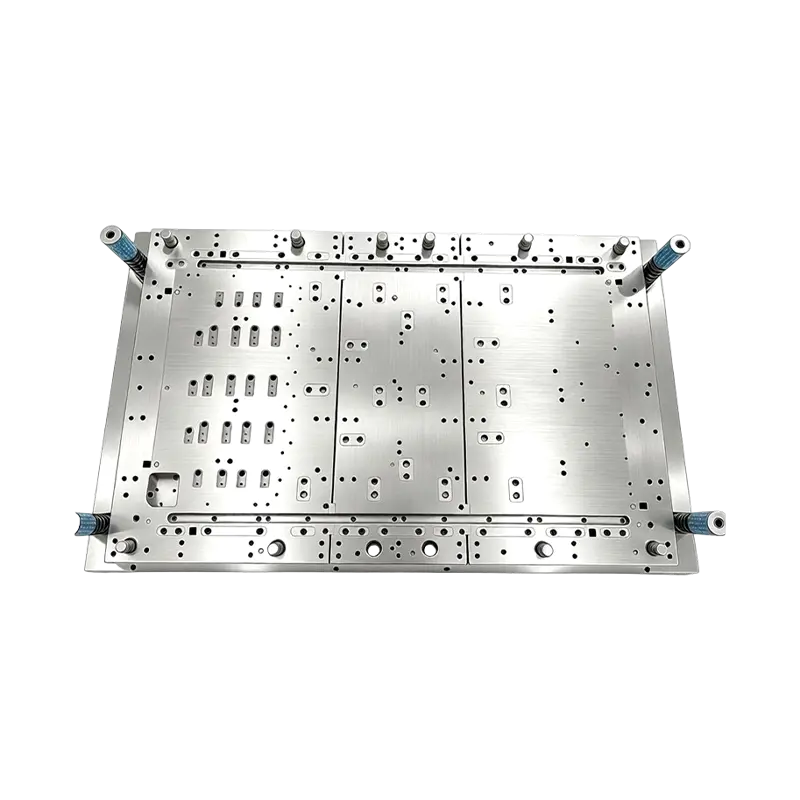
Multi-Station Progressive Stamping Die with Carbide Inserts Custom Multi Station Progressive Stamping Die Carbide Insert Metal Stamping Mold Tool for Equipment Appliances Device Hardware
High Speed Metal Stamping Tool for Precise Equipme...
-
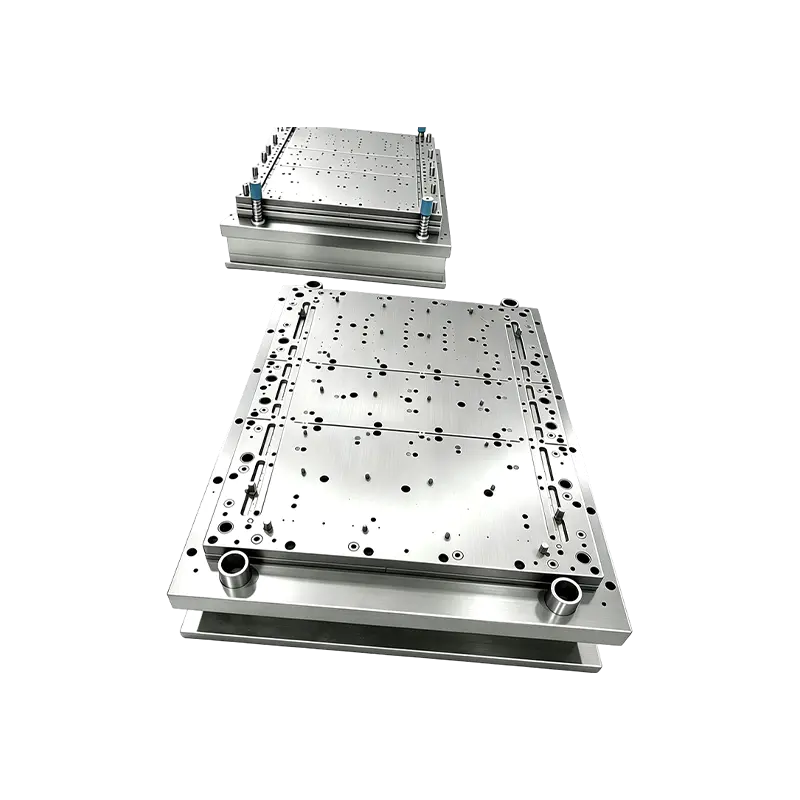
Progressive Stamping Die for Connector & Terminal Parts High Speed Progressive Stamping Die Precision Metal Hardware Stamping Tool mold for Connector Terminal Parts Automotive Components
Progressive Stamping Die for Connector & Termi...
-
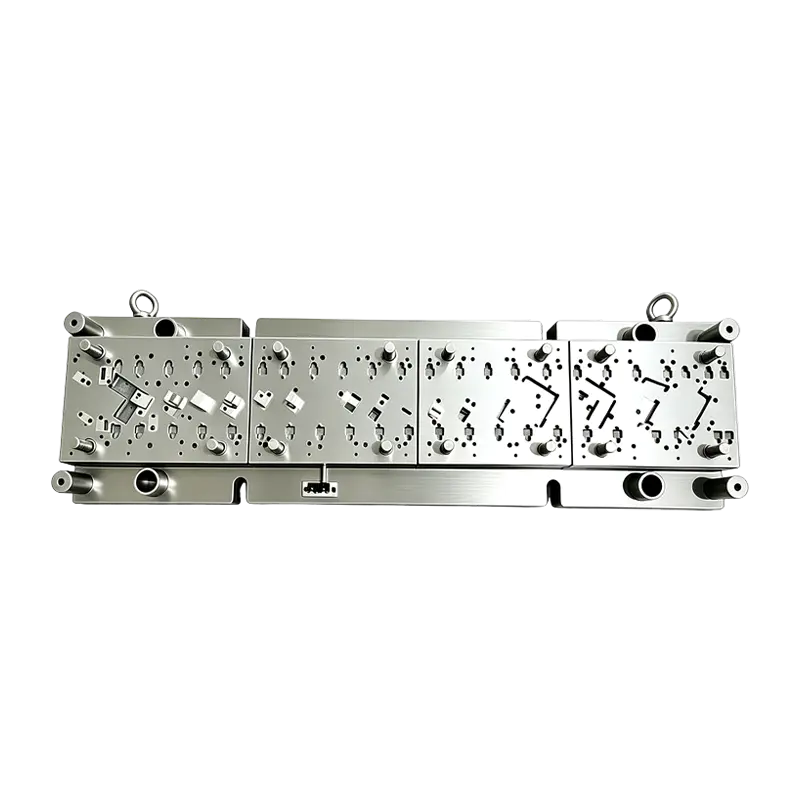
High Speed Progressive Stamping Die Sheet Metal Follow on Press Tool
Multi-operation Metal Stamping Tool for Continuous...
-
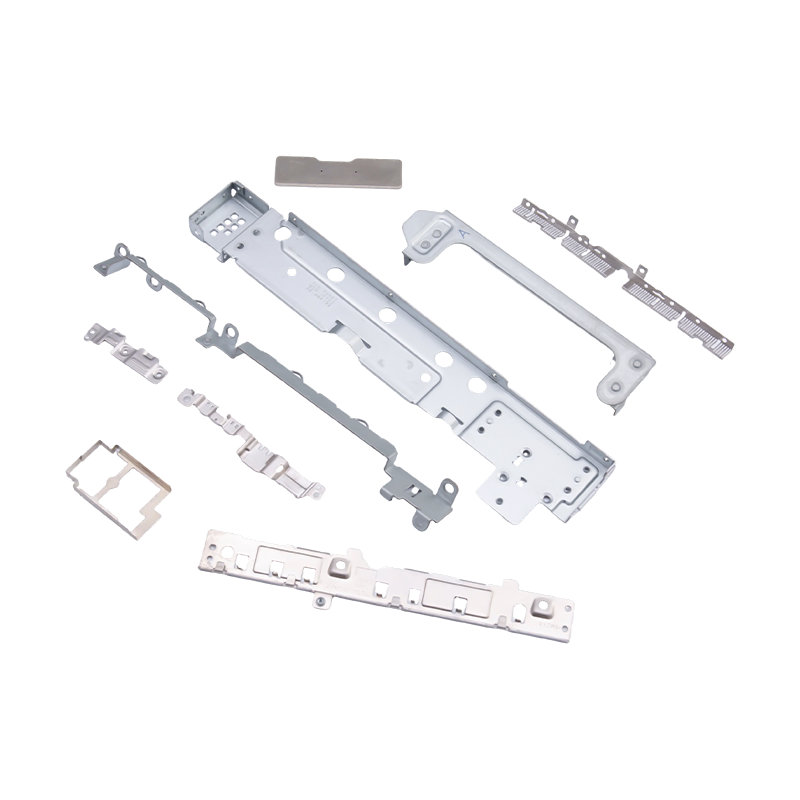
Small stamped parts for laptops and mobile phones
As essential internal components for modern portab...
- E-mail us: [email protected]
- Call us: +86-139 1308 8972

Industry News
Home / News / Industry News / Metal Stamping Explained: The Complete Guide to Process, Materials, and Cost
Metal Stamping Explained: The Complete Guide to Process, Materials, and Cost
2026-09-07
A purchasing engineer has just been asked to source 60,000 stainless steel brackets. Three quotes arrive, and the lowest per-piece price sits nearly 40% below the others — but it carries a USD 15,000 tooling charge. The gap is not a mistake: the low quote comes from metal stamping. Whether that price is real depends on the die, the press capacity, the material, and the production volume behind it.
Metal stamping is the most cost-efficient way to mass-produce precision sheet metal parts. A press forces a sheet metal strip between a punch and a die and produces a finished part in a fraction of a second per stroke. Stamping is not a single operation but a family of processes — blanking, bending, deep drawing, and more — covering parts from battery covers to laptop frames.
Content
- 1 What Is Metal Stamping?
- 2 How the Stamping Process Works
- 3 Metal Stamping vs. Alternative Manufacturing Processes
- 4 Cost Behavior at Different Production Volumes
- 5 Materials and Die Design Considerations
- 6 Industry Applications and Market Distribution
- 7 Supplier Selection and Total Cost Control
- 8 Maintenance and Compliance Advice
What Is Metal Stamping?
Metal stamping is a cold forming process that shapes flat sheet metal into parts using a press and a set of dies. The sheet, supplied as a coil or strip, is fed between a punch and a die. The punch moves down under pressure, and the metal is cut, bent, or drawn to fill the die cavity. Each press stroke creates one part; in a progressive die, one finished part exits every stroke.
The conclusion is straightforward: stamping wins on volume. After the die is built, the per-piece cost falls dramatically because the process runs at high speed, produces no chips, and consumes only the raw sheet and lubricant. At quantities above a few tens of thousands, a stamped component routinely costs 50–80% less than the same part machined from billet.
Common stamping operations
- Blanking — cutting a flat outline from the sheet.
- Piercing — punching holes or slots into the part.
- Bending — folding the sheet along a straight axis.
- Deep drawing — pulling the sheet into a cup or enclosure shape.
- Coining and embossing — pressing fine surface detail with high localized force.
High speed
Hundreds of strokes per minute.
Hundreds of strokes per minute.
Tooling-driven cost
High upfront, low per piece.
High upfront, low per piece.
Material range
Steel, stainless, aluminum, copper.
Steel, stainless, aluminum, copper.
Repeatable tolerance
Stable within ±0.05 mm after set-up.
Stable within ±0.05 mm after set-up.
How the Stamping Process Works
Five steps decide the outcome of a stamped part project:
- Part design and manufacturability review — tolerances, material thickness, hole sizes, bend radii, and edge requirements are checked against stamping rules before tooling starts.
- Die design and manufacturing — the die is the largest cost item, machined from hardened tool steel, assembled with guides and springs, and tested until the part meets the drawing.
- Material selection and preparation — coils or strips are specified by grade, thickness, width, and surface finish; material certificates confirm the chemistry.
- Press setup — the die is mounted in a press selected by tonnage, stroke, and shut height; 80–400 tonne presses cover most mid-size parts.
- Stamping and secondary operations — production runs at high speed, then deburring, tapping, washing, surface treatment, or assembly follows.
The die concept matters as much as the press. Progressive dies carry the strip through multiple stations; transfer dies move individual blanks between stations. The choice changes tooling cost and cycle time; the practical differences are covered in this comparison of progressive vs transfer metal stamping.
For automotive components with long runs, progressive molds are the standard choice because they convert a coil into a finished part in one pass, with no operator intervention between stations.
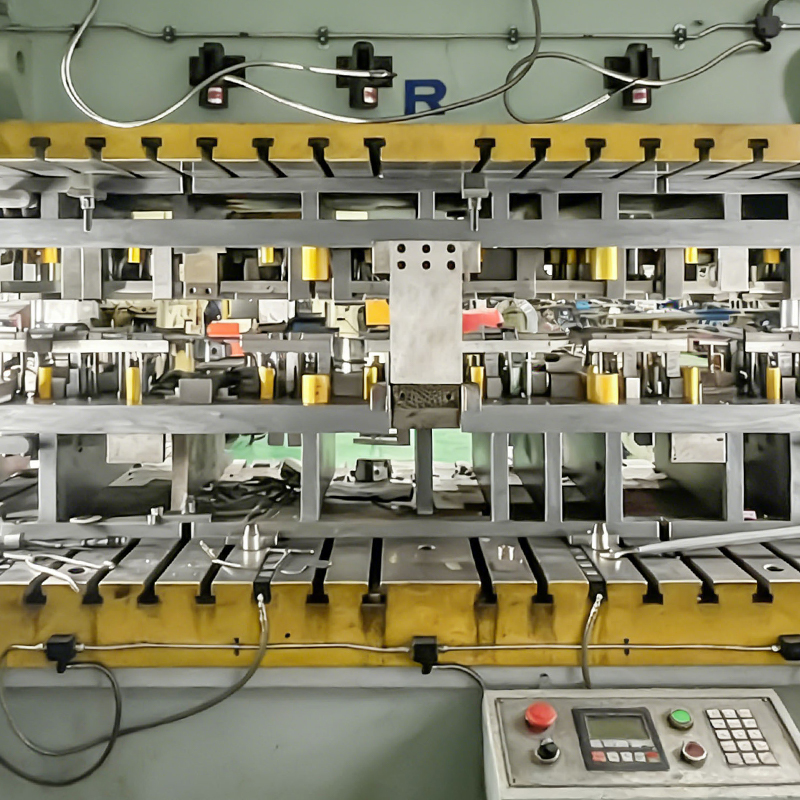 Continuous Progressive Mold for Automotive Motor HousingsThis mold is built for high-volume production with alloy steel components for wear resistance and a modular design for easy maintenance, making it a strong candidate for long-run automotive stamping where one-pass efficiency is essential.View Product →
Metal Stamping vs. Alternative Manufacturing Processes
When a design team selects a process for a sheet metal part, the shortlist is usually stamping, CNC machining, laser cutting, and sometimes die casting. Quantity and tolerance decide the answer.
Process
Tooling cost
Unit cost
Typical tolerance
Tooling lead time
Best volume
Metal stamping
High
Low at volume
±0.05 to ±0.10 mm
4–8 weeks
10,000+
CNC machining
None or low
High
±0.02 to ±0.05 mm
Days
1–1,000
Laser cutting
None
Medium
±0.10 to ±0.20 mm
Days
1–5,000
Die casting
Very high
Low
±0.05 to ±0.10 mm
6–12 weeks
10,000+
Indicative ranges for simple sheet metal parts; actual values depend on geometry, material, and supplier equipment.
The trade-off is clear. CNC machining offers tight tolerances without tooling investment, but the unit cost stays high. Laser cutting is flexible for complex 2D profiles at low volume, yet it does not create bends or deep shapes by itself. Stamping requires the largest upfront investment, but once the die is proven, the unit cost is the lowest. Below a few thousand parts, die amortization is punishing; from ten thousand parts upward, stamping is hard to beat.
Cost Behavior at Different Production Volumes
The deepest hidden cost in stamping is not press time — it is die amortization plus scrap. The per-piece cost curve drops quickly once the tooling is paid for.
100
1,000 pcs
32
10,000 pcs
18
50,000 pcs
12
100,000 pcs
At 10,000 parts, the per-piece cost falls to roughly a third of the 1,000-part level; at 100,000 parts it reaches about 12. The decline comes from spreading tooling and setup over more units; the floor is raw material plus press time.
When comparing quotes, calculate total cost of ownership: tooling plus unit price times volume, plus quality risk. A quote that avoids the tooling charge but carries a high unit price is the more expensive path at scale. A tooling price that looks high but includes hardened die steel and a spare-parts package often beats a cheap die that wears out early.
Materials and Die Design Considerations
Typical stamped materials
- Low-carbon steel (DC01 or SPCC) — formable and low cost, used for brackets, chassis, and reinforcement parts.
- Stainless steel (SUS301 or SUS304) — corrosion resistant, higher springback, more demanding on the die.
- Aluminum alloys (5052 or 6061) — lightweight, common in EV battery enclosures and heat sinks; larger bend radii are required to avoid cracking.
- Copper alloys — excellent conductivity, used in busbars, connectors, and terminals.
Die design controls how the material behaves. Punch-to-die clearance decides cut-edge quality: too little produces a secondary shear and burr; too much increases burr and reduces edge straightness. For 1.5 mm steel sheet, a clearance of 5–8% of the thickness is a common starting point.
Hardness matters. Advanced high-strength steels reduce vehicle weight but accelerate die wear, so harder tool steel and more frequent sharpening are needed. If the drawing requires a tolerance below ±0.05 mm, the die needs tight guides and the press must hold repeatability. Electronic stamping dies, for example, are held to tighter tolerances than home-appliance dies because connector and shielding parts must fit assembled boards without rework.
Industry Applications and Market Distribution
Stamped parts appear in nearly every manufacturing sector, but the balance is uneven. The approximate split of demand follows.
Automotive & EV — 45%
Electronics — 25%
Home appliances — 15%
Industrial equipment — 15%
Automotive, including electric vehicles, is the largest market. Body panels, chassis brackets, seat frames, motor housings, and battery covers are stamped. Electric vehicles especially drive demand for precision battery-related stampings such as copper busbars.
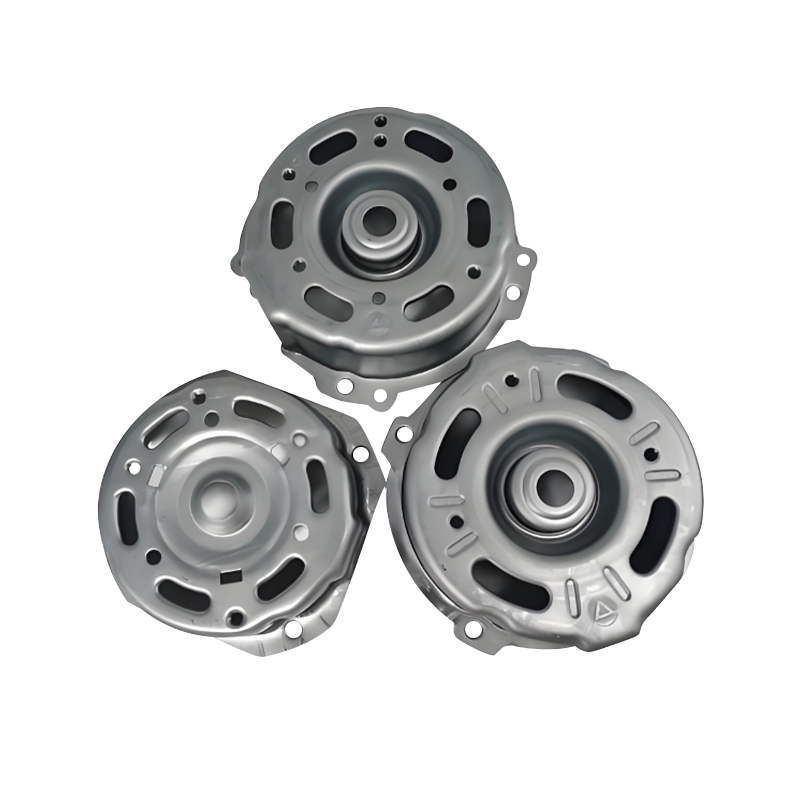 Precision Stamped Motor Housings for Automotive ApplicationsThese stampings use high-strength steel or aluminum with tight tolerances and heat-dissipation features, directly supporting the growing demand for durable motor housings in electric and conventional vehicles.View Product →
Electronics is the second-largest field. Laptop frames, large computer bases, and many small mobile-phone parts are stamped because they combine thin material, fine holes, and low cost at high volume. Home appliances follow with oven shells and large painted panels; industrial equipment adds servo-drive housings and compressor components.
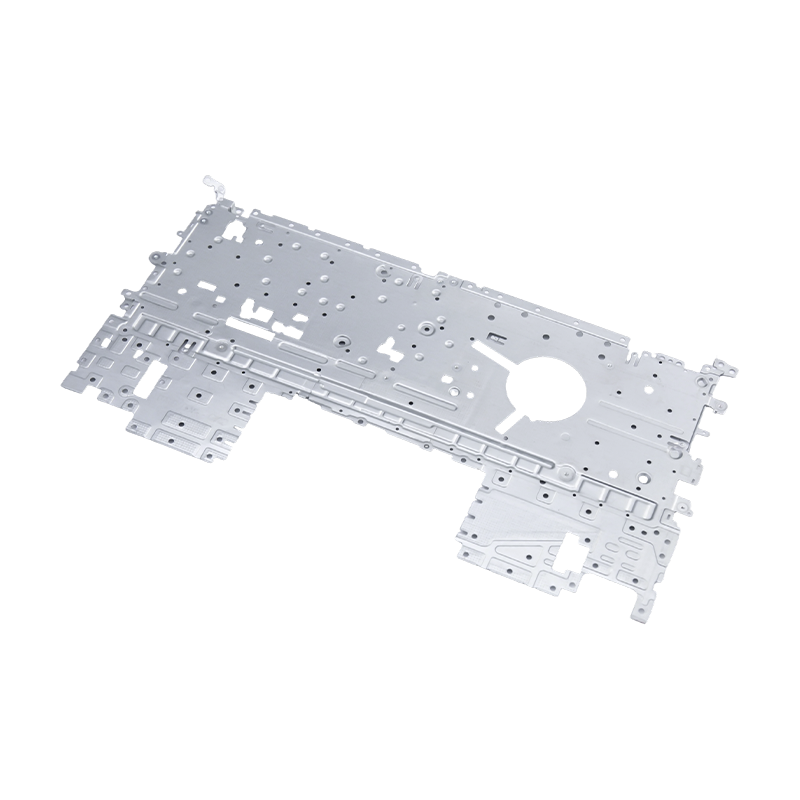 Laptop Chassis and Internal Stamping PartsMade from cold-rolled steel, aluminum, or magnesium alloy, these components offer smooth edges, precise holes, and corrosion resistance, making them suitable for cosmetic-grade laptop frames and structural assemblies.View Product →
A part family maps to each sector. For electrified powertrains, motor housing stampings combine deep drawing with tight concentricity. Battery cover stampings demand flatness and precise hole patterns. Laptop stampings require cosmetic-grade surfaces with no scratches or orange peel.
Supplier Selection and Total Cost Control
Selecting a stamping partner matters more than any single drawing dimension. Use a short evaluation sequence instead of comparing prices alone.
1. Define the part envelope
Material grade, thickness, tolerance, surface finish, and annual volume.
Material grade, thickness, tolerance, surface finish, and annual volume.
2. Run a DFM review
Check bend radii, hole-to-edge distances, and draw depth.
Check bend radii, hole-to-edge distances, and draw depth.
3. Compare total cost
Tooling plus unit price times volume, plus delivery and quality risk.
Tooling plus unit price times volume, plus delivery and quality risk.
4. Verify capacity
Press tonnage range, inspection equipment, and similar part experience.
Press tonnage range, inspection equipment, and similar part experience.
5. Agree on tooling ownership
Who keeps the die, how retrials are priced, and spare-part policy.
Who keeps the die, how retrials are priced, and spare-part policy.
Two questions are often overlooked. First, ask about die steel grade and heat treatment: a die made of quality tool steel, hardened and coated, produces consistent parts for more strokes. Second, ask how trial runs are handled. A part can look good in a soft-tool review and still change dimension in the production die. The try-out procedure determines whether the first batch arrives on time. A company that builds the die, runs the stamping, and integrates automation in-house — as Suzhou Shuangqisi Mold Equipment does with its mold, stamping-part, and automation lines — moves a part from design to production with fewer handovers.
Maintenance and Compliance Advice
Stamping quality is maintained, not achieved once. Dies wear, alignment drifts, and surface finish degrades as strokes accumulate. A practical schedule includes cleaning and lubricating die guides, checking punch and die clearance, monitoring burr height at defined intervals, and resharpening cutting edges before quality drifts outside tolerance. For high-run parts, spare inserts or a duplicate die avoid downtime when wear appears.
Regulated customers also expect documented evidence:
- ISO 9001 quality management as the baseline.
- IATF 16949 for automotive components, including PPAP submission and control plans.
- Material certificates tracing every coil to its mill.
- RoHS and REACH declarations for electronics shipped to Europe.
This is not paperwork for its own sake. A stamped part can look correct while the coating chemistry or base material fails the specification. Suppliers with traceable records make root-cause analysis faster when a deviation appears, protecting both quality and delivery.
Metal stamping rewards teams that plan ahead. Define the tolerance band realistically, choose a die concept that fits the volume and material, and evaluate suppliers on total cost and quality evidence rather than per-piece price alone. When the die is right, the press is capable, and the material is traceable, stamping delivers the lowest cost per part in mass production — from two-wheeler wheel hubs and motor housings to laptop frames.
Previous Post
Aluminum Progressive Stamping: Process, Alloys, Design Tips & Cost Guide
Next Post
Metal Stamping Process: How Tooling, Die Design, and Automation Influence Part Cost
Our Products.
Start Your Business with an OEM Manufacturer Right Here!

Provide global customers with complete turn-key solutions
through
innovation!
QUICK LINKS
CONTACT INFO.
-
 +86-139 1308 8972
 -

-
 No. 118 Yexin Road, Wujiang Economic Development Zone, Suzhou, China
Copyright © Suzhou Shuangqisi Mold Equipment Co., Ltd. All Rights Reserved. Custom Stamping Die Metal Stamping Die Manufacturers
