 English
 Español
 Deutsch
-
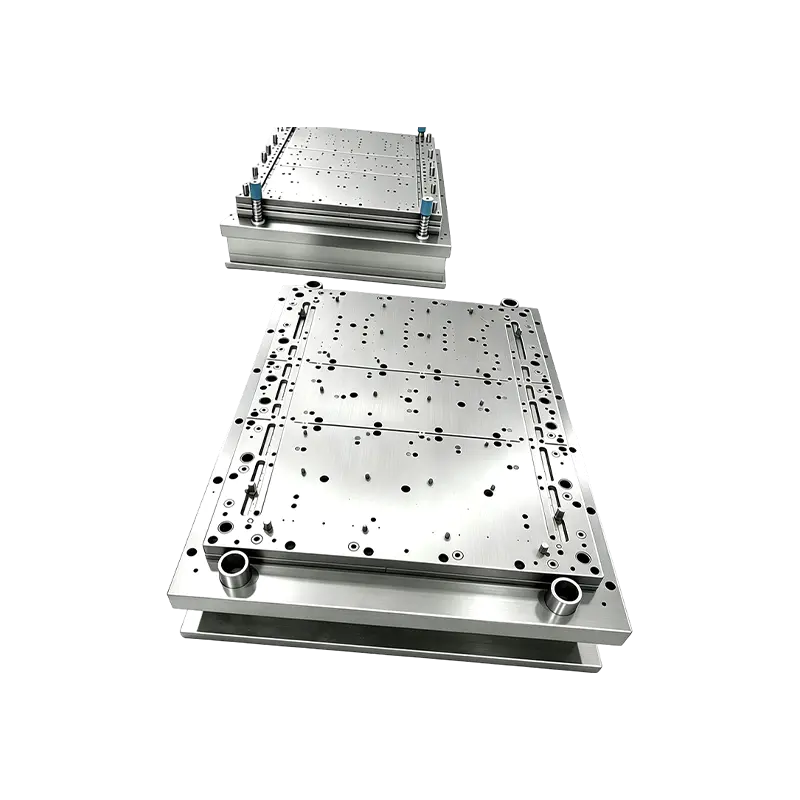
Progressive Stamping Die for Connector & Terminal Parts High Speed Progressive Stamping Die Precision Metal Hardware Stamping Tool mold for Connector Terminal Parts Automotive Components
Progressive Stamping Die for Connector & Termi...
-
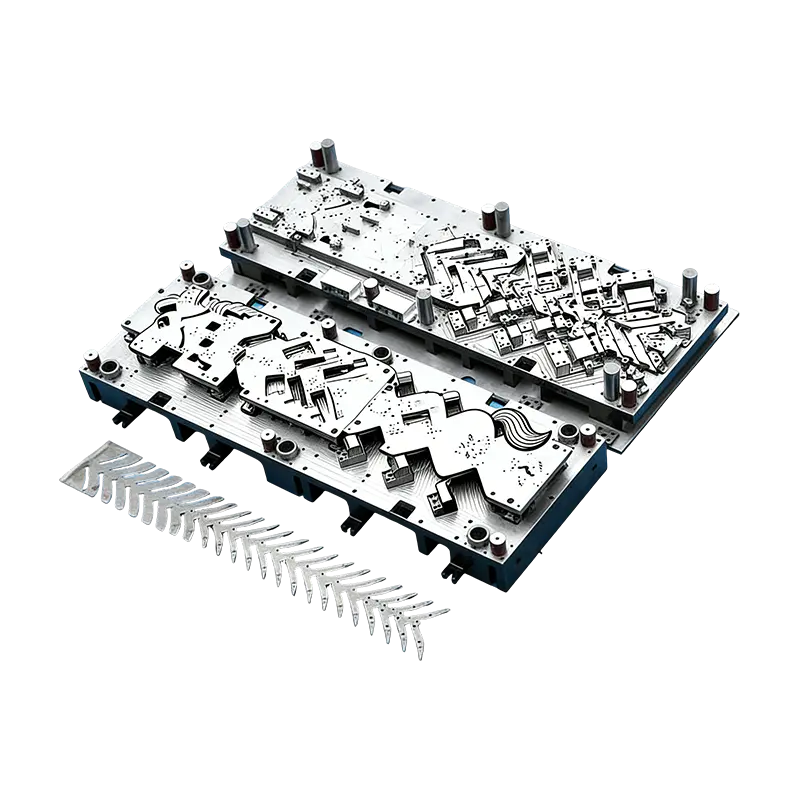
Progressive molds for automotive parts
This Continuous mold for automotive motor housing ...
-
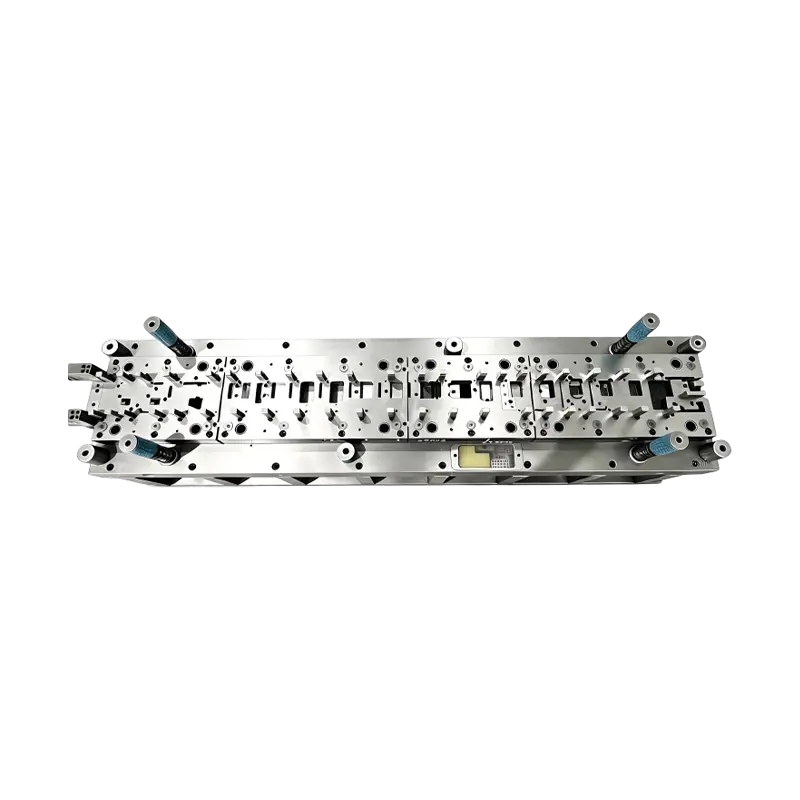
Long-Stroke Multi-Stage Progressive Die Automatic Strip Feed Progressive Die Long Travel Follow on Stamping Tool for Sheet Metal Hardware Press Moulding
Long-Stroke Multi-Stage Progressive DieOur custom ...
-
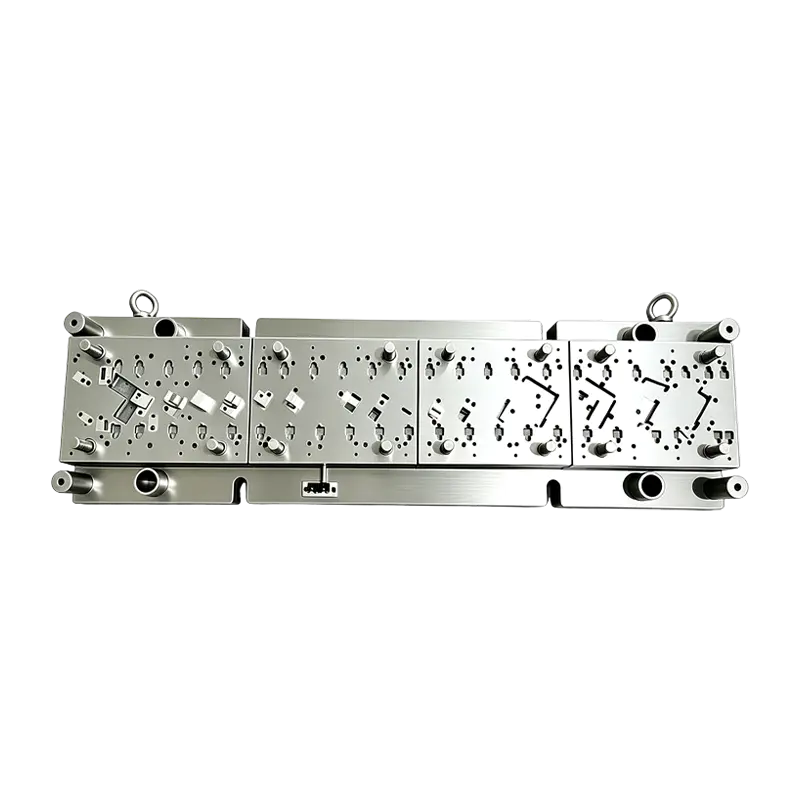
High Speed Progressive Stamping Die Sheet Metal Follow on Press Tool
Multi-operation Metal Stamping Tool for Continuous...
-
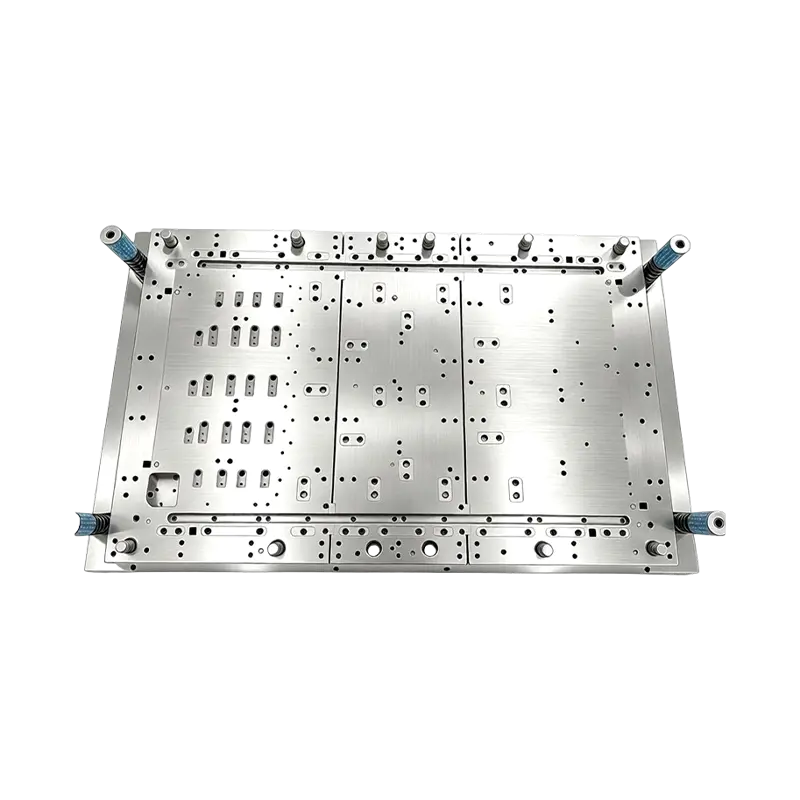
Multi-Station Progressive Stamping Die with Carbide Inserts Custom Multi Station Progressive Stamping Die Carbide Insert Metal Stamping Mold Tool for Equipment Appliances Device Hardware
High Speed Metal Stamping Tool for Precise Equipme...
- E-mail us: [email protected]
- Call us: +86-139 1308 8972

Industry News
Home / News / Industry News / Aluminum Progressive Stamping: Process, Alloys, Design Tips & Cost Guide
Aluminum Progressive Stamping: Process, Alloys, Design Tips & Cost Guide
2026-09-14
Aluminum progressive stamping is the most consistent and cost-effective way to produce high volumes of lightweight precision parts — provided the geometry, alloy, and annual quantity fit the process. A single progressive die fed from a coil can blank, pierce, form, and cut off an aluminum component on every press stroke while holding hole-to-hole tolerances near ±0.05 mm without secondary machining. That combination is why battery covers, motor housings, electronic chassis parts, and electrical connectors are routinely made this way.
Key takeaway: choose aluminum progressive stamping when annual demand is high, the part can be nested in a continuous strip, and consistent tolerances matter more than design flexibility. Below those conditions, simpler manual or transfer tooling is often more economical.
Content
- 1 What Is Aluminum Progressive Stamping?
- 2 Aluminum Alloys That Run Well in a Progressive Die
- 3 Why Progressive Stamping Is Preferred for Aluminum Parts
- 4 Design Limits: What Determines Success Before You Cut Steel
- 5 Where Aluminum Progressive Stampings Are Used
- 6 Tooling Cost and Supplier Selection: Four Steps That Prevent Regret
- 7 Maintenance, Quality, and Compliance Considerations
What Is Aluminum Progressive Stamping?
Progressive stamping feeds a continuous metal strip through a single die set with multiple stations. Each station performs one or more operations — piloting, blanking, coining, bending, drawing, embossing, or lancing — so the raw strip gradually turns into a finished part by the time it reaches the last station, where it is cut off from the carrier strip.
How the process runs in production
- A coil feeder straightens the aluminum strip and advances it into the die at a precise pitch per press stroke.
- Pilots engage pre-pierced holes to lock the strip position at every station, which guarantees positional accuracy from feature to feature.
- Stations work progressively: the first pierces pilot holes, the middle ones form bends or embossments, and the final station separates the part.
- The finished part is discharged through a chute while the skeleton scrap is rewound or shredded for recycling.
Because all stations act on different parts of the same strip simultaneously, one press stroke produces one complete aluminum part. That continuous operation is what separates progressive stamping from transfer stamping, where individual blanks are shuttled between separate die stations.
Aluminum Alloys That Run Well in a Progressive Die
Not every aluminum grade feeds cleanly through a progressive die. Successful candidates combine formability, predictable springback, and acceptable surface behavior under high-speed punching. In practice, 3xxx, 5xxx, and 6xxx series alloys cover most projects.
Alloy
Common Temper
Why It Is Selected
5052
H32
High fatigue strength and corrosion resistance; used for battery covers, brackets, and fuel tank ends.
3003
H14
Excellent formability and low cost; a workhorse for enclosures, heat exchanger parts, and general stampings.
6061
T6
Stronger and more stable in service, but springback is higher; preferred for structural brackets and mounts.
1100
H14
Very soft and easy to draw; used for nameplates, reflectors, and electrical parts with simple geometry.
Table 1 — Aluminum alloy selection for progressive dies: strength and formability always trade against springback.
Why Progressive Stamping Is Preferred for Aluminum Parts
The business case comes down to four measurable advantages over manual dies, machining, or deep-draw-only tooling.
Uninterrupted throughput
A well-built aluminum progressive die runs at hundreds of strokes per minute, and every stroke produces a complete part. Unit cost falls quickly once volume exceeds the tooling amortization point.
Repeatable precision
Because the strip is piloted at every station, feature-to-feature positions stay consistent across millions of cycles. Critical hole patterns in battery and motor components hold ±0.05 mm without rework.
Weight reduction
At 2.7 g/cm3, aluminum is about one-third the weight of steel. Progressive stamping lets designers use thin, stiff, formed sections instead of heavy castings.
Integrated secondary operations
Tapping, riveting, cam-forming, and marking can be added as in-die stations, so parts come out closer to their final assembly state and reduce supply-chain steps.
Battery enclosures are a typical example where these advantages add up. The cover must be dimensionally stable, corrosion-resistant, and produced in high volume at consistent cost.
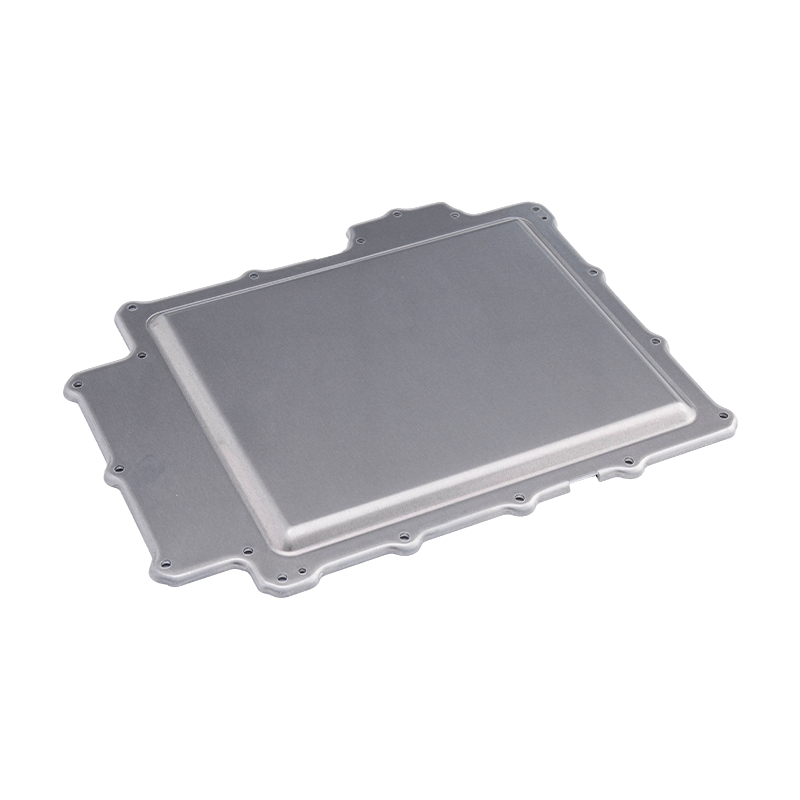 Precision Battery Cover Stamping Parts for EnclosuresThis stamped battery cover suits automotive and energy storage enclosures, offering dimensional stability and corrosion resistance in high-volume production, aligning with the article's discussion of weight and sealing benefits.View Product →
In practice, manufacturers who switch from welded steel assemblies to stamped aluminum covers cut part weight by more than half while improving sealing consistency.
Design Limits: What Determines Success Before You Cut Steel
Aluminum behaves differently from steel in a progressive die. Its higher yield-to-modulus ratio produces more springback, and its tendency to gall against tool steel makes lubrication and die coatings mandatory. Understanding these limits up front is the difference between a smooth launch and a costly redesign.
Practical design rules used by tooling engineers
- Minimum bend radius of 1.0 to 1.5 times material thickness for 3xxx and 5xxx alloys; increase toward 2.0 times for 6xxx-T tempers.
- Specify consistent burr direction on any surface that becomes a sealing or sliding interface.
- Keep drawn depths moderate; aluminum tears at sharp corner radii, so add a minimum 0.5 mm corner radius on deep forms.
- Allow for springback compensation in the die design; reliable suppliers add correction features during tryout rather than after parts fail.
Achievable tolerances in production
±0.05 mm
Piercing
±0.08 mm
Trimmed profile
±0.10 mm
Formed bends
±0.15 mm
Flanged edges
Chart 1 — Typical production tolerances held on aluminum progressive stampings with well-maintained tooling.
Where Aluminum Progressive Stampings Are Used
Aluminum progressive stamping appears wherever lightweight, electrically conductive, or corrosion-resistant metal parts are needed at high volume. The distribution below reflects typical demand across the industries we supply.
- Automotive and EV (42%) — battery covers, motor housings, seat parts, copper busbars, structural brackets.
- Electronics (21%) — laptop enclosures, server chassis parts, small connectors and shields.
- Appliances and white goods (19%) — oven panels, control-box stampings, heat exchanger fins.
- Industrial equipment (18%) — servo-driver housings, compressor components, mounting plates.
Automotive and new energy vehicles
The shift to electric drivetrains has made aluminum progressive stamping the default process for battery-system and motor components. A stamped copper or aluminum busbar, for example, replaces bent-and-machined bars with a part that holds flatness and hole position in one step.
 Copper Busbar Stamping Parts for EV Power DistributionThis high-purity copper busbar supports efficient current flow between battery, motor, and converters, with plated surfaces and tight tolerances for demanding EV applications, matching the paragraph's emphasis on progressive stamping advantages.View Product →
Similarly, motor housing stamping parts take advantage of aluminum's thermal properties and light weight, while progressive dies hold the tight concentricity required by rotor and stator assemblies.
Electronics and appliances
Consumer electronics favor aluminum for its surface finish and EMI shielding behavior. Progressive stamping produces the thin-wall, high-precision parts that go into laptop and phone assemblies.
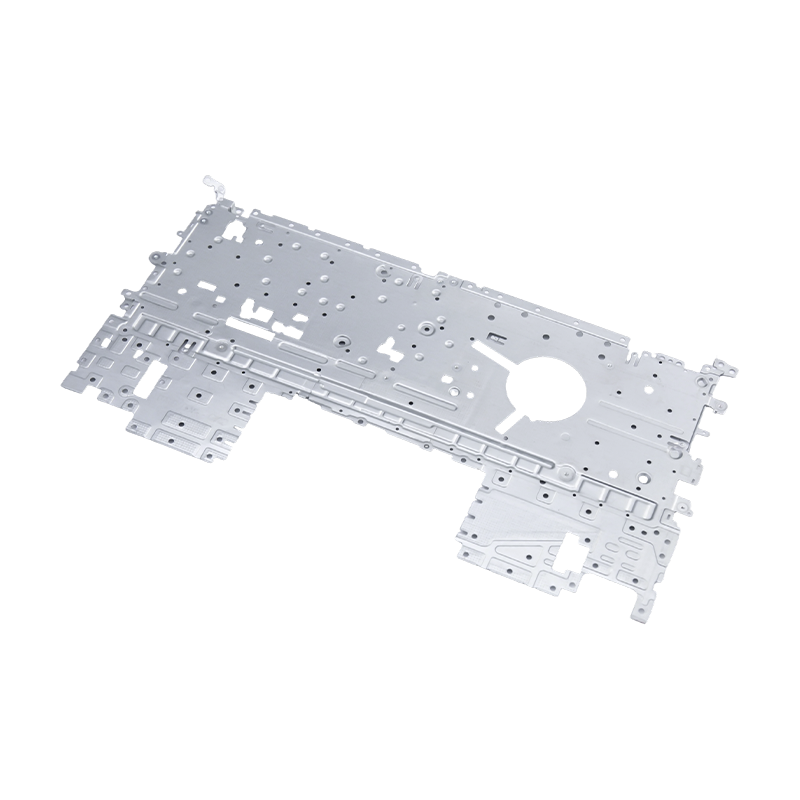 Aluminum Laptop Chassis Stamping PartsThese stamped components for laptop chassis and brackets combine light weight with rigidity, featuring precise hole positions and snap-fit structures that support efficient assembly, relevant to the article's point about thin-wall electronics parts.View Product →
On the appliance side, large oven shells and control-panel stampings benefit from the same process economics when production volumes justify dedicated tooling.
Tooling Cost and Supplier Selection: Four Steps That Prevent Regret
Progressive dies are the largest up-front cost in an aluminum stamping program, often outweighing the press and material handling equipment. The goal is not to pay the least for tools, but to pay for the right tool design, because die quality determines part quality for the life of the program.
Step 1 — Validate the business case. Progressive tooling starts making sense at roughly 50,000 to 100,000 parts per year. Below that, consider more economical tooling options.
Step 2 — Send a manufacturable data package. Provide the 3D model, tolerance stack, surface finish requirement, and annual demand. A clear strip-layout review at this stage avoids costly die revisions.
Step 3 — Audit real production capability. Look for in-house die design, CNC machining, and tryout presses under one roof. A supplier with both die-making and stamping capability solves tolerance problems before they reach production.
Step 4 — Demand a first-article report with SPC data. Confirm that critical features stay within Cpk targets across multiple coils and press runs, not just on the first sample.
Suppliers that combine progressive dies, stamping presses, and automation — such as our team at Shuangqisi, with 80 to 400 ton presses and an in-house stamping automation subsidiary — can shorten the ramp-up and keep tolerances stable across shifts.
Maintenance, Quality, and Compliance Considerations
The best aluminum progressive dies still lose performance if maintenance is neglected. Aluminum's tendency to gall makes lubrication management and surface coatings the two controls that separate reliable programs from recurring downtime.
- Die surface protection: DLC or TiCN coatings on forming punches reduce aluminum pickup and extend regrind intervals.
- Lubricant selection: use evaporative or low-residue lubricants compatible with downstream cleaning, especially for battery and electronics parts.
- Preventive maintenance: inspect pilots, springs, and wear plates at defined stroke intervals; progressive dies fail predictably when wear reaches a threshold.
- Compliance documentation: for export or regulated industries, keep material certificates and PPAP or equivalent documentation available for audit.
Quality control on aluminum stampings should include CMM verification of critical hole positions, surface checks for galling scratches, and periodic hardness verification of incoming coils, because incoming material variation is the most common hidden cause of cracks and springback drift.
Aluminum progressive stamping is not the cheapest process for prototypes or small batches, and it cannot beat a transfer die for very large panels. But for parts that fit a coil-fed strip and repeat in the hundreds of thousands, it delivers the lowest unit cost, the tightest consistency, and the shortest cycle time of any forming method. The real competitive advantage comes from choosing a supplier that designs the die, runs the stamping, and builds the automation as one integrated project.
Before you approve a quote, compare the supplier's die-making track record, press capacity, and SPC discipline — not just the price per part. Explore Shuangqisi's mold and stamping capabilities when you are ready to evaluate a potential partner for your aluminum progressive stamping program.
Previous Post
Aluminum Stamping Suppliers: How to Evaluate Capability, Risk, and Fit
Next Post
Metal Stamping Explained: The Complete Guide to Process, Materials, and Cost
Our Products.
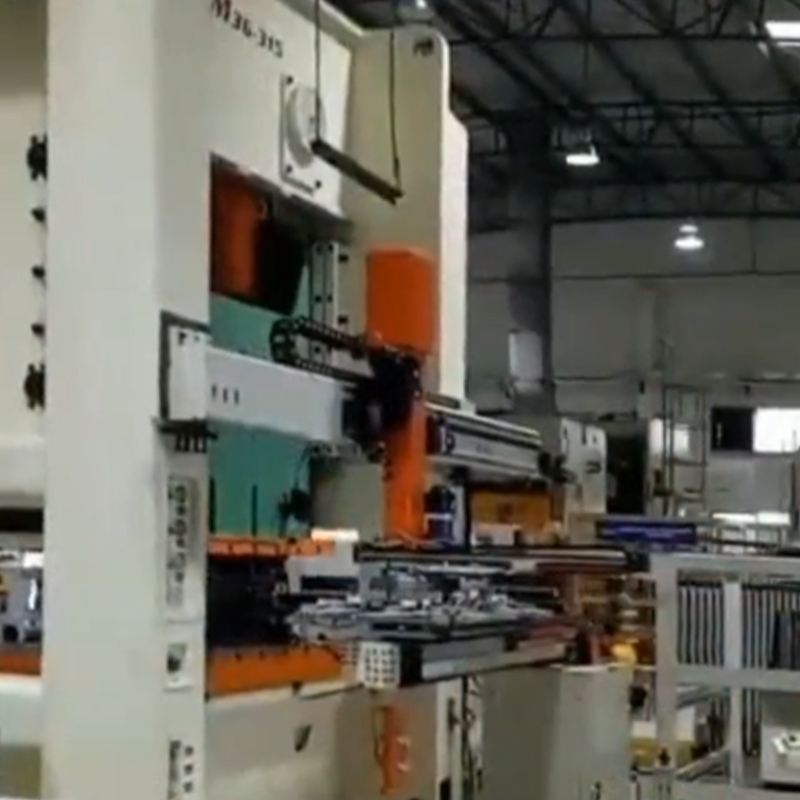
Start Your Business with an OEM Manufacturer Right Here!

Provide global customers with complete turn-key solutions
through
innovation!
QUICK LINKS
CONTACT INFO.
-
 +86-139 1308 8972
 -

-
 No. 118 Yexin Road, Wujiang Economic Development Zone, Suzhou, China
Copyright © Suzhou Shuangqisi Mold Equipment Co., Ltd. All Rights Reserved. Custom Stamping Die Metal Stamping Die Manufacturers
