 English
 Español
 Deutsch
Why the Gap Between Traditional and Simulation-Optimized Dies Matters Now Automotive stamping dies have always been among the most technically demanding tooling investments in vehi...
READ MORE- E-mail us: [email protected]
- Call us: +86-139 1308 8972

Product Categories
Metal Stamping Dies Suppliers
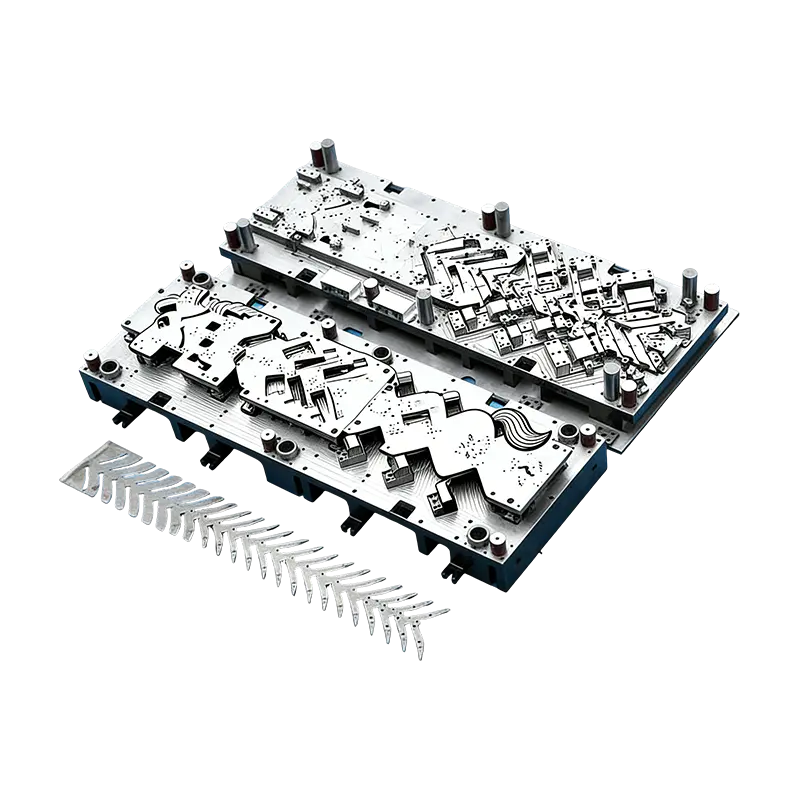
Stamping dies that draw and compress planar materials into various hollow shapes are used in stamping. Deep drawing dies are stamping dies that process flat blanks or semi-finished hollow bodies into open hollow parts through plastic deformation. Their core function is to control material flow to achieve a reduction in shape while maintaining a relatively stable sheet thickness. These dies can perform initial deep drawing, thinning deep drawing, and reverse deep drawing processes. Typical applications include the manufacture of complex geometric parts such as automotive fuel tanks and enamel basins. During the process, parameters such as blank holder force and die clearance are controlled to prevent wrinkling and cracking, and polishing, coating, and die-drawing techniques are used to extend die life. Their structural designs include inverted initial deep drawing dies, blank holder-less reverse deep drawing dies, and double-die thinning deep drawing dies, meeting the technical requirements of different forming stages.
About
Who we are
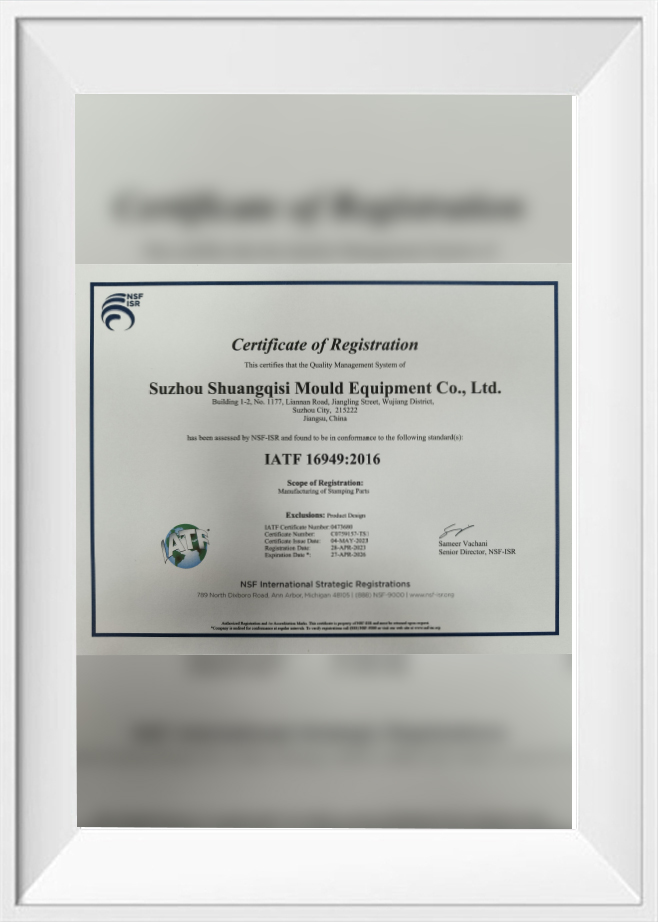
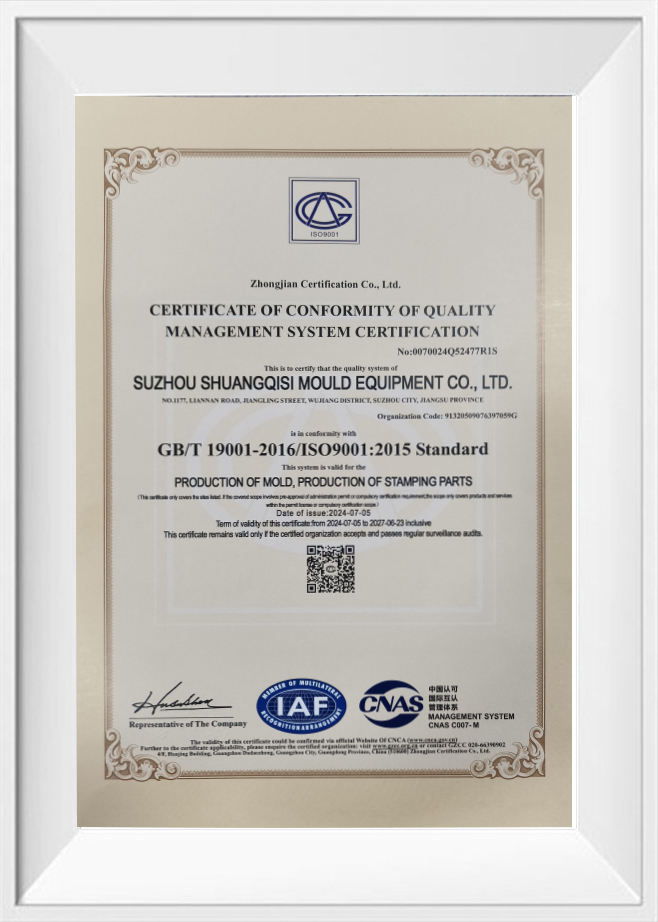
Suzhou Shuangqisi Mold Equipment Co., Ltd., located at No. 118 Yexin Road, Wujiang District, Suzhou City, has 60 technical staff. Through the joint efforts and continuous development of all employees, the company has become a professional manufacturer of stamping dies and hardware parts, Metal Stamping Dies Suppliers and Metal Stamping Dies Factory in China, offering high-quality products at competitive prices, integrating design, manufacturing, and service. The company possesses imported wire cutting machines, CNC machining centers, over 10 grinding machines of various sizes, and 25 punch presses (80T-400T), among other advanced precision machine tools. Custom Metal Stamping Dies. It has also trained many senior operators and experienced debugging personnel, enabling it to meet the needs of diverse customers. Currently, the company's main clients include Anter Group, Ousheng Electric, Dongbei Group, and Huichuan Technology, primarily supplying molds and products for servo drives, compressors, and new energy vehicles. The company's technical level is among the leading in the industry, with an experienced team that is dedicated to technological advancement. The company focuses on creating value for its customers and adheres to high-quality development. With 15 years of experience in the mold industry, the company has accumulated a large number of technical talents. As early as 2016, it invested in and established Suzhou Keshuang Intelligent Technology Co., Ltd., which mainly produces stamping automation equipment. With many years of experience, it can provide customers with turnkey projects for stamping molds and stamping automation. The company can also invest in related production equipment according to customer needs to create cost-effective products and services for customers.

Message Feedback
Certificate Of Honor
News
-
-
What AHSS Grades Are Actually Used in Automotive Stamping Parts Advanced high-strength steels are not a single material but a family of distinct alloy systems, each engineered with...
READ MORE -
The Functional Gap That Drives Tolerance Differences The tolerance requirements of any stamping die are ultimately derived from what the finished part must do in service. Home appl...
READ MORE -
Why Cost Comparisons Between These Two Processes Are Often Misleading When manufacturers evaluate metal stamping parts against metal drawing part products, the conversation almost ...
READ MORE
Industry Knowledge
Thermal Stability Control in Precision Metal Stamping Dies Manufacturing
Temperature variation during machining and assembly can significantly affect the dimensional accuracy of Metal Stamping Dies, especially for high-precision progressive tools used in servo drive and new energy applications. Even minor thermal expansion in die plates or guide components may lead to misalignment, accelerated wear, or inconsistent part tolerances. Experienced manufacturers typically maintain controlled workshop environments and perform stress-relief treatments after rough machining to ensure long-term stability.
In our own production practice, the combination of imported wire cutting machines, CNC machining centers, and multiple precision grinding machines allows us to maintain micron-level tolerances while reducing deformation risks. With more than 60 technical staff and experienced debugging personnel, we are able to deliver dies that maintain performance stability across long production cycles.
- Perform intermediate stress relief heat treatment after rough milling
- Use symmetrical machining strategies to reduce internal stress concentration
- Control workshop temperature during precision grinding and assembly
- Allow sufficient stabilization time before final inspection
Wear Mechanism Analysis and Surface Treatment Selection for Metal Stamping Dies
Understanding wear mechanisms is critical for extending the service life of Metal Stamping Dies. Adhesive wear, abrasive wear, fatigue cracking, and galling are the most common failure modes, particularly when processing high-strength steel or stainless materials used in compressors and automotive components. Selecting appropriate tool steel grades and surface coatings can dramatically improve durability and reduce maintenance costs.
With over 15 years of mold industry experience, we often recommend coating solutions tailored to customer production volumes and material types rather than using standardized approaches. Our long-term cooperation with clients such as equipment manufacturers and industrial automation companies has demonstrated that customized surface treatment strategies can increase die life by several times.
| Wear Type | Typical Cause | Recommended Treatment |
| Adhesive Wear | High friction and pressure | TiN or DLC coating |
| Abrasive Wear | Hard inclusions in material | Surface nitriding |
| Fatigue Cracking | Repeated cyclic stress | High toughness tool steel |
Progressive Die Alignment Accuracy and Its Impact on Production Efficiency
Progressive Metal Stamping Dies require extremely precise alignment between stations to maintain product consistency during high-speed operation. Misalignment can cause burr formation, dimensional deviation, or unexpected tool breakage. Precision guide posts, bushings, and accurate machining of locating surfaces are essential to ensure repeatability, particularly in multi-station processes.
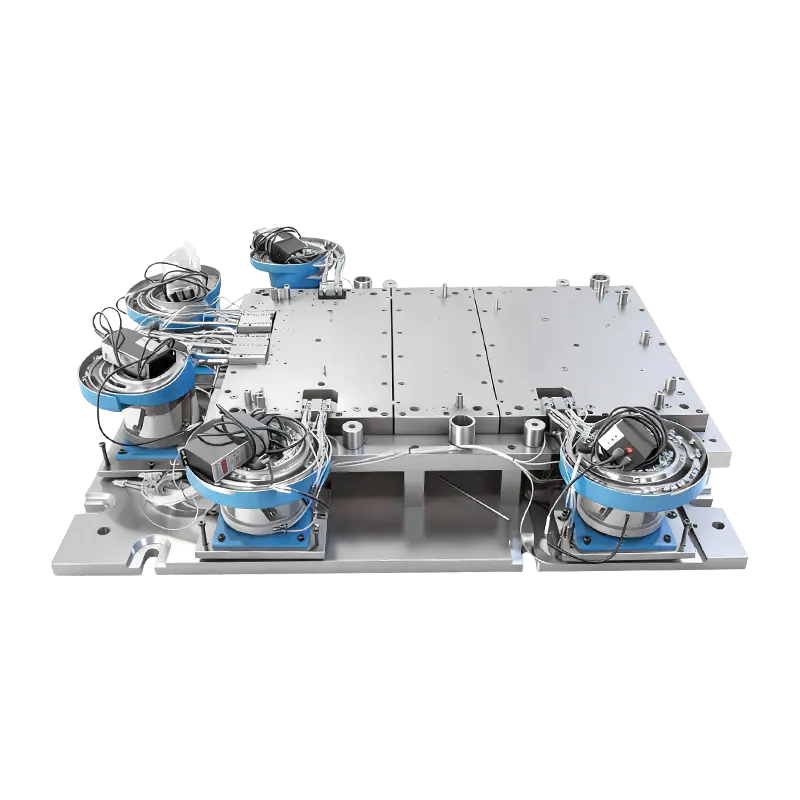
Our facility includes 25 punch presses ranging from 80T to 400T, which allows us to simulate real production conditions during die testing and debugging. This capability helps verify alignment accuracy before delivery, reducing customer commissioning time and improving project reliability. We also provide turnkey solutions that combine dies and automation equipment through our affiliated intelligent technology company, enabling smoother integration into production lines.
- Use precision ground guide components with tight tolerance fits
- Implement sensor monitoring for misfeed or overload detection
- Perform dynamic testing at actual production speeds
- Maintain strict assembly and inspection standards
Cost Optimization Strategies Through Modular Design of Metal Stamping Dies
Modular die design has become increasingly popular as manufacturers seek to reduce lifecycle costs and improve maintenance efficiency. Instead of replacing entire dies when wear occurs, modular inserts and replaceable functional components allow targeted maintenance. This approach is particularly beneficial for industries with frequent product updates, such as new energy vehicles and industrial automation equipment.
Drawing on our experience in providing molds for servo drives and compressor components, we often incorporate standardized modules into die structures while maintaining customized forming sections. This balance enables both flexibility and cost efficiency. Our ability to invest in related production equipment based on customer needs further supports long-term partnerships and competitive project outcomes.
Companies that combine strong technical teams, advanced machining resources, and automation integration capabilities are better positioned to support modern manufacturing requirements. By focusing on value creation and high-quality development, we aim to help customers achieve sustainable production advantages through reliable Metal Stamping Dies solutions.
Start Your Business with an OEM Manufacturer Right Here!

Provide global customers with complete turn-key solutions
through
innovation!
QUICK LINKS
CONTACT INFO.
-
 +86-139 1308 8972
 -

-
 No. 118 Yexin Road, Wujiang Economic Development Zone, Suzhou, China
Copyright © Suzhou Shuangqisi Mold Equipment Co., Ltd. All Rights Reserved. Custom Metal Stamping Dies
