 English
 Español
 Deutsch
Why the Gap Between Traditional and Simulation-Optimized Dies Matters Now Automotive stamping dies have always been among the most technically demanding tooling investments in vehi...
READ MORE- E-mail us: [email protected]
- Call us: +86-139 1308 8972

Automotive and Electric Vehicle Deep Drawing Dies
Product Categories
Automotive Stamping Dies Manufacturers
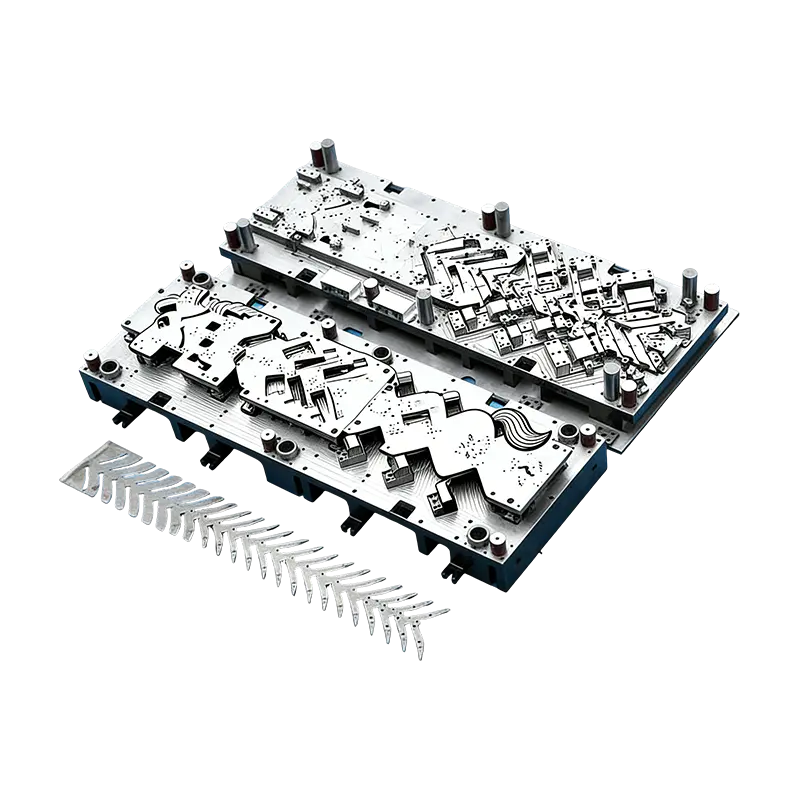
Automotive and Electric Vehicle Deep Drawing Dies are core equipment for shaping metal sheet components in automotive and electric vehicle (EV) manufacturing, enabling the formation of hollow, complex-shaped parts through controlled plastic deformation. Composed of key components like punches, dies, blank holders, and die sets, they are engineered to match both production machinery and material properties.
In traditional automobiles, these dies are widely used for body panels (e.g., door outer panels, hoods) and structural parts, requiring precision tolerance control (typically ±0.02mm) and resistance to material wear. For EVs, they are specialized for lightweight components such as magnesium-aluminum alloy battery casings, with optimized designs to handle deep drawing ratios exceeding 2.5:1 and minimize material thinning.
Key design focuses include adjustable blank holder force to prevent wrinkling or cracking, ultra-smooth surface treatment (Ra ≤ 0.05μm) for reduced friction, and modular structures for cost efficiency. Integrated with simulation technologies and intelligent monitoring, they ensure stable mass production while adapting to the industry’s shift toward lightweighting and high strength.
About
Who we are
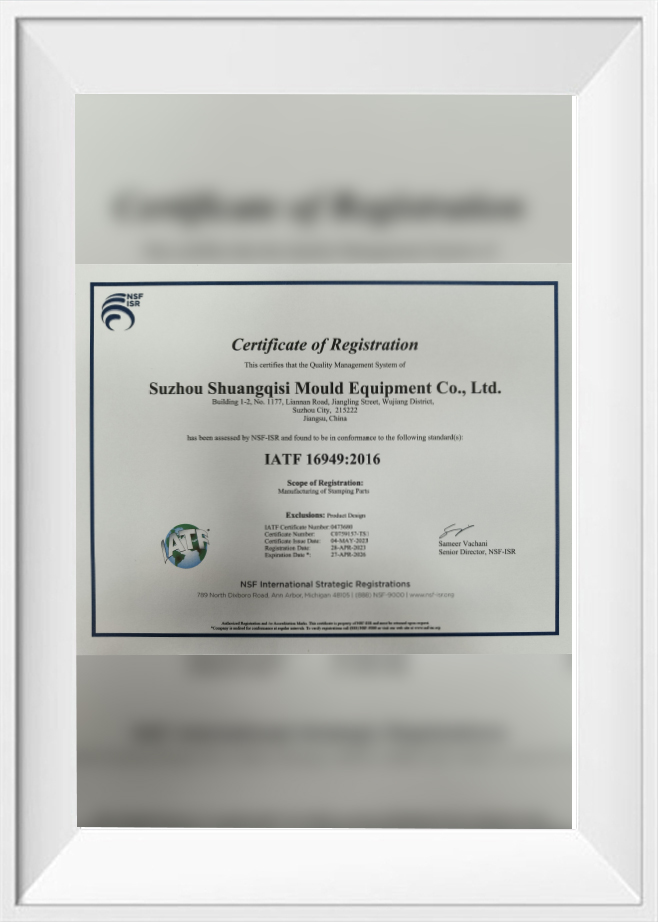
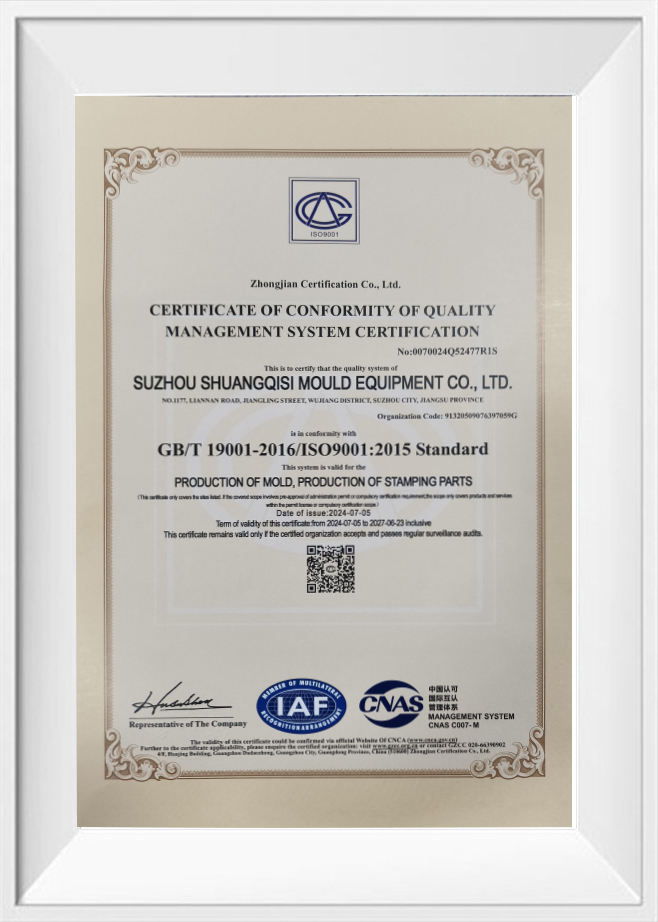
Suzhou Shuangqisi Mold Equipment Co., Ltd., located at No. 118 Yexin Road, Wujiang District, Suzhou City, has 60 technical staff. Through the joint efforts and continuous development of all employees, the company has become a professional manufacturer of stamping dies and hardware parts, Automotive Stamping Dies Manufacturers and Deep Drawing Dies Factory in China, offering high-quality products at competitive prices, integrating design, manufacturing, and service. The company possesses imported wire cutting machines, CNC machining centers, over 10 grinding machines of various sizes, and 25 punch presses (80T-400T), among other advanced precision machine tools. Custom Deep Drawing Dies. It has also trained many senior operators and experienced debugging personnel, enabling it to meet the needs of diverse customers. Currently, the company's main clients include Anter Group, Ousheng Electric, Dongbei Group, and Huichuan Technology, primarily supplying molds and products for servo drives, compressors, and new energy vehicles. The company's technical level is among the leading in the industry, with an experienced team that is dedicated to technological advancement. The company focuses on creating value for its customers and adheres to high-quality development. With 15 years of experience in the mold industry, the company has accumulated a large number of technical talents. As early as 2016, it invested in and established Suzhou Keshuang Intelligent Technology Co., Ltd., which mainly produces stamping automation equipment. With many years of experience, it can provide customers with turnkey projects for stamping molds and stamping automation. The company can also invest in related production equipment according to customer needs to create cost-effective products and services for customers.

Message Feedback
Certificate Of Honor
News
-
-
What AHSS Grades Are Actually Used in Automotive Stamping Parts Advanced high-strength steels are not a single material but a family of distinct alloy systems, each engineered with...
READ MORE -
The Functional Gap That Drives Tolerance Differences The tolerance requirements of any stamping die are ultimately derived from what the finished part must do in service. Home appl...
READ MORE -
Why Cost Comparisons Between These Two Processes Are Often Misleading When manufacturers evaluate metal stamping parts against metal drawing part products, the conversation almost ...
READ MORE
Industry Knowledge
Springback Compensation Techniques in Automotive Stamping Dies for High-Strength Materials
Springback control has become one of the most critical challenges in Automotive Stamping Dies, especially with the increasing use of high-strength steel and lightweight alloys in new energy vehicles. Unlike conventional materials, advanced high-strength steels exhibit higher yield strength and elastic recovery, making dimensional accuracy difficult to maintain after forming. Engineers often rely on simulation-driven compensation, over-bending strategies, and restrike operations to achieve final geometry requirements.
In our tooling practice, we combine forming simulation with real press debugging using our 80T–400T punch equipment to validate compensation parameters before delivery. With more than 60 skilled technicians and experienced adjustment personnel, we are able to reduce trial iterations and help customers reach mass production conditions faster.
- Use addendum surface optimization to control material flow
- Apply restrike dies for final shape correction
- Optimize blank holding force distribution
- Implement real-time measurement feedback during tryout
Material Flow Control Strategies in Drawing Dies for Complex Components
Drawing Dies require precise control of material flow to prevent wrinkles, tearing, or uneven thickness distribution, particularly for deep or asymmetrical geometries. The placement and geometry of draw beads, punch radii, and binder surfaces significantly influence the forming outcome. For components used in compressors or industrial equipment housings, even small deviations can affect assembly performance and sealing reliability.
With 15 years of mold manufacturing experience, we have accumulated practical knowledge in adjusting bead height, lubrication conditions, and forming sequences according to different material grades. Our advanced machining resources, including imported wire cutting equipment and precision grinding machines, enable us to produce highly accurate forming surfaces that improve production consistency for customers.
| Control Factor | Impact on Forming | Optimization Method |
| Draw Bead Geometry | Material flow resistance | Adjust bead height and radius |
| Binder Force | Wrinkle prevention | Pressure balancing system |
| Lubrication | Surface quality and friction | High-performance lubricants |
Failure Prevention and Tool Life Enhancement in Deep Drawing Dies
Deep Drawing Dies are subject to high cyclic loads and severe friction conditions, which can cause cracking, galling, and accelerated wear. Tool material selection, heat treatment quality, and surface finishing processes are key factors in determining die life. Polishing forming radii and applying surface coatings such as nitriding or PVD treatments can significantly reduce friction and extend operational lifespan.
Our company continuously invests in advanced machining and inspection equipment to ensure die durability and precision. We also collaborate with customers to select appropriate materials based on production volume and part complexity, helping reduce long-term maintenance costs. This customer-focused approach has enabled us to build stable partnerships across industries including automation equipment and new energy technology.
- Select high-toughness tool steels for impact resistance
- Improve surface roughness through precision grinding and polishing
- Apply wear-resistant coatings for high-friction zones
- Implement preventive maintenance schedules
Automation Integration and Production Efficiency Improvements in Automotive Stamping Dies
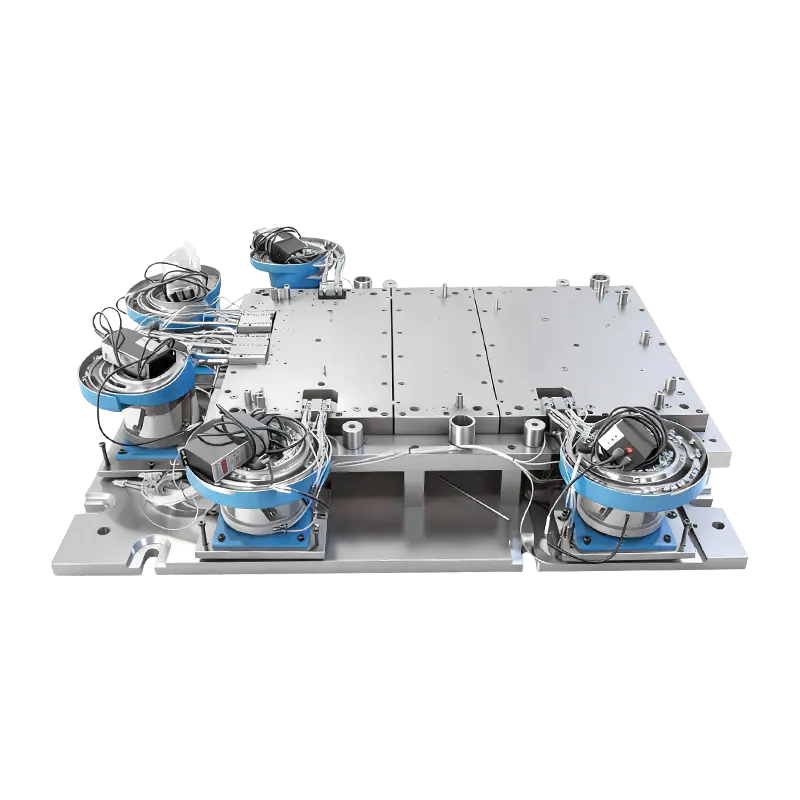
Modern Automotive Stamping Dies increasingly operate within automated production lines that include robotic handling, transfer systems, and real-time monitoring technologies. Automation not only improves production speed but also enhances consistency, reduces labor costs, and enables traceability. Integration between die design and automation equipment is therefore becoming a key competitive factor for manufacturers.
Since 2016, we have invested in an affiliated intelligent technology company specializing in stamping automation equipment, allowing us to provide turnkey solutions that combine dies, automation systems, and production equipment. This integrated capability enables customers to shorten project cycles and achieve faster return on investment while maintaining high-quality production standards.
With strong technical teams, extensive machining capacity, and years of project experience, we focus on creating value-driven solutions tailored to customer requirements. By aligning tooling design with automation strategy, manufacturers can achieve sustainable efficiency improvements in Automotive Stamping Dies, Drawing Dies, and Deep Drawing Dies applications.
Start Your Business with an OEM Manufacturer Right Here!

Provide global customers with complete turn-key solutions
through
innovation!
QUICK LINKS
CONTACT INFO.
-
 +86-139 1308 8972
 -

-
 No. 118 Yexin Road, Wujiang Economic Development Zone, Suzhou, China
Copyright © Suzhou Shuangqisi Mold Equipment Co., Ltd. All Rights Reserved. Automotive Stamping Dies OEM Factory
